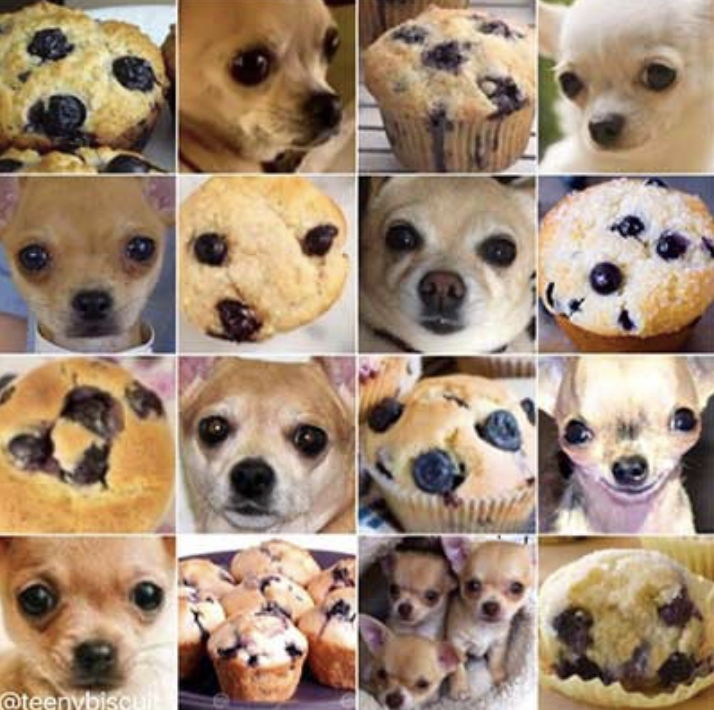
“Machine learning hit the public awareness after spectacular advances in language translation and image recognition. These are typically problems of classification — does a photo show a poodle, a Chihuahua or perhaps just a blueberry muffin? Surprisingly, the latter two look quite similar (E. Togootogtokh and A. Amartuvshin, preprint at https://arxiv.org/abs/1801.09573; 2018). Less widely known is that machine learning for classification has an even longer history in the physical sciences. Recent improvements coming from so-called ‘deep learning’ algorithms and other neural networks have served to make such applications more powerful.”
Read more on The Power of Machine Learning via Nature Physics
“Recently, artificial intelligence and machine-learning algorithms have gained significant attention in the field of osteoporosis [1]. They are recognized for their potential in exploring new research fields, including the investigation of novel risk factors and the prediction of osteoporosis, falls, and fractures by leveraging biological testing, imaging, and clinical data [2]. This new approach might improve the performance of current fracture prediction models by including all possible variables such as the bone mineral density (BMD) of all sites as well as trabecular bone score (TBS) data [3]. Also, the new model could suggest novel factors that could influence the fracture by calculating all variables through a deep learning network. Although there are a few studies in osteoporosis and fracture prediction using machine learning [4–6], a fracture-prediction machine-learning model with a longitudinal, large-sized cohort study including BMD and TBS has not been developed [3].”
Read more on Clinical Applicability of Machine Learning in Family Medicine via Korean J Family Medicine.

 JACQUELINE P. ASHBY