“He that lives upon hope, dies farting.”
— Benjamin Franklin, Poor Richard’s Almanack, 1736
I’ll never forget that quote. It was September 1990, and CSUS President Donald R. Gerth opened our U.S. Government class with it scrawled across the chalkboard. A bold, memorable way to say: don’t sit around waiting — act.
I’ve carried Ben’s wisdom ever since. And I haven’t invested this much in others — or in the world — just to quietly… well, you know.
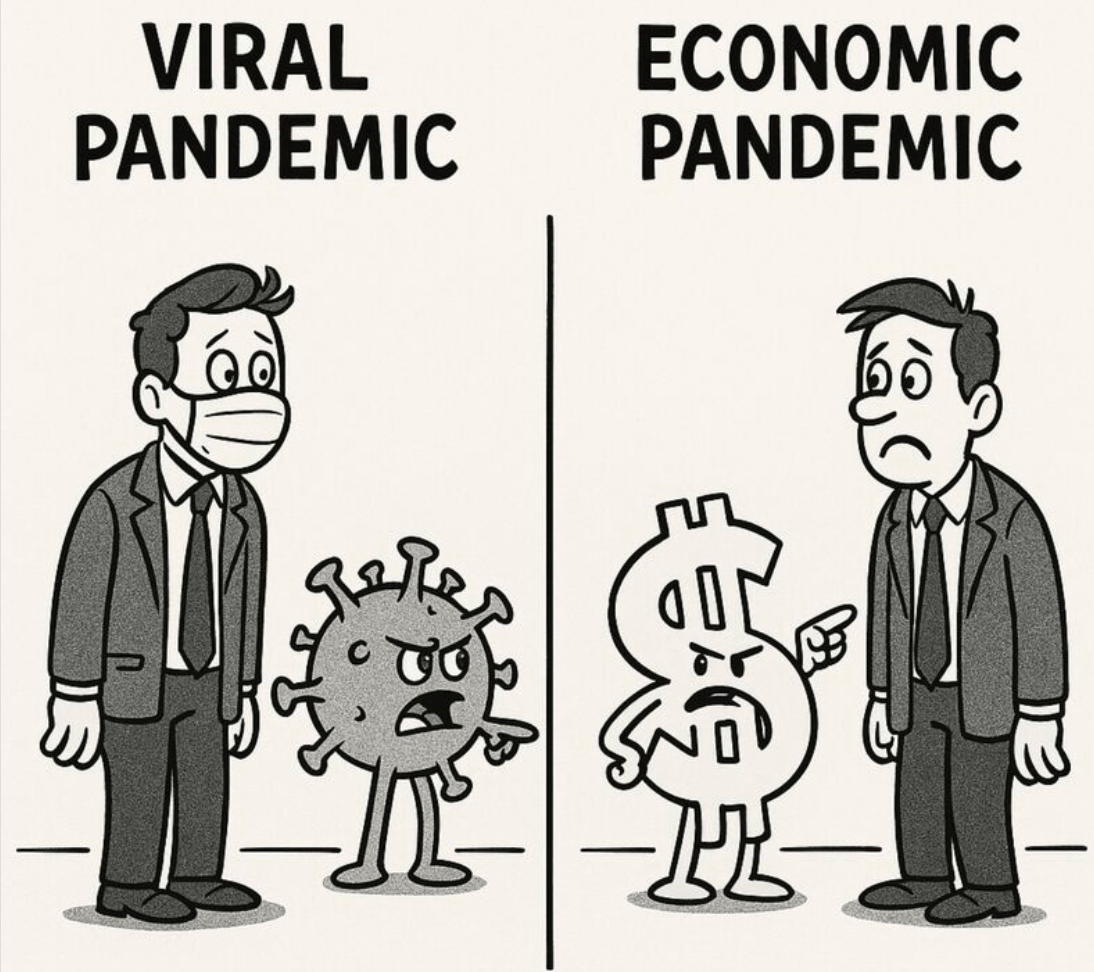
Lately, I’ve been waking up with a familiar pit in my stomach. And while I wish I could blame it on last night’s chimichanga, I know better. There’s a familiar global hum of fear and uncertainty — a déjà vu from the early days of the COVID-19 pandemic.
Only now, it’s economic.
Markets yo-yo like they’re auditioning for Coney Island. Systems are wobbling. Toilet paper is escalating in price. Borders, again, feel like more than just physical lines. The news sounds like a cross between a disaster film trailer and bad financial advice.
Both the viral and economic pandemics have exposed the same deep truth — we are inextricably interconnected. Interdependent. What happens in one corner of the globe ripples across the rest.
Despite all the tough talk, nationalism, and ideological whiplash, we need to resist the temptation to shut down — physically, economically, and emotionally. Because borders aren’t just geopolitical. They’re psychological, too. And when we wall ourselves off — from each other, from opposing views, from history — we all lose.
We need to show up differently than we did before…than we did in 2020. And part of that involves working more collaboratively across government and industry lines.
💬 1. Talk Less About the Man, More About the Mechanism
We’ve spent too much airtime reacting to personalities. Tariffs aren’t just a “Trump” issue — they’re a tool. Let’s redirect the conversation toward how these tools affect everyday people, small businesses, global trust, and economic stability. Ask: Who gains? Who pays? Who decides?
🤝 2. Reconnect Economies with Empathy
Economic policy isn’t just about numbers. It’s about people: the warehouse worker, the farmer, the startup team on their third round of layoffs. Empathy isn’t soft — it’s strategic. Let’s lead with human-centered stories, not just GDP graphs.
🌐 3. Refuse to Play the Zero-Sum Game
Tariffs fuel the narrative of “us vs. them.” But the global economy is not a tug-of-war — it’s more like a complicated game of Jenga. One bad move affects everyone. Let’s challenge oversimplified rhetoric and advocate for policies rooted in cooperation, resilience, and mutual benefit.
And let’s not forget — it’s our children who will inherit these challenges, along with all the unanswered questions and unsolved equations we’ve left on the table. So let’s sharpen our collective #2 pencils and start working through it — with the clarity, creativity, and courage this moment calls for.
Tariffs

 JACQUELINE P. ASHBY