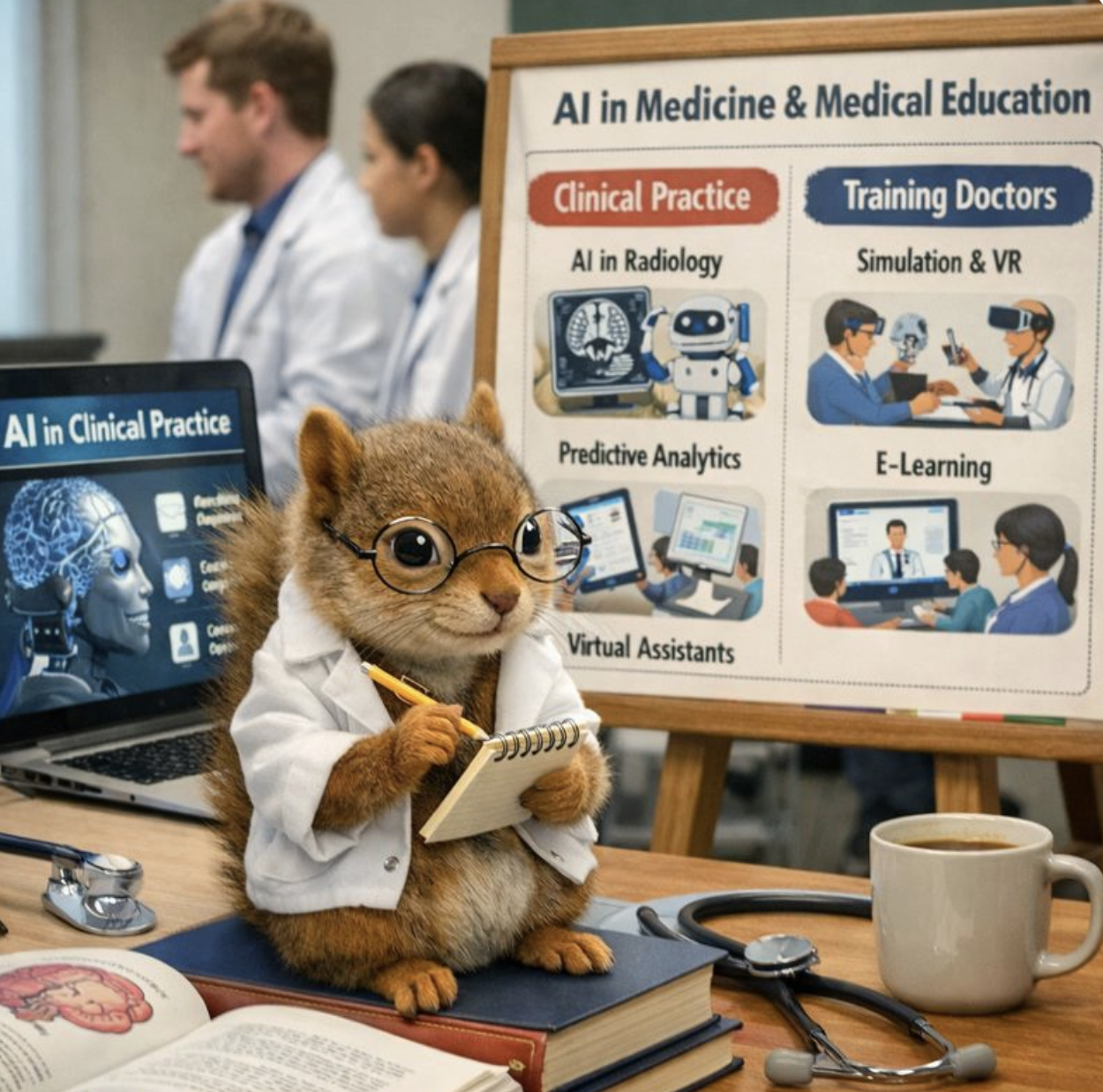
“The General Medical Council (GMC) states that doctors ‘are responsible for the decisions they make when using new technologies like AI, and should work only within their competence.’15 This coincides with the World Medical Association calling for reviewing medical curricula and education for all healthcare stakeholders to improve understanding of the risks and benefits of AI in healthcare.16 It follows then that in fostering good medical practice, medical schools must prepare students for the clinical environment that awaits them through building competence and familiarity in this evolving domain.
With 2 in 3 physicians using AI in their clinical practice, an increase of 78% from 2023,17 enthusiasm for the technology is rapidly growing. Yet, despite this uptake, a 2024 international survey of over 4500 students across 192 medical, dental, and veterinary faculties found that over 75% reported no formal AI education in their curriculum, highlighting a critical gap between technological advancement and medical training.18 This discrepancy underscores the urgency for medical schools to proactively incorporate AI teaching to ensure graduates are ready for the realities of modern clinical practice.”
Read more on Artificial Intelligence in Medical Education: Promise, Pitfalls, and Practical Pathways here.

 JACQUELINE P. ASHBY