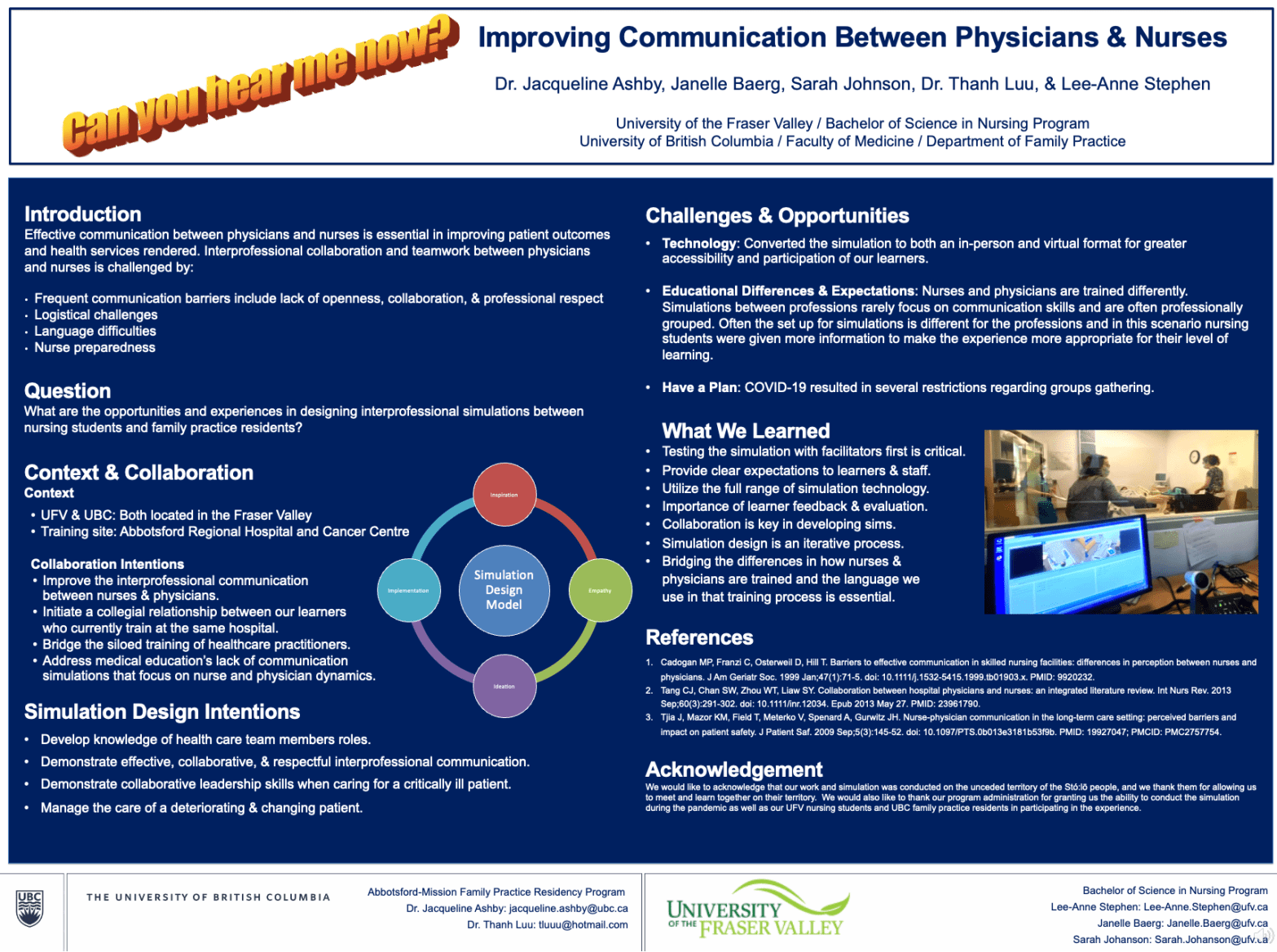
Interprofessional simulation is one of the most effective ways to strengthen team-based care. In 2020, through the British Columbia Simulation Network, I connected with Lee-Anne Stephen, Associate Professor and Director of the School of Health Studies at UFV, and together we launched an interprofessional simulation project bringing together the UBC Family Practice Residency Program and UFV’s Nursing Program.
One lesson stood out right away: communication between physicians and nurses cannot be assumed. It needs to be taught, practised, and intentionally designed. Working with University of British Columbia Family Practice residents and University of the Fraser Valley nursing students, we saw that strong simulation depends on clear expectations, skilled facilitation, thoughtful use of technology, and meaningful learner feedback.
We also learned that shared learning works best when we pay close attention to differences in professional training, language, and role preparation. This was not a one-time event. It was an iterative process that strengthened collaboration, mutual respect, and team-based thinking.
A valuable reminder that better patient care begins long before practice, it begins with learning how to communicate and work well together.
Learn more here “UFV nursing students learn with UBC medical residents”: https://blogs.ufv.ca/health/ufv-nursing-students-learn-with-ubc-medical-residents/

 JACQUELINE P. ASHBY