
This morning, I had the opportunity to facilitate a Planetary Health & Public Health session with our Primary Compassionate Care Initiative mentees in Nigeria.
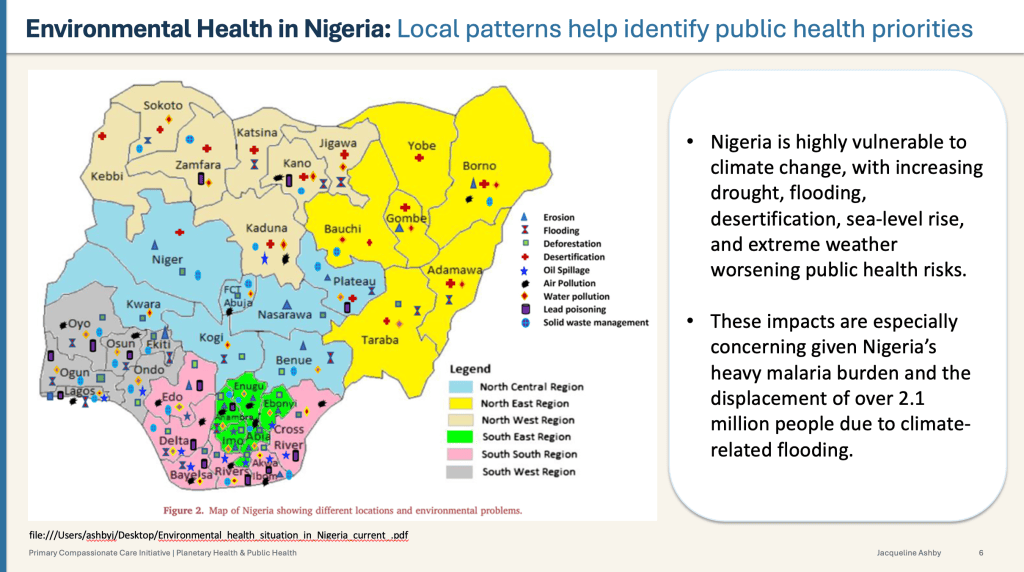
We began by examining the intersection between environmental change and public health and what these issues actually look like within participants’ own communities. The group discussed challenges including air pollution, waste management, flooding, erosion, sanitation, and the health consequences that follow when environments and communities are under pressure. That pressure can often divide people and result in conflict and violence distracting from the community and their recovery effort.
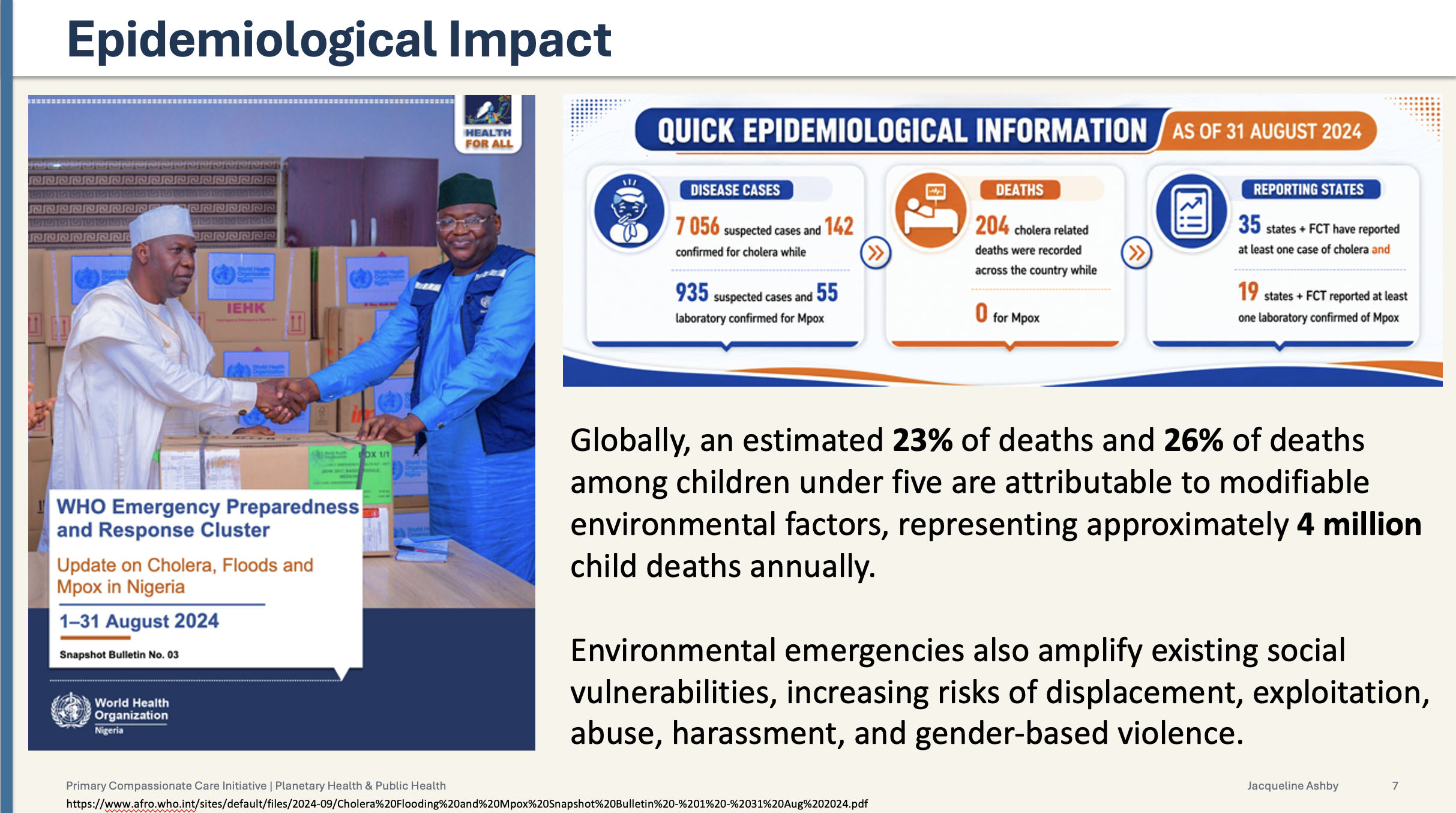
One of the slides examined the epidemiological impact of environmental conditions, including their disproportionate effects on children. But it also highlighted something that can be overlooked when we discuss environmental emergencies: these events can amplify existing social vulnerabilities and increase the risk of displacement, exploitation, abuse, harassment, trafficking, and gender-based violence.
That slide took the conversation somewhere I had not anticipated and after the formal session ended, we continued discussing human trafficking in Nigeria, sexual exploitation, and the people who may be suffering in silence within our communities.
The discussion moved beyond identifying the problem to asking a much harder and more important question: What can we do as public health workers to support them?
Dr. Aisha Liman offered an important perspective during our discussion: public health cannot be separated from the social and legal conditions that shape health. If we are going to care for people holistically, public health professionals need to understand not only disease and epidemiology, but also human rights, relevant laws and policies, social systems, advocacy, and the protections available to survivors. This is public health outside the box.
That means knowing when someone needs more than clinical care. It means being able to recognize vulnerability, understand the systems surrounding that person, advocate appropriately, and help connect survivors with the support and protections they need.
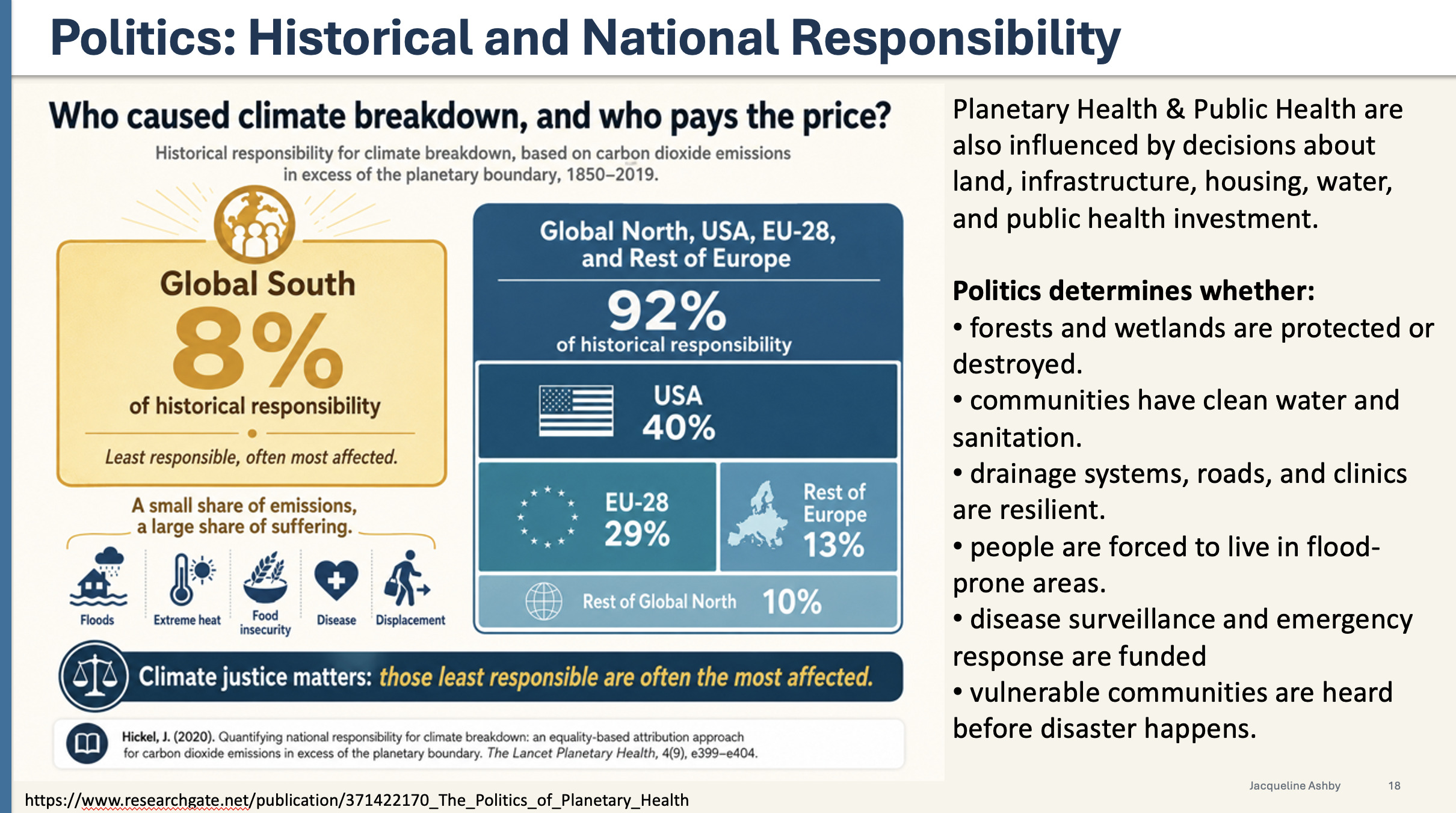
Our session began with planetary health and the relationship between people and the environments in which they live. The discussion reminded me just how interconnected that relationship really is.
Environmental disruption can become economic disruption.
Economic disruption can become displacement.
Displacement can increase vulnerability.
And vulnerability can become a profound public health and human rights issue.
This is why I continue to value these discussions so much. Sometimes the most important learning happens when the conversation goes somewhere you did not plan for.
#PlanetaryHealth #PublicHealth #Nigeria #GlobalHealth #HumanRights #HealthEquity #HumanTrafficking #GenderBasedViolence #PCCI


Leave a Reply