Chiquita

Ode to Chiquita Boneita
At Green Templeton, quiet and tall,
Stands Chiquita Boneita, queen of the hall.
With a grin so wide and a gaze so bright,
She rules the room in ghostly light.

A scholar of bones, a teacher of lore,
She rattles with wisdom (and sometimes the floor).
Her femurs stand firm, her phalanges wave,
A skeleton sage, so bold and brave.

Oh, Chiquita, with your ivory grace,
You add some charm to this scholarly place.
A book in hand and a banana in toe
She may resemble your Nana, but nobody knows.

So here’s to you, our bony delight—
May your teachings endure through day and night! 💀📚✨

There’s a new skeleton in the library of Green Templeton.
I’ve name her Dr. Chiquita Boneita.
For the record.

Question

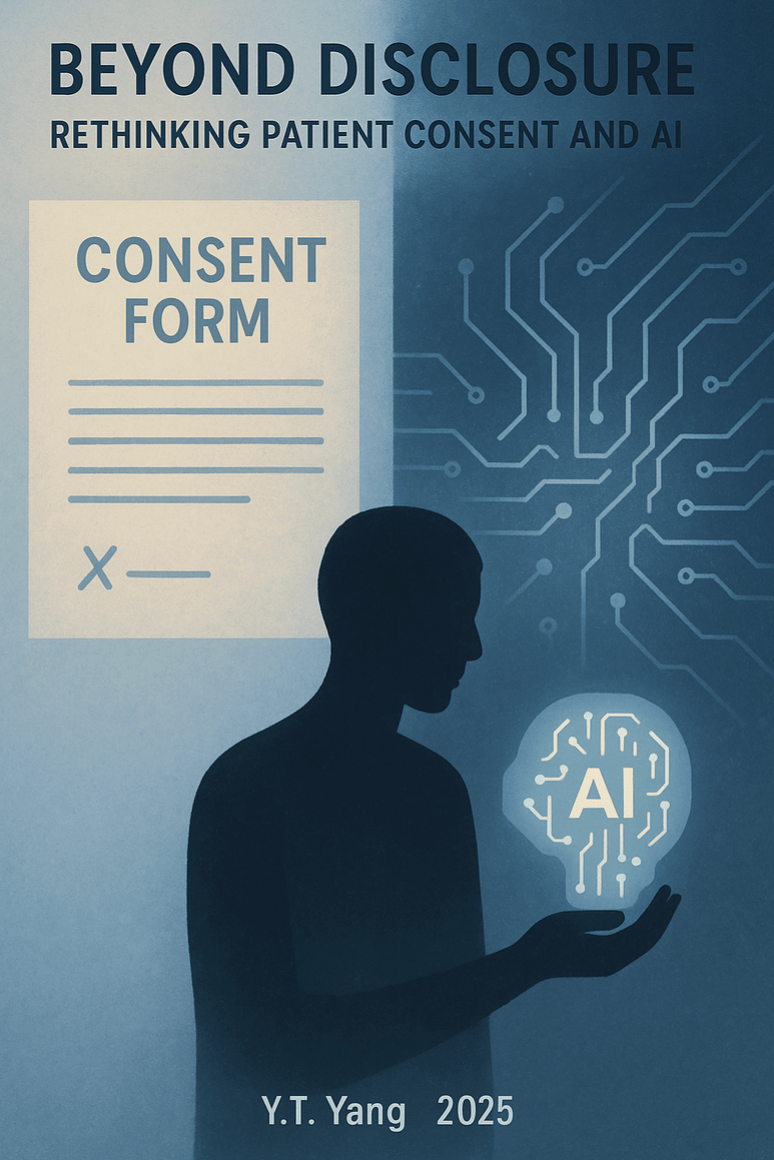
After nearly a decade in medical education, I’ve seen AI quietly reshape both learning and clinical practice. But as educators, clinicians, and patients, are we asking the right questions about its use?

Too often, AI tools are implemented without transparency, oversight, or patient consent. Some platforms even guide users on capturing patient data—without clear governance—raising serious concerns about privacy, ownership, and compliance.

💡 Questions we all need to ask:
🔹 Patients: Is AI being used in my care? How is my data stored and used? Can I access my AI-generated records? Can I opt out?

🔹 Educators & Institutions: Are AI tools aligned with privacy laws? Have vendor agreements been updated to reflect AI-driven features?

🔹 Developers & Policymakers: Is AI implementation transparent and ethical? Are there built-in safeguards? Does the tool comply with FIPPA/HIPAA?

AI itself isn’t good or bad—it’s a tool. But without scrutiny, it can become a liability rather than an asset.

🔍 Never assume AI is being used ethically. Ask the hard questions. Demand clear answers. Protect patient trust.

~ Jacqueline

Learn more on Patients’ Trust in Health Systems to Use Artificial Intelligence via JAMA

App that Map!

Exciting News! 🚀📢 Thrilled to share that Dr. Meera Anand and I have published our latest work, “APP that Map! Curriculum Mapping in Family Medicine”, in Medical Education!

What’s the challenge? Curriculum mapping is critical for ensuring equity, consistency, and accreditation across distributed medical training programs. In our case, UBC Family Medicine spans over 20 training sites—each with unique learning experiences due to regional differences. However, our previous Excel-based mapping method was cumbersome, time-consuming, and engagement was low.

What did we do?
✅ Redesigned the mapping process—streamlining 478 learning objectives into 42 core learning outcomes.
✅ Developed a custom app in Oracle Apex—allowing faculty to easily input and visualize data.
✅ Increased engagement—within 7 months of launch, all sites completed the process (compared to <50% using spreadsheets!).
✅ Enabled data-driven decision-making—helping us track curriculum trends and improve resource allocation.

Lessons Learned:
💡 Technology can enhance, but not replace, faculty engagement—ongoing training is key.
💡 Balancing simplicity and robust data collection is a continuous challenge.
💡 Visualizing trends improves decision-making for accreditation & program improvements.

This work demonstrates how thoughtful integration of technology can streamline curriculum mapping and enhance medical education. Would love to hear from others working in curriculum innovation—how are you leveraging tech to improve learning outcomes?

📄 Read the full paper here.

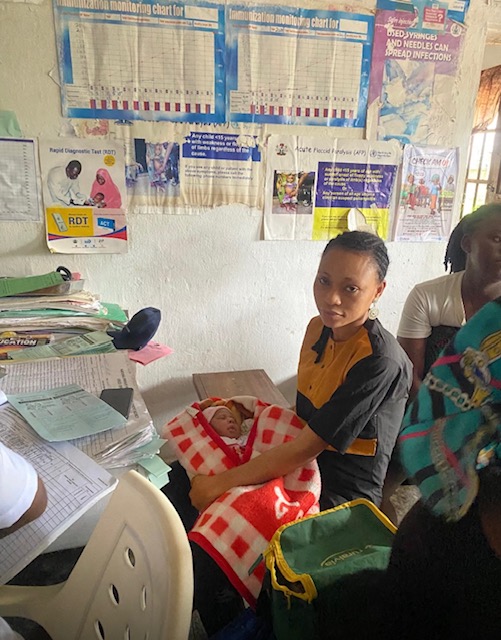
Immunize

Background

WHO, as requested by its member states, launched the Expanded Programme on Immunization (EPI) in 1974 to make life-saving vaccines available to all globally. To mark the 50-year anniversary of EPI, we sought to quantify the public health impact of vaccination globally since the programme’s inception.

Methods

In this modelling study, we used a suite of mathematical and statistical models to estimate the global and regional public health impact of 50 years of vaccination against 14 pathogens in EPI. For the modelled pathogens, we considered coverage of all routine and supplementary vaccines delivered since 1974 and estimated the mortality and morbidity averted for each age cohort relative to a hypothetical scenario of no historical vaccination. We then used these modelled outcomes to estimate the contribution of vaccination to globally declining infant and child mortality rates over this period.

Findings

Since 1974, vaccination has averted 154 million deaths, including 146 million among children younger than 5 years of whom 101 million were infants younger than 1 year. For every death averted, 66 years of full health were gained on average, translating to 10·2 billion years of full health gained. We estimate that vaccination has accounted for 40% of the observed decline in global infant mortality, 52% in the African region. In 2024, a child younger than 10 years is 40% more likely to survive to their next birthday relative to a hypothetical scenario of no historical vaccination. Increased survival probability is observed even well into late adulthood.

Interpretation

Since 1974 substantial gains in childhood survival have occurred in every global region. We estimate that EPI has provided the single greatest contribution to improved infant survival over the past 50 years. In the context of strengthening primary health care, our results show that equitable universal access to immunisation remains crucial to sustain health gains and continue to save future lives from preventable infectious mortality.

Read more on Contribution of vaccination to improved survival and health: modelling 50 years of the Expanded Programme on Immunization via The Lancet.

Echolocation

“Bats’ skill with echolocation—pinpointing prey on the wing and in the dark—has long been a source of inspiration for scientists and engineers, resulting in advances that include novel medical devices for the visually impaired and sophisticated radar systems. Now researchers have created a 3D sonar system that, when combined with high-speed cameras, makes it easier to ‘see’ bat echolocation in action. The new tech, which could reveal more valuable insights into echolocation and predator-prey interactions, is described in a study published 8 January in IEEE Sensors Letters. It could also potentially pave the way for even more bat-inspired technologies in the future.”

Read more on Sonar System “Sees” Bat Echolocation in Action: The tech could help develop more bat-inspired devices in the future via IEEE Spectrum.

Limits

Anduril Founder Palmer Luckey, the designer of the virtual-reality headset Oculus Rift, laid out his vision for the future of the IVAS program Tuesday in a blog post titled, “Turning Soldiers into Superheroes.”

“For me, this announcement is deeply personal. Since my pre-Oculus days as a teenager who had the opportunity to do a tiny bit of work on the Army’s BRAVEMIND project, I’ve believed there would be a headset on every soldier long before there is a headset on every civilian,” Luckey wrote.

He wrote that IVAS will allow troops to “surpass the limits of human form and cognition, seamlessly teaming enhanced humans with large packs of robotic and biologic teammates.”

The Army has conducted IVAS-controlled drone flights for microdrones, such as the Black Hornet and other squad-level drones. The device is also used for inter- and intra-squad communication, both through voice and chat. Users can share map information, coordinates or other data via the headset.

Read more on Oculus founder wants to help troops ‘surpass the limits of human form’ via Military Times

Literacy

https://childrensliteracy.ca/Literacy-Matters

“I find television very educating. Every time somebody turns on the set, I go into the other room and read a book.” ~ Groucho Marx

My family installed a Little Free Library in our community 11 years ago, and it has been an incredible experience ever since. Children of all ages stop by to pick up a book or two, and sometimes they even make special requests. This has shown me how important it is for each of us to contribute to promoting literacy in our neighborhood. Together, we can inspire a love for reading and make a lasting impact!

Read more on my experience.

Hockey

OBJECTIVE

Concussions can occur at any level of ice hockey. Incidence estimates of concussions in ice hockey vary, and optimal prevention strategies and return-to-play (RTP) considerations have remained in evolution. The authors performed a mixed-methods study with the aim of elucidating the landscape of concussion in ice hockey and catalyzing initiatives to standardize preventative mechanisms and RTP considerations.

METHODS

The authors performed a five-part mixed-methods study that includes: 1) an analysis of the impact of concussions on games missed and income for National Hockey League (NHL) players using a publicly available database, 2) a systematic review of the incidence of concussion in ice hockey, 3) a systematic review of preventative strategies, 4) a systematic review of RTP, and 5) a policy review of documents from major governing bodies related to concussions in sports with a focus on ice hockey. The PubMed, Embase, and Scopus databases were used for the systematic reviews and focused on any level of hockey.

RESULTS

In the NHL, 689 players had 1054 concussions from the 2000–2001 to 2022–2023 seasons. A concussion led to a mean of 13.77 ± 19.23 (range 1–82) games missed during the same season. After cap hit per game data became available in 2008–2009, players missed 10,024 games due to 668 concussions (mean 15.13 ± 3.81 per concussion, range 8.81–22.60 per concussion), with a cap hit per game missed of $35,880.85 ± $25,010.48 (range $5792.68–$134,146.30). The total cap hit of all missed games was $385,960,790.00, equating to $577,635.91 per concussion and $25,724,052.70 per NHL season. On systematic review, the incidence of concussions was 0.54–1.18 per 1000 athlete-exposures. Prevention mechanisms involved education, behavioral and cognitive interventions, protective equipment, biomechanical studies, and policy/rule changes. Rules prohibiting body checking in youth players were most effective. Determination of RTP was variable. Concussion protocols from both North American governing bodies and two leagues mandated that a player suspected of having a concussion be removed from play and undergo a six-step RTP strategy. The 6th International Conference on Concussion in Sport recommended the use of mouthguards for children and adolescents and disallowing body checking for all children and most levels of adolescents.

CONCLUSIONS

Concussions in ice hockey lead to substantial missed time from play. The authors strongly encourage all hockey leagues to adopt and adhere to age-appropriate rules to limit hits to the head, increase compliance in wearing protective equipment, and utilize high-quality concussion protocols.

Learn more on Concussions in ice hockey: mixed methods study including assessment of concussions on games missed and cap hit among National Hockey League players, systematic review, and concussion protocol analysis via Journal of Neurosurgery.

Image of JT Miller and Filip Hronek. Wear your helmet during warm up Hronek… 🙂