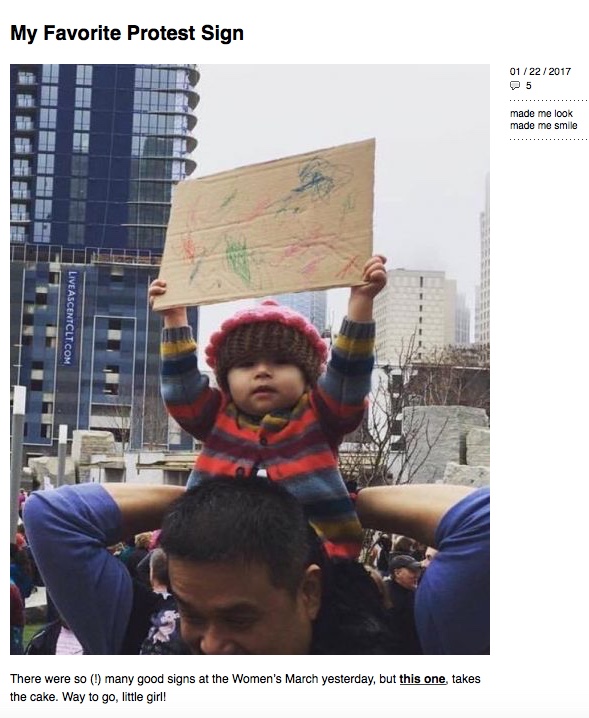
Love that baby girl! via SwissMiss.
Author Archives: Jacqueline Ashby
Exploring the intersection between person and place.
Rights
 As long as you live you’ll never see a photograph of 7 women signing legislation about what men can do with their reproductive organs.
#NeverSayNever
Badlands
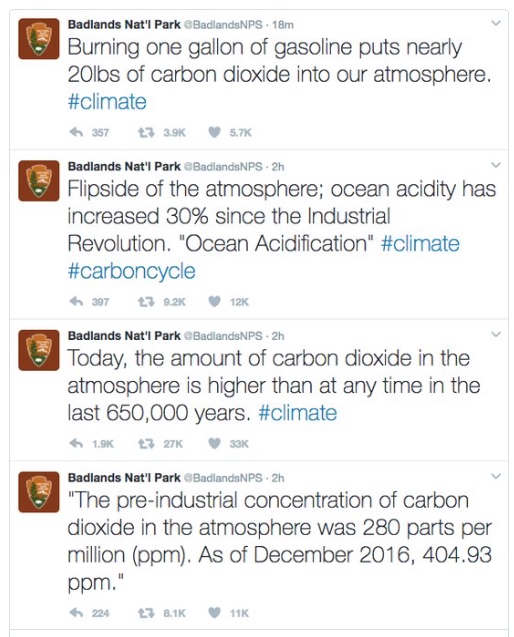
“The Badlands National Park tweets come after Trump’s administration enforced a social media blackout on the Environmental Protection Agency, barring EPA staff from publishing news releases, blog posts or social media updates. The rules also barred EPA staff from awarding new contracts or grants.” More here:
A Rogue National Park Is Tweeting Out Climate Change Facts in Defiance of Donald Trump
And here:
Trump administration tells EPA to cut climate page from website: sources
Incentive
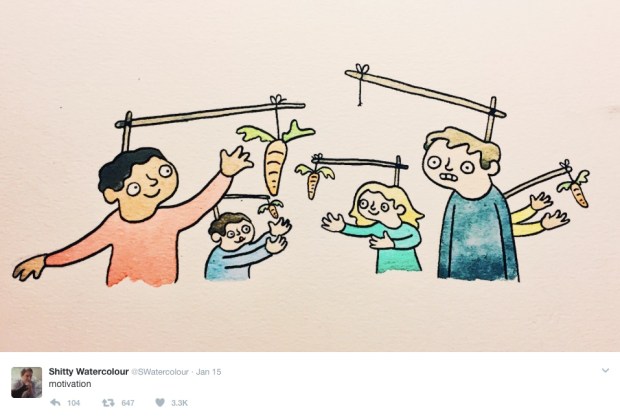 There are a whole lot of ways to be perfect, and not one of them is attained through punishment. ~ Ursula Le Guin
Guesstimate

Flushed
 “Proust tells us that the sort of knowledge of the heart we need in this case cannot be given us by the sciences of psychology, or, indeed, by any sort of scientific use of intellect. Knowledge of the heart must come from the heart — from and in its pains and longings, its emotional responses.” ~ Martha Nussbaum via Brainpickings
Mapping
Delft University of Technology (Netherlands) is offering a tuition-free, online EdX course:
Design in Healthcare: Using Patient Journey Mapping
Begins: February 8, 2017
Duration: 5 weeks
Register here.
Cheers!
j.
Love

Gotta have LOVE.
History

 JACQUELINE P. ASHBY