OCHA Humanitarian Situation Report – 19 March 2026
Child Protection
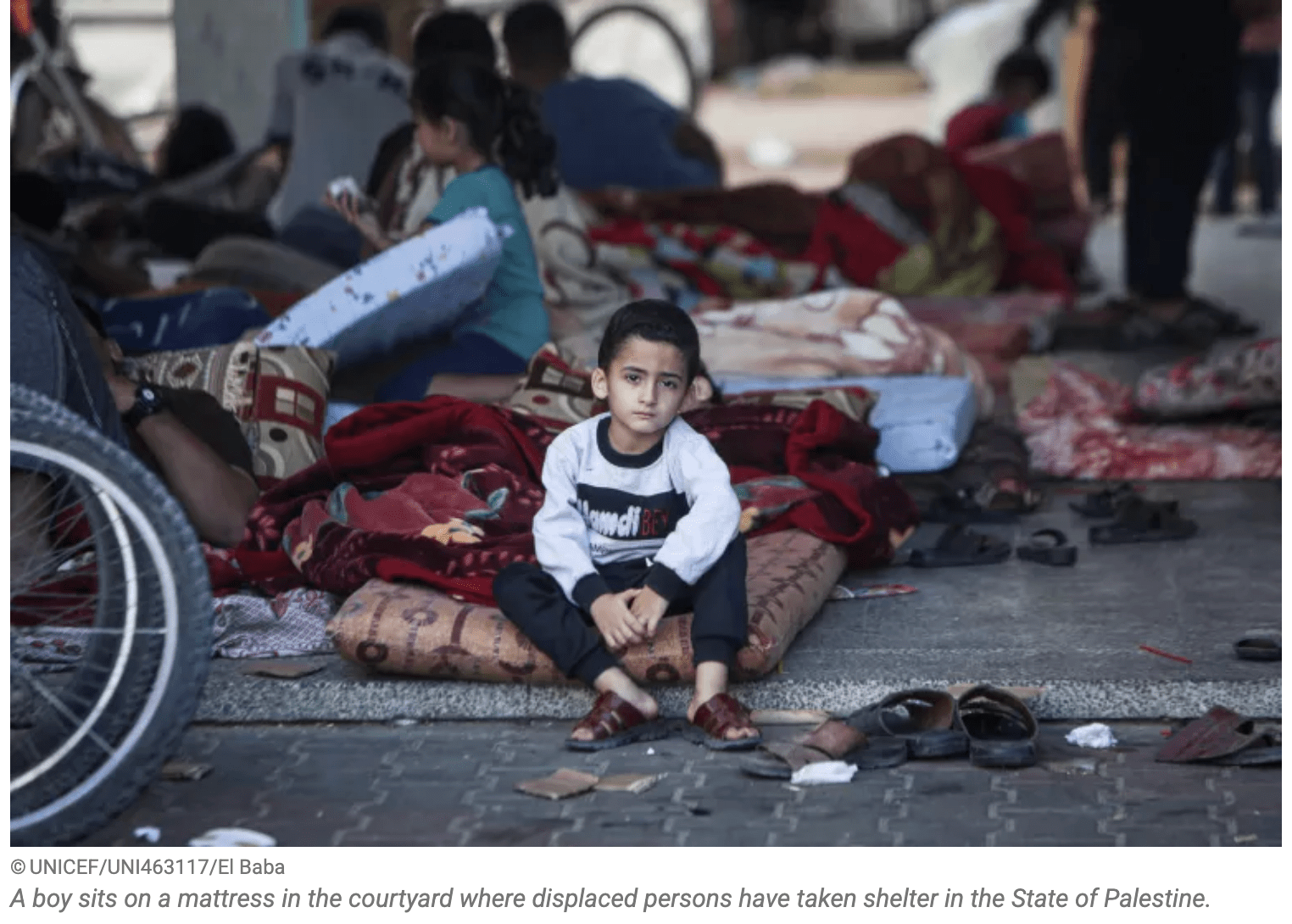
- Between 8 and 15 March, child protection partners reached over 2,700 children with mental health and psychosocial support (MHPSS) and recreational activities.
- Case management services were scaled up to respond to increasing protection concerns, with 150 children newly registered and supported through tailored interventions, including follow-up and referrals for specialized services to ensure continuity of care.
- Over 800 caregivers participated in child protection awareness sessions, including explosive ordnance risk education, with awareness materials and protection messaging also distributed in displacement settings.
- Child protection services were complemented by assistance, including cash support to 661 families with children facing protection vulnerabilities, as well as clothing kits provided to 40 children.
- Between, 8 and 15 March, UNICEF also brought into Gaza 600 wheelchairs for children with injuries and disabilities.
- Partners report increasing violence against children, driven by overcrowded shelters, heightened caregiver stress, and the breakdown of family and community support structures. Many areas still lack adequate child‑friendly spaces due to congestion in shelters and displacement sites, and partners emphasize the need to integrate safe spaces when new sites are established. Ongoing fuel shortages and limited cash liquidity for transportation also continue to restrict staff mobility, hampering access to operational locations and the delivery of child protection services. At the same time, there remains a significant shortage of psychologists, counsellors and trained psychosocial workers, limiting the capacity to meet the growing mental health and protection needs of children.
Addressing Gender-Based Violence
- On 8 March and throughout the following week through 15 March, partners addressing gender-based violence (GBV) marked International Women’s Day through a range of activities, including workshops, art and painting sessions, bazaars and inclusive events for persons with disabilities. These initiatives reached over 2,000 participants and focused on promoting women’s empowerment, supporting vulnerable groups, and recognizing the contributions of frontline workers and women leaders.
- Multisectoral services addressing GBV continued to be provided through 68 safe spaces for women and girls, two safe shelters, and multiple case-management and awareness-raising points. Between 8 and 15 March, partners conducted more than 530 daily group sessions, reaching over 13,500 people with legal aid, sexual and reproductive health information and psychosocial support. Individual case management, including cash‑for‑protection assistance, was also provided. To address the growing intersection between mental health and GBV, a dedicated session was held for 22 partners, focusing on service linkages. The MHPSS Technical Working Group additionally shared an updated GBV referral map to strengthen integrated response and prevention efforts. Partners reported operational challenges due to rising costs of materials needed for group activities – such as handicrafts and pastry making – as well as increasing transportation costs.
- Eighteen partners distributed dignity kits to 15,000 vulnerable women and girls between 8 and 15 March.
Education
- During the reporting period, 64 Education Cluster partners continued efforts to maintain and expand safe learning spaces, support the delivery of structured learning and psychosocial support, equip and train educational personnel, and promote protective and inclusive learning environments for children. Particular attention was given to reaching girls, children with disabilities, and other vulnerable groups.
- However, the scale and quality of the response continue to be affected by the challenging operating environment in Gaza, including extensive damage to education infrastructure, overcrowding in displacement sites, limited space for learning, and restrictions affecting the entry of supplies and movement of personnel. Recent NGO deregistration measures are further constraining the Cluster’s ability to expand and sustain the education response, reducing technical capacity and limiting NGOs’ ability to bring staff, supplies, and learning materials into Gaza. These constraints continue to pose significant obstacles to meeting the education needs of all children across the Gaza Strip.
- By mid-March 2026, 494 temporary learning spaces (TLSs) were operational in Gaza, accommodating 300,243 students (54 per cent girls) currently attending classes, supported by 7,854 teachers (73 per cent female). Out of the enrolled students, 287,500 are school-aged children and 12,743 kindergarten-aged children. Of the total 1,923 are children with disabilities.
- Despite this progress, only about 39 per cent of all school-aged and kindergarten-aged children (ages 4–17) for the 2025–2026 academic year are enrolled in these TLSs, highlighting the significant gap that remains in access to education. In neighborhoods with high displacement, existing TLSs cannot meet the demand, leaving thousands of children unreached. If this gap is not addressed, children risk falling behind academically, losing critical psychosocial support, and facing long-term consequences for their development and future opportunities.
- Between 7 and 16 March, education partners brought into Gaza 428 learning kits, sufficient for approximately 17,000 learners.




 JACQUELINE P. ASHBY