
Fast-Forward

“Boredom is unpleasant, with people going to great lengths to avoid it. One way to escape boredom and increase stimulation is to consume digital media, for example watching short videos on YouTube or TikTok. One common way that people watch these videos is to switch between videos and fast-forward through them, a form of viewing we call digital switching. Here, we hypothesize that people consume media this way to avoid boredom, but this behavior paradoxically intensifies boredom.

Across seven experiments (total N = 1,223; six preregistered), we found a bidirectional, causal relationship between boredom and digital switching. When participants were bored, they switched (Study 1), and they believed that switching would help them avoid boredom (Study 2). Switching between videos (Study 3) and within video (Study 4), however, led not to less boredom but more boredom; it also reduced satisfaction, reduced attention, and lowered meaning. Even when participants had the freedom to watch videos of personal choice and interest on YouTube, digital switching still intensified boredom (Study 5).

However, when examining digital switching with online articles and with nonuniversity samples, the findings were less conclusive (Study 6), potentially due to factors such as opportunity cost (Study 7). Overall, our findings suggest that attempts to avoid boredom through digital switching may sometimes inadvertently exacerbate it. When watching videos, enjoyment likely comes from immersing oneself in the videos rather than swiping through them. (PsycInfo Database Record (c) 2024 APA, all rights reserved).”

Read more on Fast-forward to boredom: How switching behavior on digital media makes people more bored via NIH.
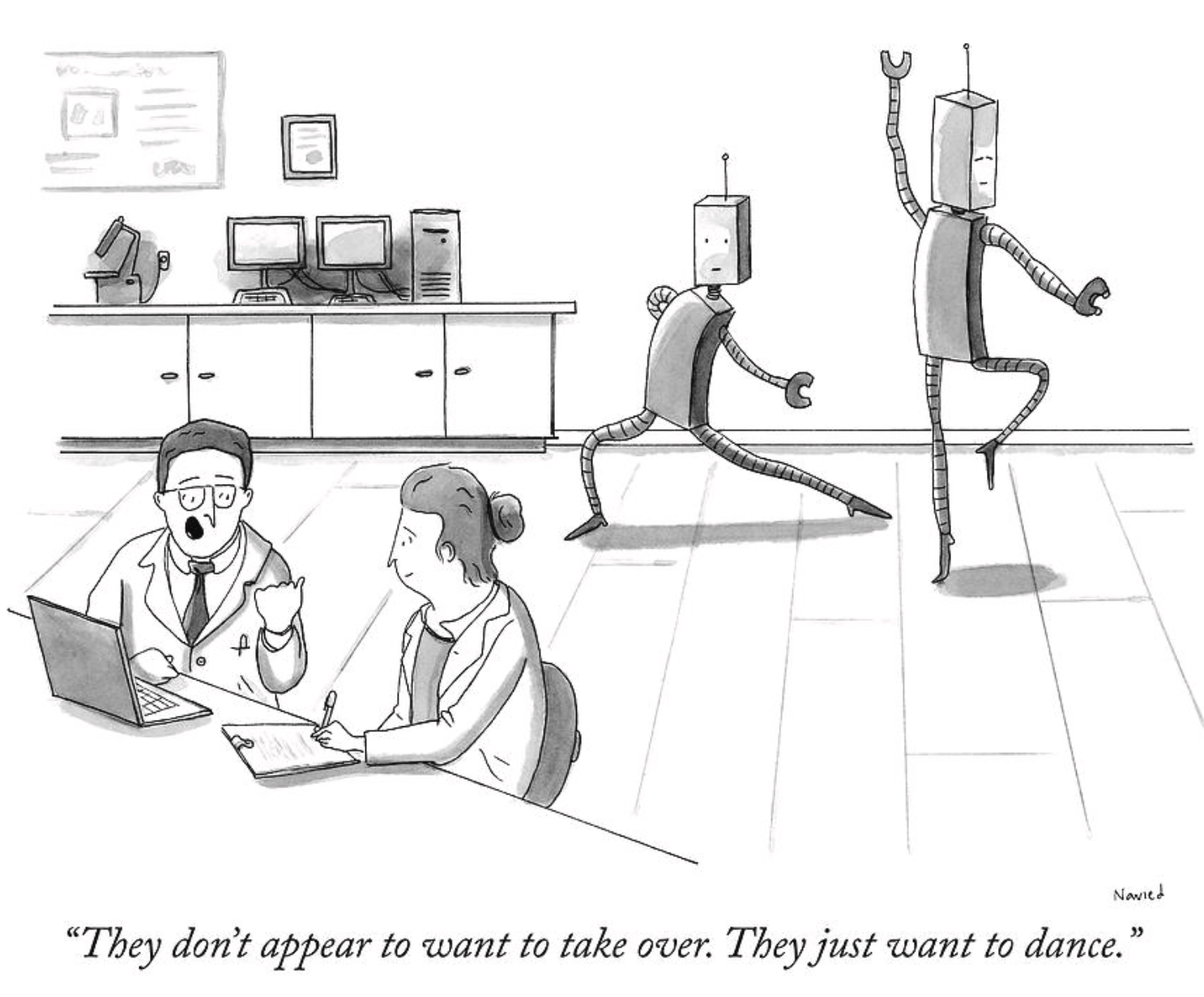
Takeover

Human society has entered the age of artificial intelligence, medical practice and medical education are undergoing profound changes. Artificial intelligence (AI) is now applied in many industries, particularly in healthcare and medical education, where it deeply intersects. The purpose of this paper is to overview the current situation and problems of “AI+medicine/medical” education and to provide our own perspective on the current predicament. Methods: We searched PubMed, Embase, Cochrane and CNKI databases to assess the literature on AI+medical/medical education from 2017 to July 2022. The main inclusion criteria include literature describing the current situation or predicament of “AI+medical/medical education”. Results: Studies have shown that the current application of AI in medical education is focused on clinical specialty training and continuing education, with the main application areas being radiology, diagnostics, surgery, cardiology, and dentistry. The main role is to assist physicians to improve their efficiency and accuracy. In addition, the field of combining AI with medicine/medical education is steadily expanding, and the most urgent need is for policy makers, experts in the medical field, AI and education, and experts in other fields to come together to reach consensus on ethical issues and develop regulatory standards. Our study also found that most medical students are positive about adding AI-related courses to the existing medical curriculum. Finally, the quality of research on “AI+medical/medical education” is poor. Conclusion: In the context of the COVID-19 pandemic, our study provides an innovative systematic review of the latest “AI+medicine/medical curriculum”. Since the AI+medicine curriculum is not yet regulated, we have made some suggestions.

More on Artificial intelligence for healthcare and medical education: a systematic review via Am J Transl Res.