Love is not all: it is not meat nor drink
Nor slumber nor a roof against the rain;
Nor yet a floating spar to men that sink
And rise and sink and rise and sink again;
Love can not fill the thickened lung with breath,
Nor clean the blood, nor set the fractured bone;
Yet many a man is making friends with death
Even as I speak, for lack of love alone.
It well may be that in a difficult hour,
Pinned down by pain and moaning for release,
Or nagged by want past resolution’s power,
I might be driven to sell your love for peace,
Or trade the memory of this night for food.
It well may be. I do not think I would.

Edna St. Vincent Millay
1892–1950

Worst movie ever. You are right.
Our Oxford Year. And our place. Always amongst the stillness of flowers.
“It is not, on the whole, that natural phenomena and entities themselves are disappearing; rather that there are fewer people able to name them, and that once they go unnamed they go to some degree unseen. Language deficit leads to attention deficit. As we further deplete our ability to name, describe and figure particular aspects of our places, our competence for understanding and imagining possible relationships with non-human nature is correspondingly depleted.
The ethno-linguist K. David Harrison bleakly declares that language death means the loss of ‘long-cultivated knowledge that has guided human–environment interaction for millennia … accumulated wisdom and observations of generations of people about the natural world, plants, animals, weather, soil. The loss [is] incalculable, the knowledge mostly unrecoverable.’ Or as Tim Dee neatly puts it, ‘Without a name made in our mouths, an animal or a place struggles to find purchase in our minds or our hearts.”
When we talk about Artificial Intelligence (AI) in healthcare, our minds often go to diagnostic tools, scribe assistants, or chatbot-based triage systems. But there’s another sector that has been living with AI’s risks and rewards for much longer: cybersecurity. Recently, I attended a lecture by cybersecurity strategist Dr. Craig Jarvis on the growing use of AI in digital defence. His insights translate remarkably well to our clinical context because, at its core, both cybersecurity and healthcare depend on trust, accuracy, and human oversight.
Let’s look at some of the lessons medicine can borrow from AI in cyber defence.
1. AI Can Help but Only If Humans Stay in the Loop
In cybersecurity, automated systems monitor threats, detect anomalies, and even block attacks. But when something unexpected happens, a human expert still needs to interpret, intervene, and decide.
In clinical practice, the same applies. AI tools can summarize patient notes, flag abnormal results, or even draft assessments — but they don’t understand context, patient nuance, or social determinants. We must always ensure “the clinician stays in the loop.”
“Speed is valuable, but not at the expense of human control.”
2. Reduce Toil, Not Thinking
In IT, AI is praised for reducing “toil” or the repetitive, low-value work that consumes time and mental energy. In medicine, the same promise is appealing: fewer administrative burdens, quicker charting, streamlined information retrieval.
But the key is toil reduction without cognitive erosion. If AI saves time, that time should be redirected toward deeper clinical reasoning, patient connection, or teaching moments and not simply faster throughput.
3. The System Is Only as Safe as Its Weakest Prompt
One cybersecurity slide Dr. Jarvis shared reported that 1 in 80 AI prompts carries a high risk of exposing sensitive enterprise data.
In healthcare, that translates to:
Be mindful of what information you input into AI tools.
Avoid typing identifiable patient data into any non-approved system.
Remember that AI retains patterns and once entered, data may not be fully private.
Clinical AI safety begins with data awareness at the prompt level.
4. Diversity Matters: No Single AI Does It All
Cybersecurity systems rely on multiple forms of AI:
Machine learning to detect patterns
Generative AI to summarize or report
Agentic AI to automate tasks and responses
In family medicine, this diversity principle also holds. One model may excel at summarizing notes, another at generating patient education materials, and a third at supporting evidence retrieval. Integrating these tools thoughtfully ensures resilience and balance, not dependence on a single system.
5. Guard Against “Inflated Expectations”
Dr. Jarvis highlighted the case of Cylance, a once-hyped AI cybersecurity company valued at over $1 billion later sold at a massive loss when its promise outpaced its performance.
In healthcare, inflated expectations can be equally dangerous. AI is powerful, but it’s not a replacement for judgment, empathy, or context. Adopting AI responsibly means piloting, evaluating, and refining tools before scaling much like any new clinical guideline.
Bringing It Back to Practice
If we think like cybersecurity professionals, we can reframe how we approach AI in medicine:
Cybersecurity Principle
Clinical Analogue
Human-in-the-loop oversight
Clinician supervision of AI recommendations
Patch management
Regularly update clinical AI tools and policies
Threat detection
Identify AI misuse, bias, or data leakage
Governance frameworks
Clear clinical and ethical accountability
The Bottom Line
AI can help us practice smarter, not just faster, but only if we approach it with the same discipline, skepticism, and care that cybersecurity experts apply to digital defence.
As family physicians and educators, our role is to ensure that AI augments, not replaces, the human connection at the heart of care.
Trust the technology, but verify the outcome and always with compassion and clinical judgment.
“The whimsicalness of her art is sublime. If she just added a floating goat, it would be perfect.” — Chagall
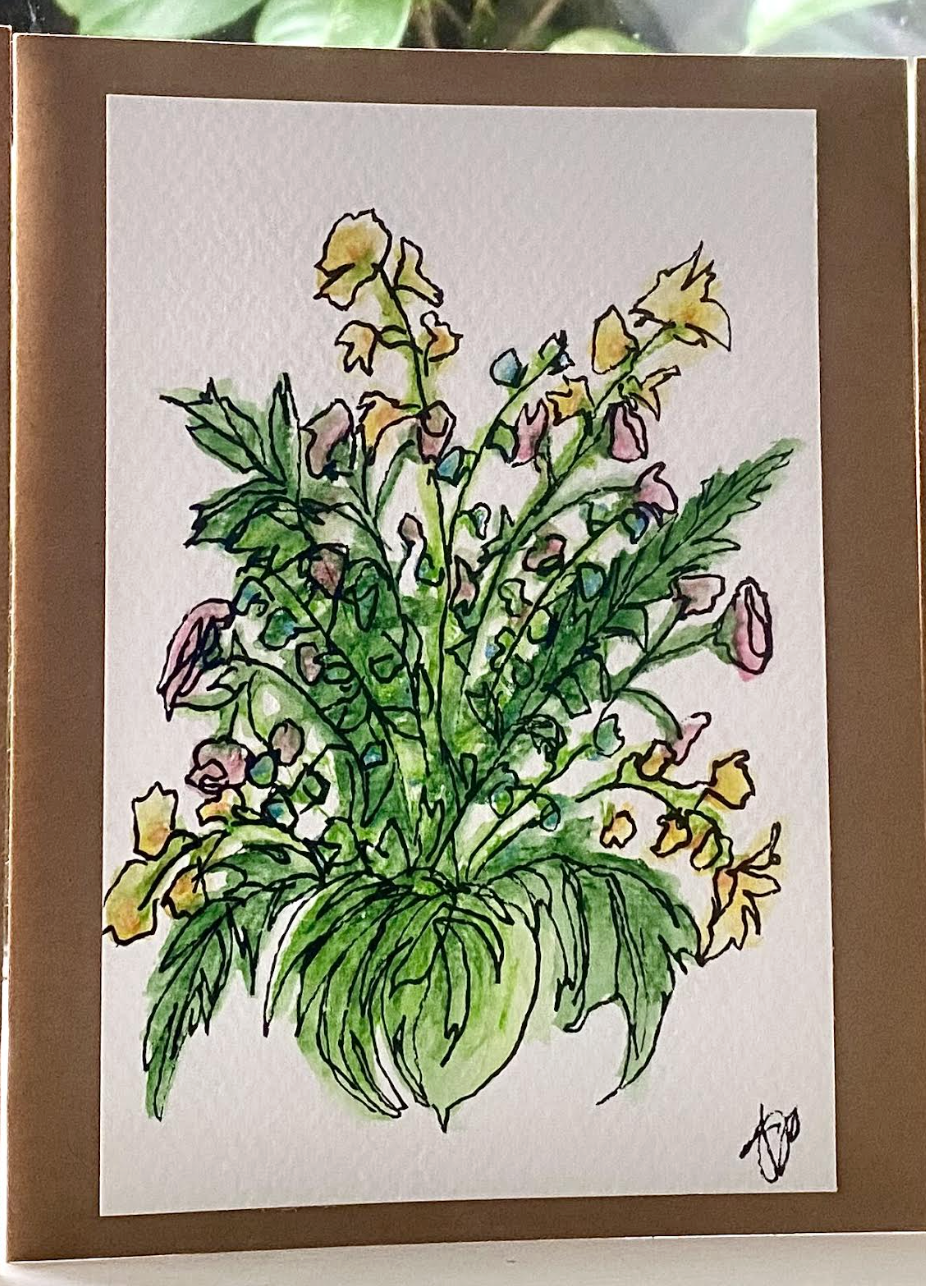
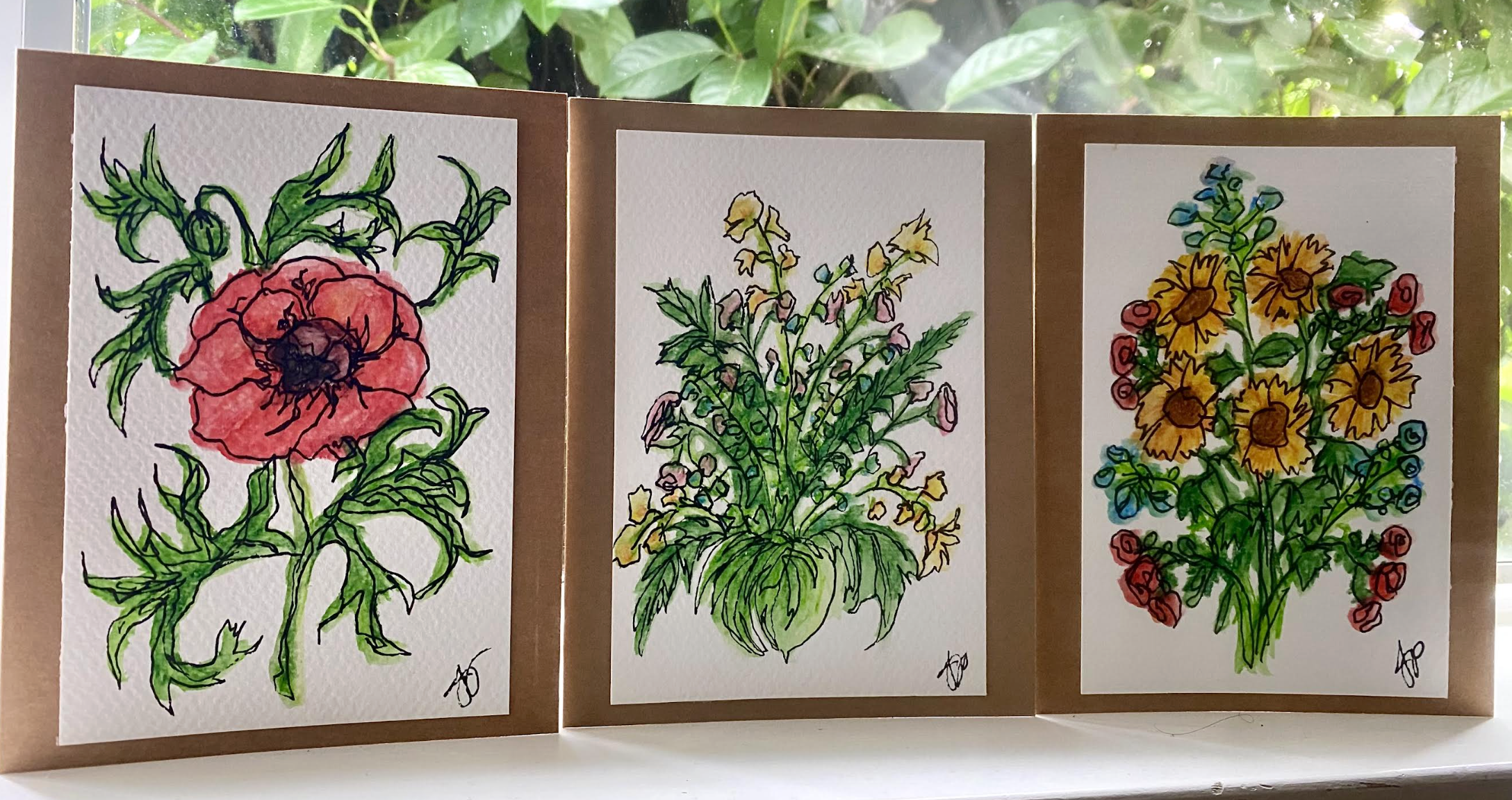
Sotheby’s hasn’t called yet, but these hand-painted original babies will be up for sale at the Silk Purse Arts Centre (West Vancouver) next month, and every penny I raise goes straight to World Central Kitchen and the Silk Purse Arts Centre.
World Central Kitchen provides meals to communities in crisis around the globe, and the Silk Purse Arts Centre, a local gallery and creative hub that keeps the arts thriving in my own community.
And I know what you’re thinking: “I could paint this.” And you probably could. But you didn’t. I did. And now you’re going to pay for it.
The critics have spoken:
“Her sunflowers are way better than mine.” — van Gogh
“Her brushstroke is so fluid and all over the place, and she doesn’t even drink.” — Pollock
“They’re useless. Not one ounce of political symbolism or intent.” — Banksy
“We would never think to shred.” — Sotheby’s
“They’re watercolour! No can of soup at these.” — Just Stop Oil Protestors
“They look better with the lights off.” — Ex-husband
Note: The experiences described here are my personal account and perceptions, based on communications, publicly available posts, and my own documentation. All evidence has been preserved, shared with trusted individuals, and provided to the appropriate authorities. This post exists to ensure there is a public record of my experience.
Patterns in Behavior In my last piece, I unpacked how Revolutionary Clinics blurred the lines between nonprofits, for-profits, and real estate trusts. That analysis was about structural crossovers. This one is more personal. It’s about what happens when the same pattern plays out in human behavior—when branding, identity, and trust are used as shields for something darker.
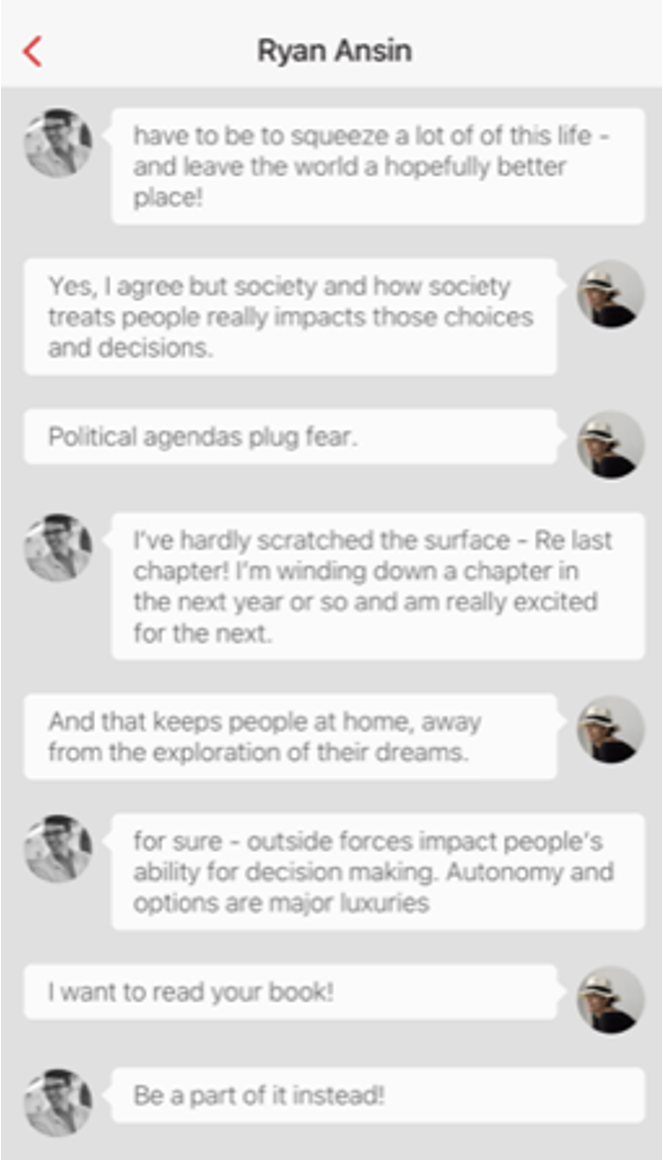
I first met Revolutionary Clinics Co-Founder and CSO, Gregory Ryan Ansin, in 2020 through the TED conference. He reached out to me by text and, on the surface, appeared charismatic and engaged, presenting himself as someone passionate about innovation. But what unfolded after that encounter felt very different. What began as a casual professional connection shifted into unwanted attention and behavior that I experienced as intrusive and harassing.
Text exchange July 2020 via TEDConnect App
The Role of Online Accounts: Part of that shift, in my view, involved an alternate Twitter account under the name “Gregorio Catarino” (@gregcatarino1). I cannot verify who operated the account, but its posts and timing gave me the impression it was linked to Mr. Ansin. From my perspective, the account appeared to communicate indirectly, outside of more public channels. Through its posts and reposts, I perceived that my activities online and offline were being closely watched. The effect was that I felt signaled to and monitored, which contributed to a growing sense of unease.
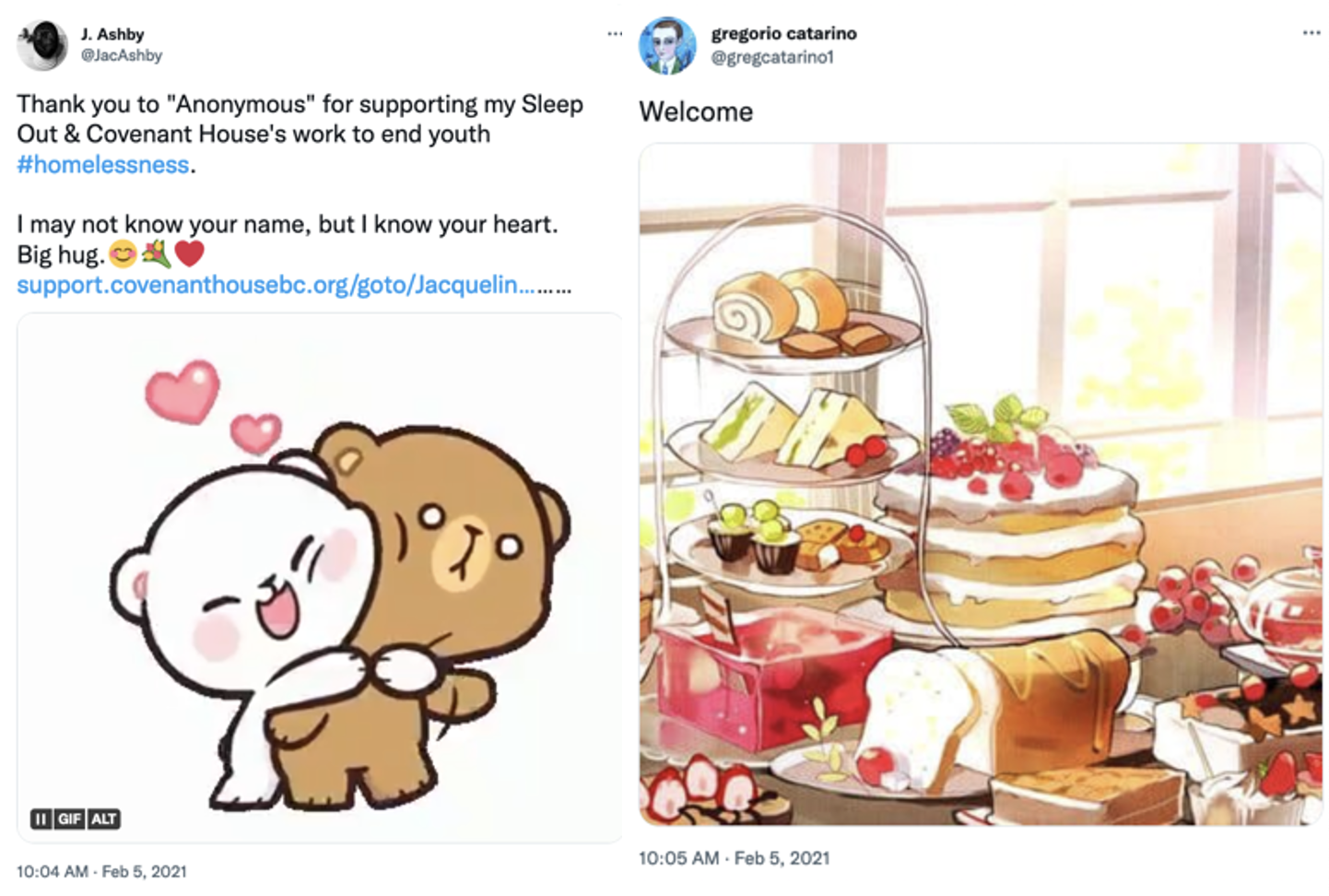
At 10:04 AM on Feb 5, 2021, I thanked “Anonymous” and the @gregcatarino1 account responded at 10:05 AM February 5, 2021 with “Welcome”.
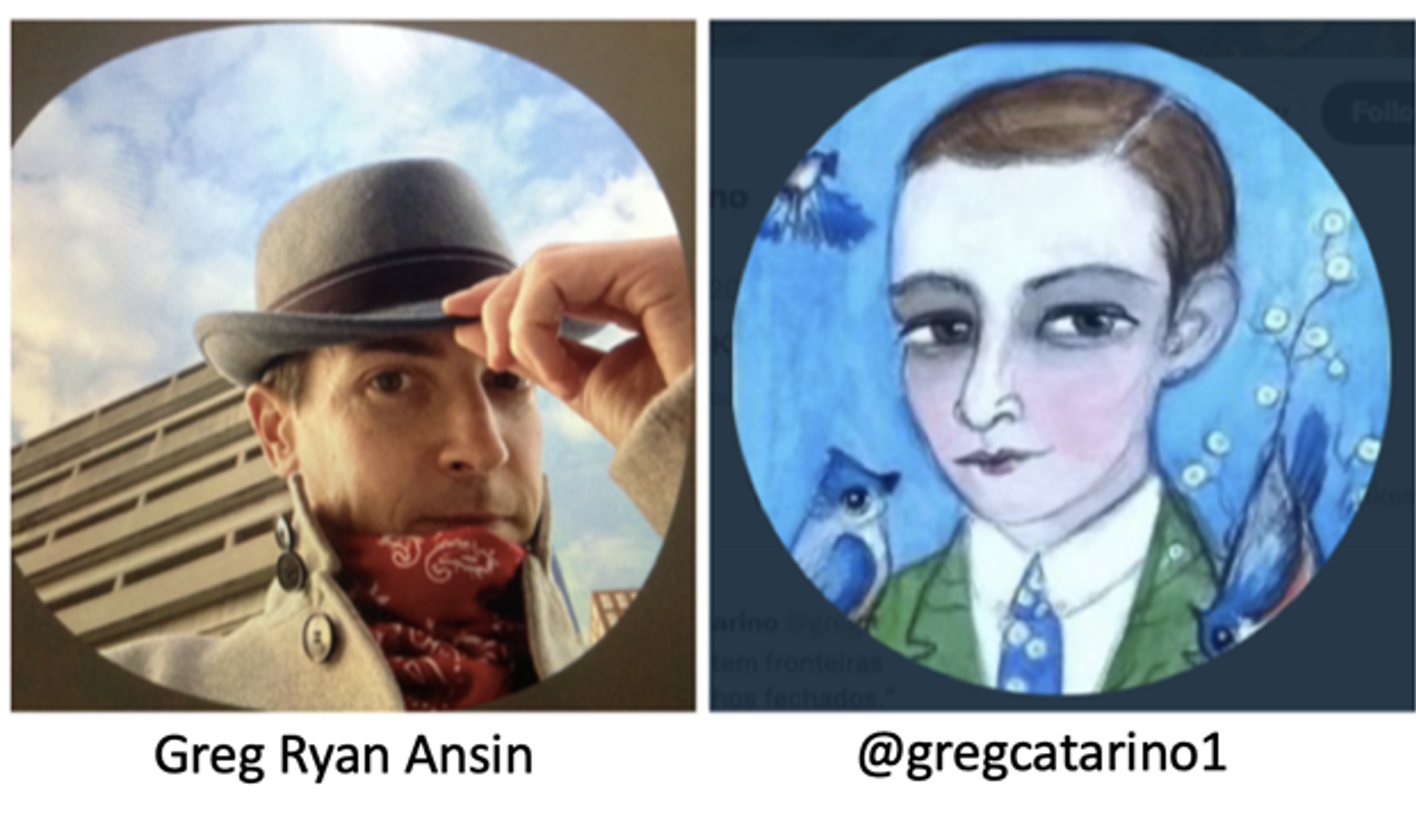
Visual Comparison In attempting to confirm for authorities who might be behind the @gregcatarino1 account, I compared publicly available images. On the left is a photograph of Gregory Ryan Ansin taken from his publicly visible Clubhouse profile. On the right is the profile image used by the @gregcatarino1 account.
I cannot verify who operates the Twitter account. However, the juxtaposition of these images, combined with the account’s content and timing, led me to form the impression that the account might be linked to Mr. Ansin. This impression is based solely on patterns I personally observed, not on any verified admission or proof.
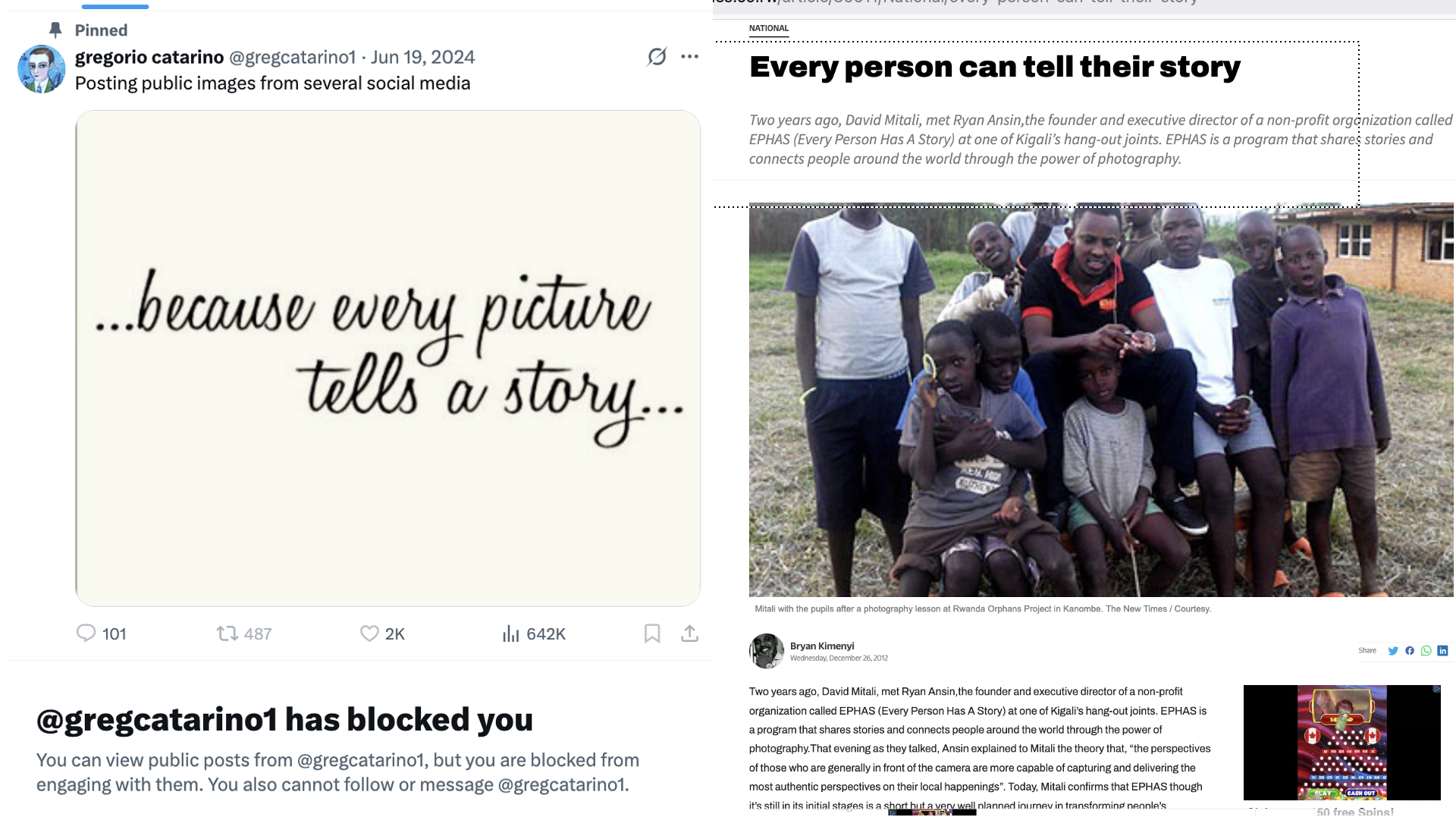
The @gregcatarino1 account also uses imagery and wording that appear strikingly consistent with older material associated with Ryan Ansin, including the pinned phrase “…because every picture tells a story…” and references to the “Every person can tell their story” article that addresses Ansin’s “Every Person Has A Story” (EPHAS) project (article linked here). Also noted, is that the @gregcatarino1 account has blocked me, a move that does not clarify the account’s ownership but does add another layer of suspicion to an already troubling pattern.
Another striking detail is the @gregcatarino1 account’s use of child-like, hand-drawn imagery, which appears visually consistent with the style used in Ojie the Honeybee: an allegory, a book published under the name G. Ryan Ansin. This does not, by itself, establish authorship of the @gregcatarino1 account. However, the overlap in visual style, paired with the language, themes, and broader pattern I documented, adds to the impression of a concealed but recognizable identity trail.
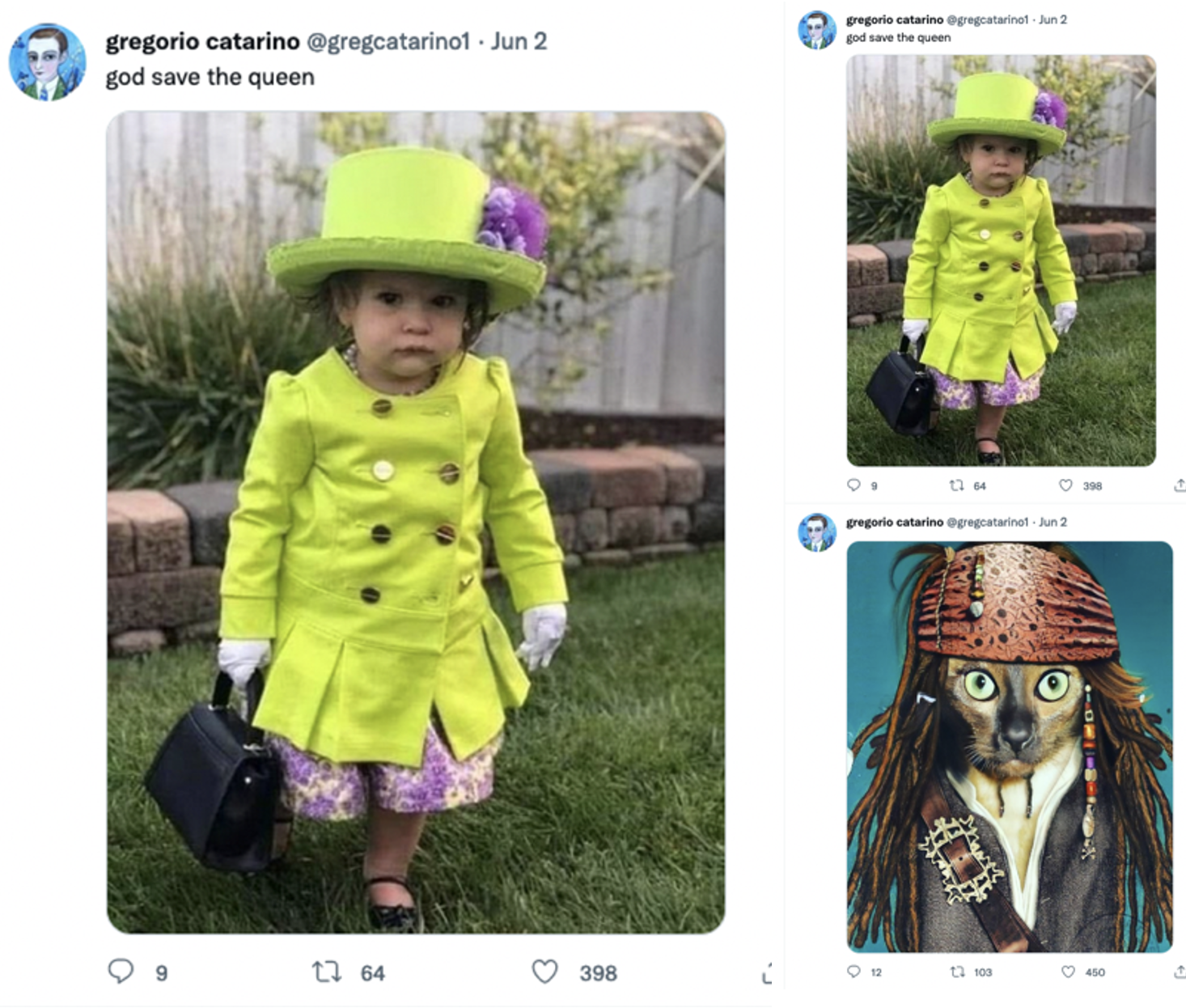
Personal Images and Identity Links Among the posts on the @gregcatarino1 account are images that appear to be personal in nature. For example, on June 2 the account posted a photograph of a young child dressed in a bright green outfit with the caption “god save the queen.” In earlier conversations, Mr. Ansin had told me that his wife was expecting a daughter that they later named “Eliza.” Directly beneath the child’s photo, the account shared an image of a cat styled as “Jack Sparrow.”
This combination of posts gave me the impression that the account was not simply anonymous but was being operated by someone with access to aspects of his personal life. While I cannot definitively verify who was behind the account, the presence of what looked like family-related images contributed to my perception that this profile was unlikely to be random or unrelated.
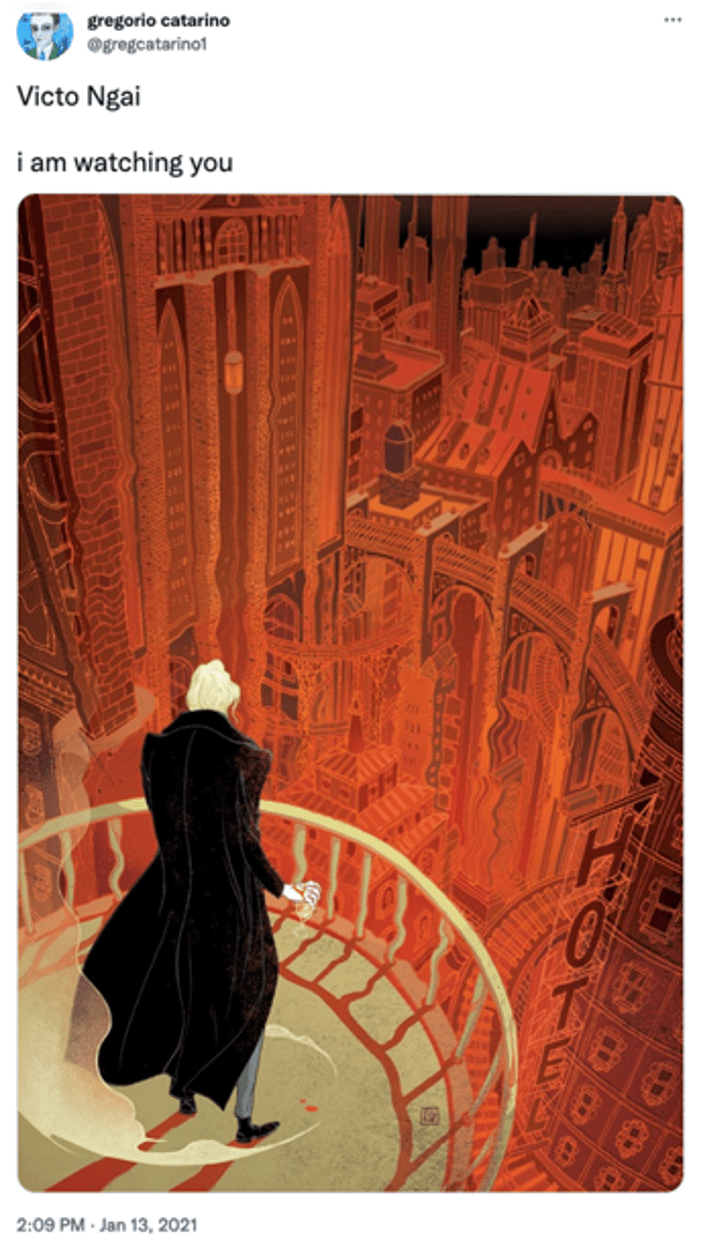
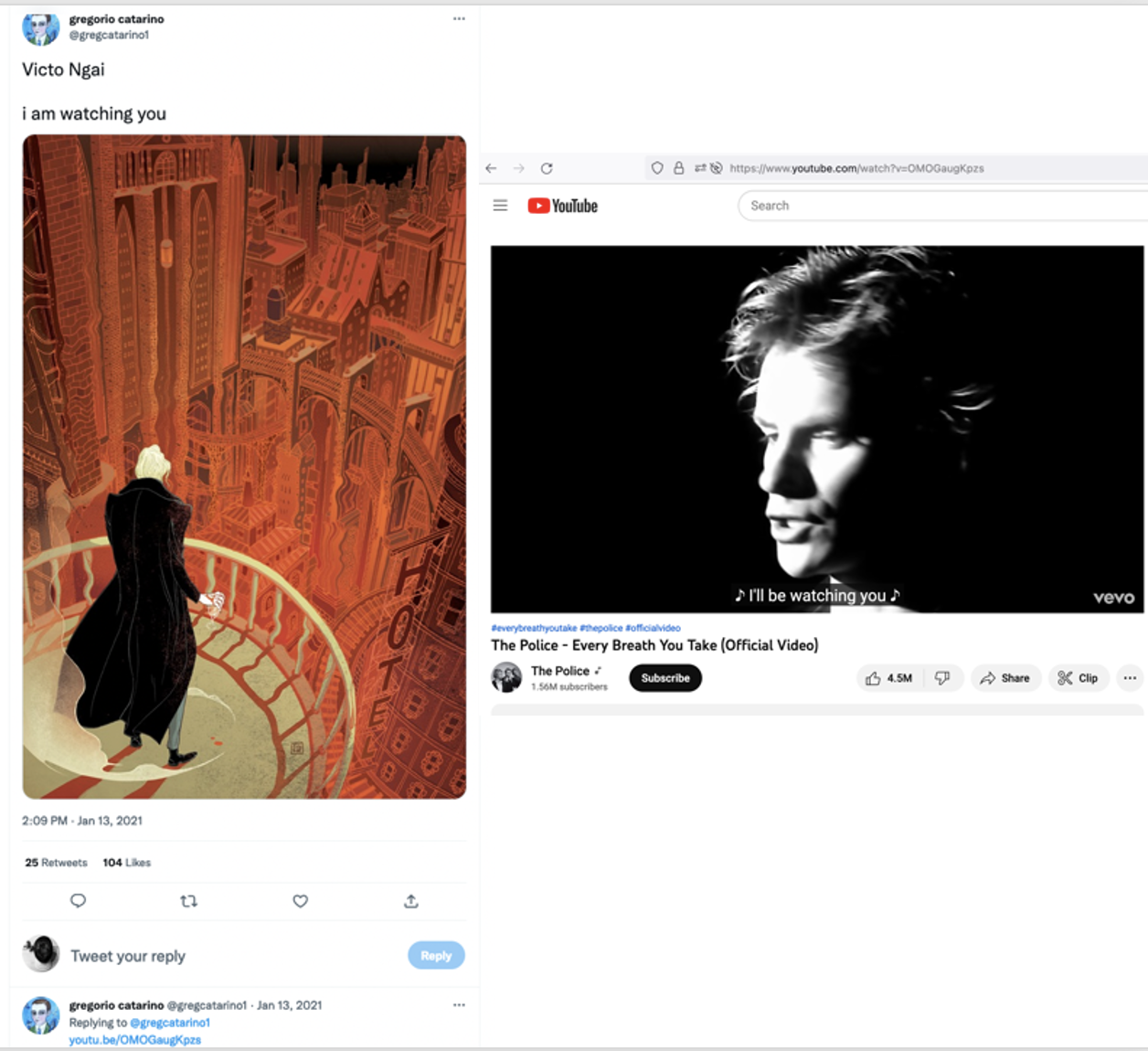
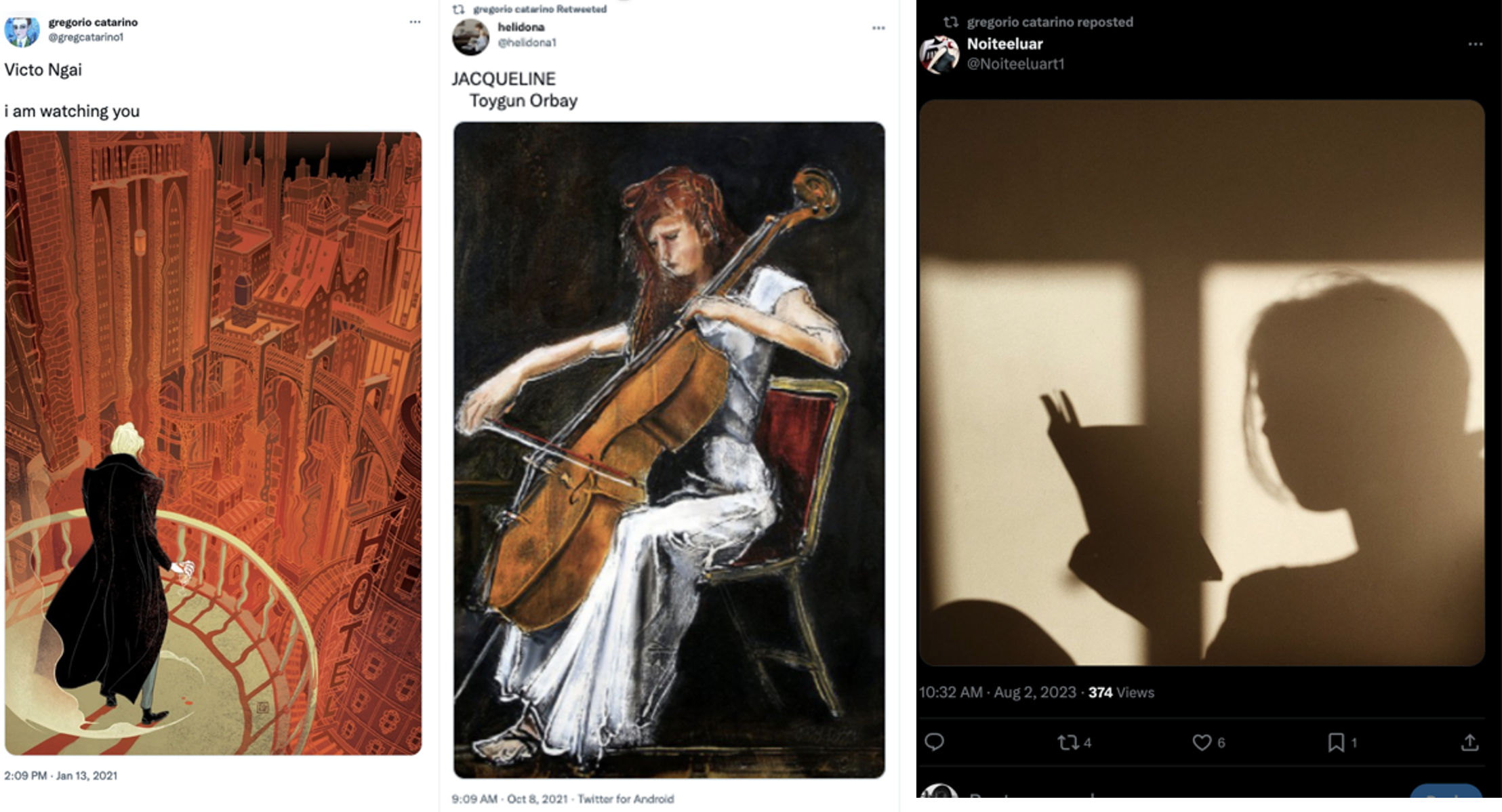
Visual Messaging The activity on the @gregcatarino1 account includes posts and reposts that, in the context of my experience, felt directed and unsettling. For example, one post paired the phrase “I am watching you” with an illustration of a lone figure looking over a city, alongside the song “Every Breath You Take” by The Police.
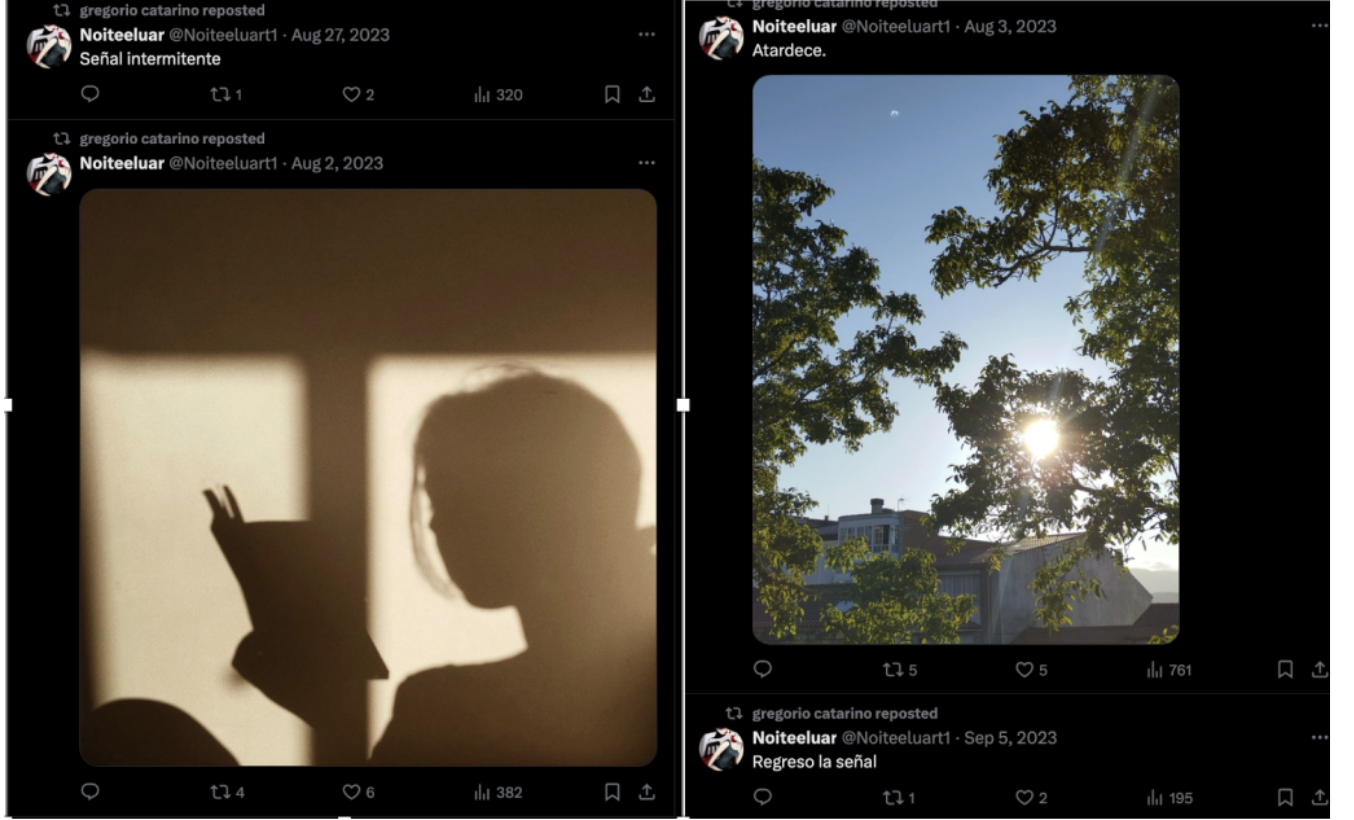
Another repost highlighted an image captioned with my name, “JACQUELINE,” beside a painting of a woman with a cello, which I had been playing at the time. A further repost by the account showed what appeared to be a silhouetted figure reading that resembled me; the background suggested it could have been taken outside my residence.
Individually, these posts might seem ambiguous. Taken together, they created the impression for me of presence, surveillance, and personal targeting. The imagery—watching from above, naming me directly, and shadow figures—reinforced my perception of being observed. While I cannot speak to the intent behind these posts, their cumulative effect was that I felt notified and monitored.
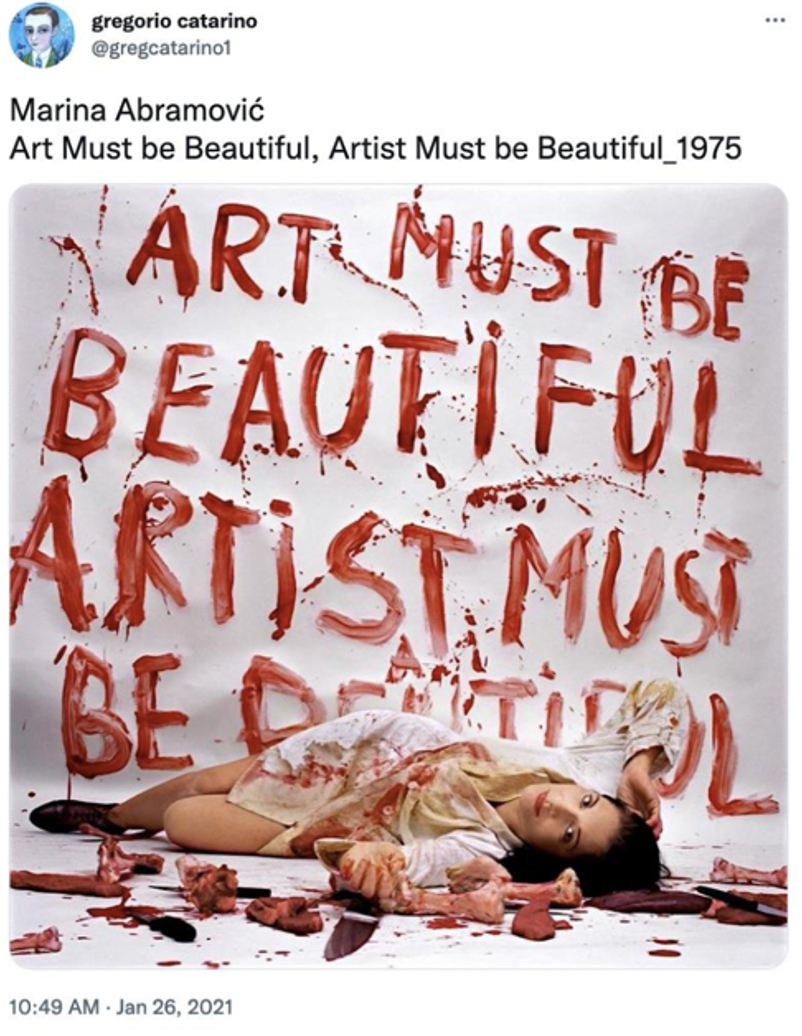
Escalation After Rejection Over time, the dynamic shifted further. I made it clear that I did not welcome his attention, the behavior appeared to escalate in ways that felt more aggressive. At one point, the online activity included disturbing imagery—such as violent art pieces and references that, in context, felt threatening to me.
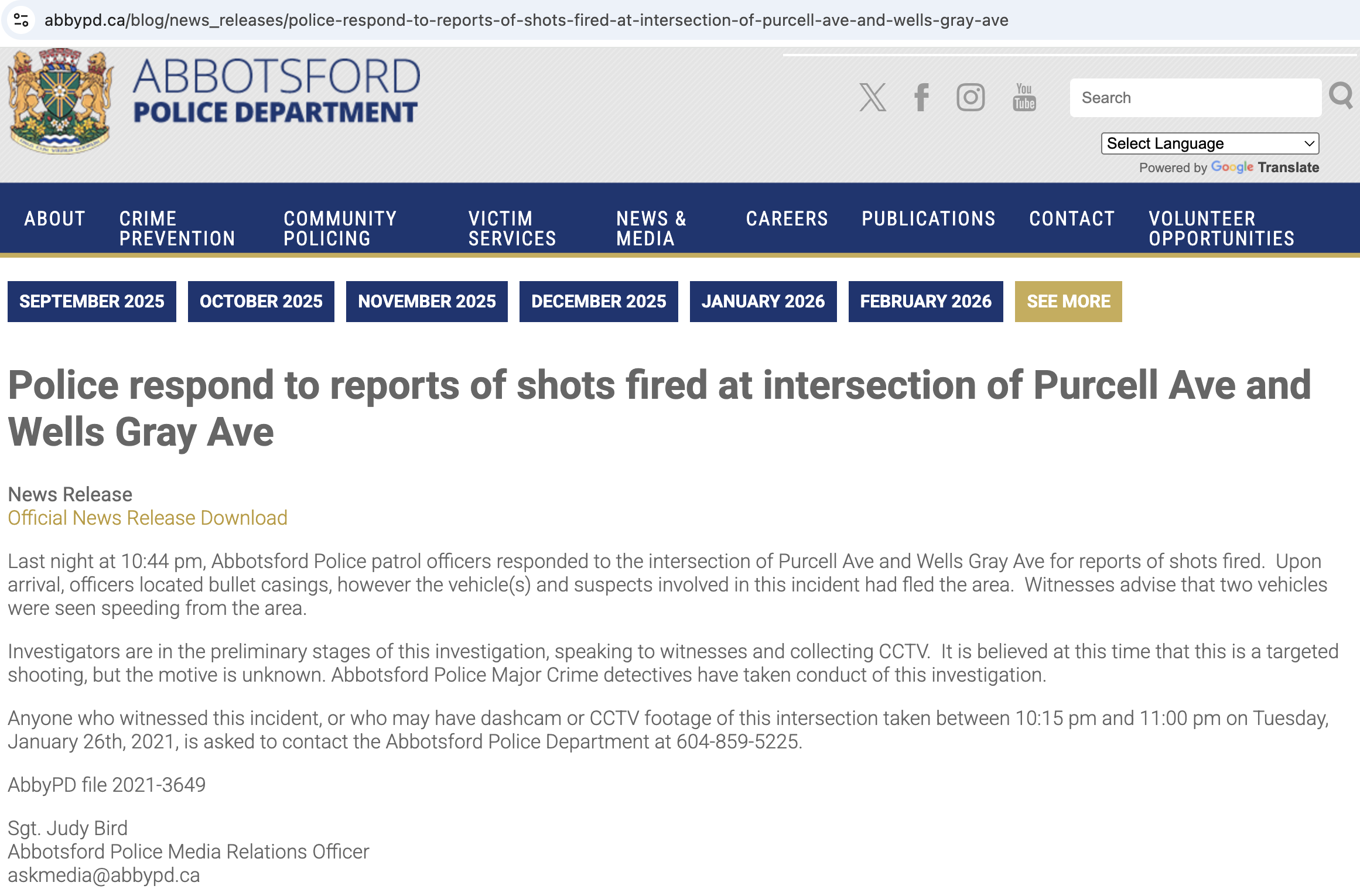
On the evening of January 26, 2021, there were local reports of gunshots fired near my home at the time (AbbyPD file 2021-3649), which heightened my sense of being unsafe.
While I cannot claim to know his intent or connect the online content directly to real-world events, the combination of these factors intensified my perception that rejection was being met with hostility. The effect was deeply unsettling, leaving me feeling vulnerable and targeted.
In an email correspondence with Mr. Ansin, he threatened to “send men my way” — a message I experienced as a direct threat. Following that, during my travels, I began encountering men waiting outside hotels where I was staying, including outside my hotel room doors. On one occasion, in January 2024, I was physically assaulted outside my hotel while attending the University of Oxford.
I reported these incidents in my conversations with authorities. I cannot verify whether the men I encountered or the assault were connected to his email or coordinated by him, but the timing and pattern left me with the perception that his threat was not idle. These experiences were deeply frightening and have had a lasting impact on my sense of safety.
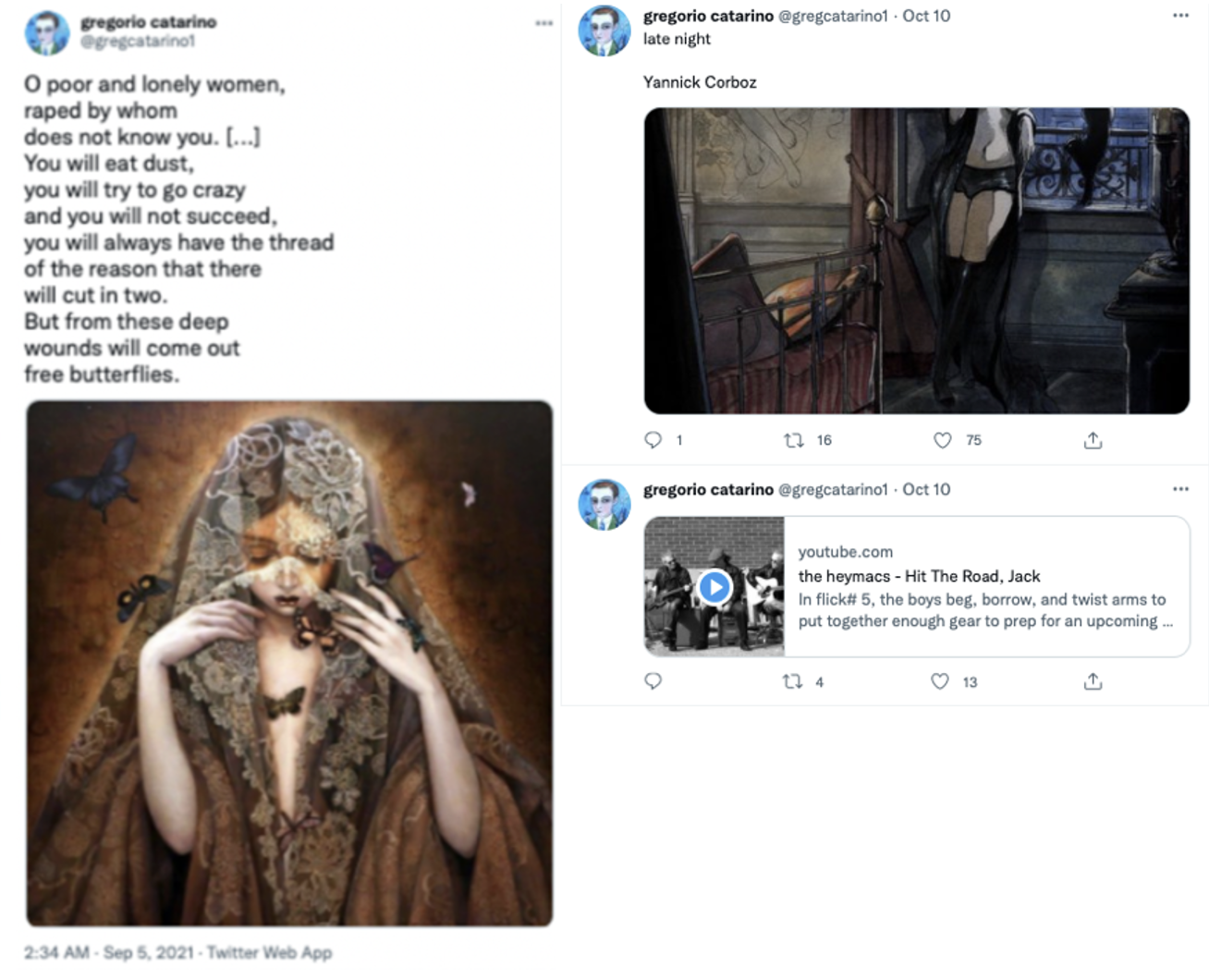
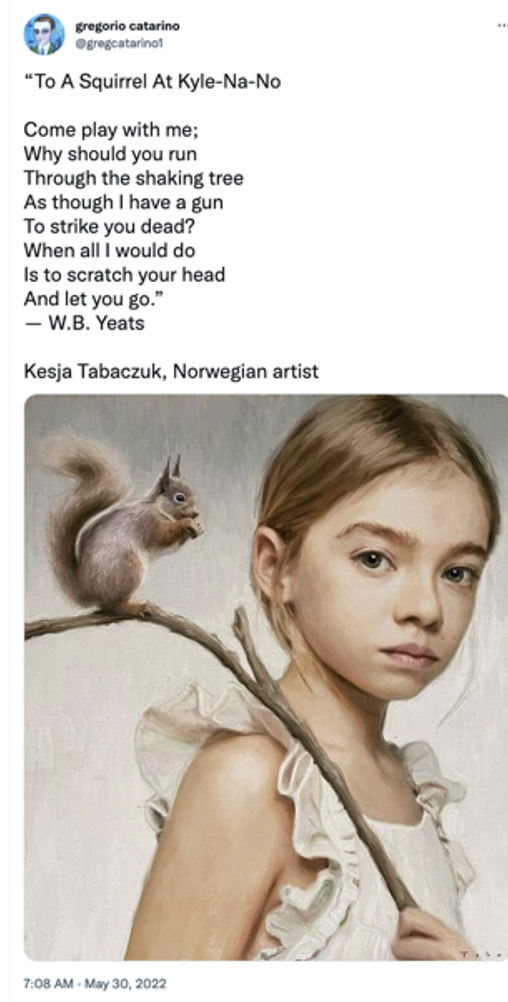
Continued References to Violence Another recurring theme on the @gregcatarino1 account is violent or disturbing imagery paired with poetry and art. For example, one post included a poem about women, “raped by whom does not know you… you will try to go crazy,” alongside an image of a veiled girl surrounded by butterflies. Another showed a woman leaning against a window in her underwear with the caption “Hit the Road, Jack.” A further post cited W.B. Yeats with the line “As though I have a gun to strike you dead” paired with a portrait of a young girl.
Individually, these posts could be interpreted as artistic expressions. But in the context of my experience—after unwanted attention had escalated—they read very differently. I cannot state what the intent of these posts was. What I can say is that their cumulative effect was deeply unsettling and reinforced my perception of being threatened.
Coordinated Signaling Another feature of the account activity that stood out to me is its pattern of reposting and interacting with other accounts, such as “Noiteeluart1,” and doing so in multiple languages, including Spanish. Posts included phrases like “Señal Intermitente” (intermittent signal), “Atardece” (it grows dark), and “Regresó la señal” (the signal returned). In the context of my experience, these interactions gave me the impression of coded messaging or signaling between accounts.
The account name “Noiteeluart” also caught my attention. Read quickly, it can resemble the phrase “naughty lude art,” which seemed consistent with the sexualized and suggestive imagery that often circulated in connection with @gregcatarino1.
While I cannot confirm intent, the choice of name contributed to my impression that the activity was layered and potentially coded.
I cannot verify whether there was any organized scheme or coordinated network behind this activity. What I can say is that the pattern of multilingual posts and repeated interactions deepened my perception that the communications extended beyond a single individual.
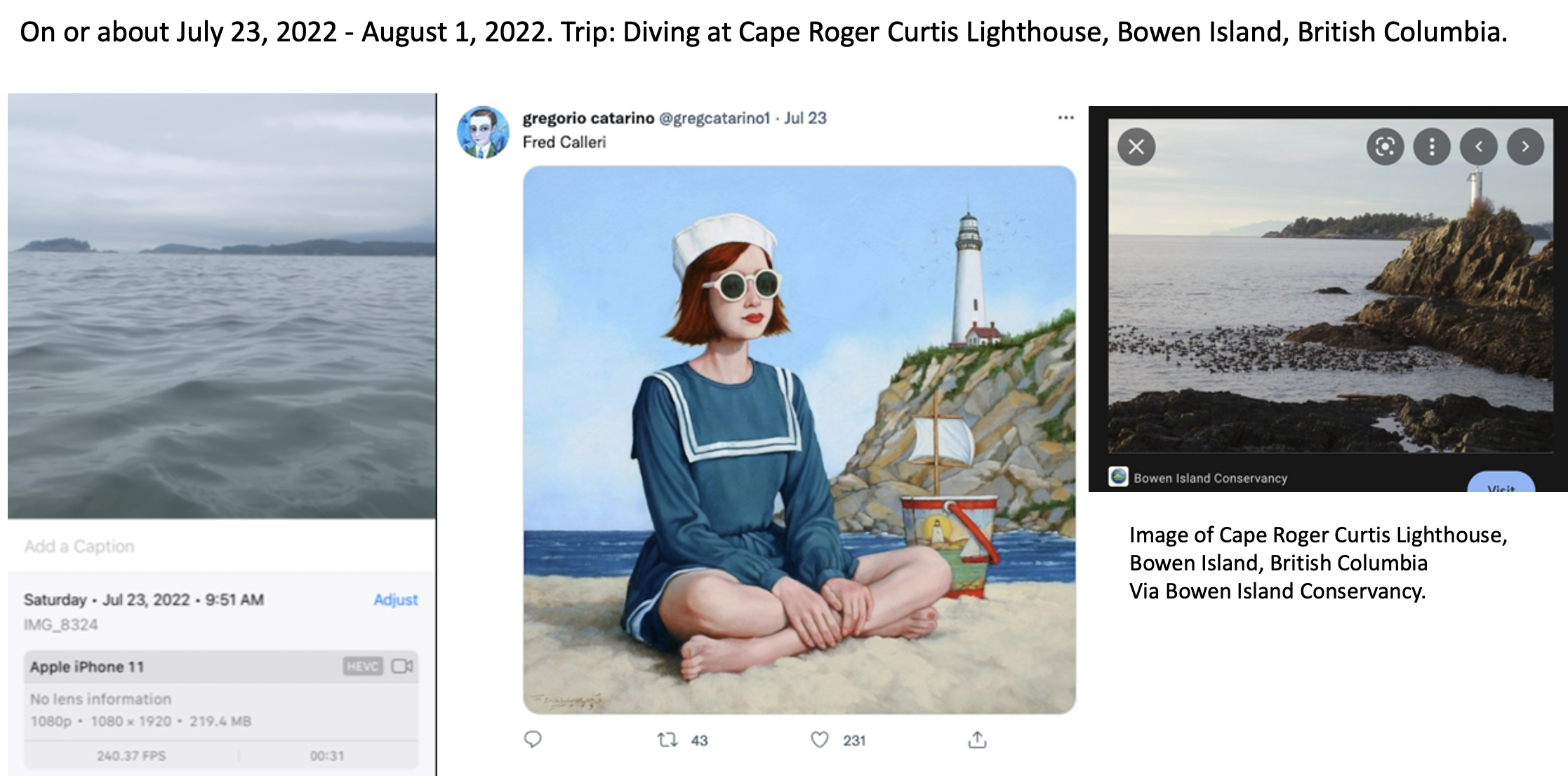
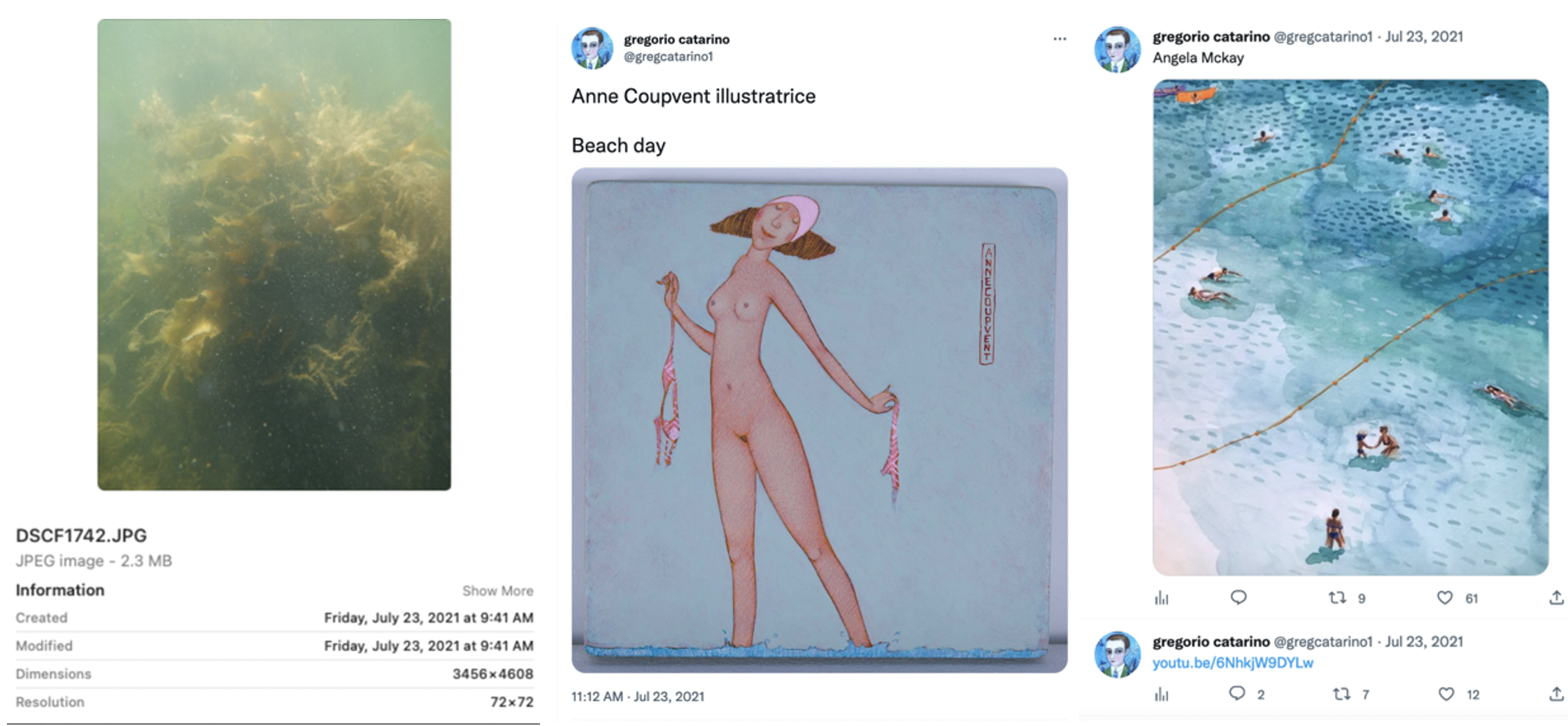
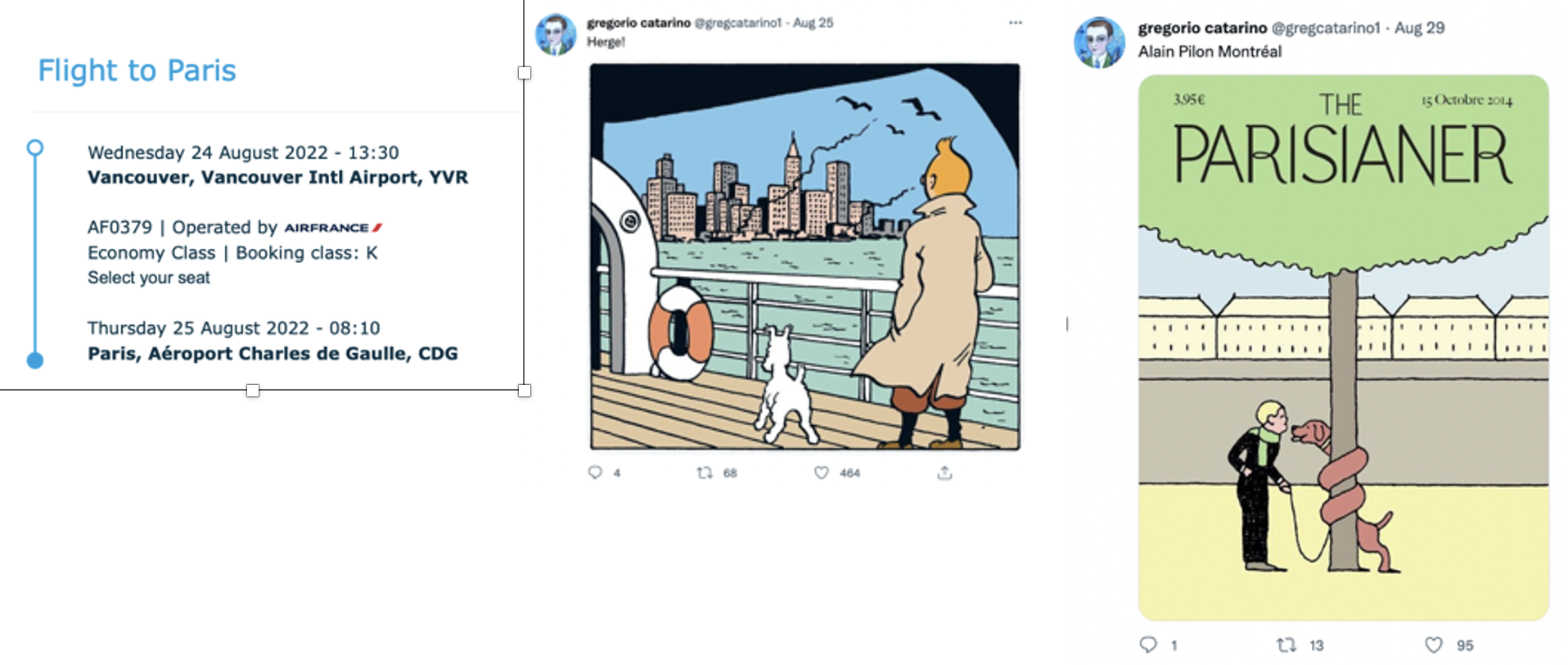
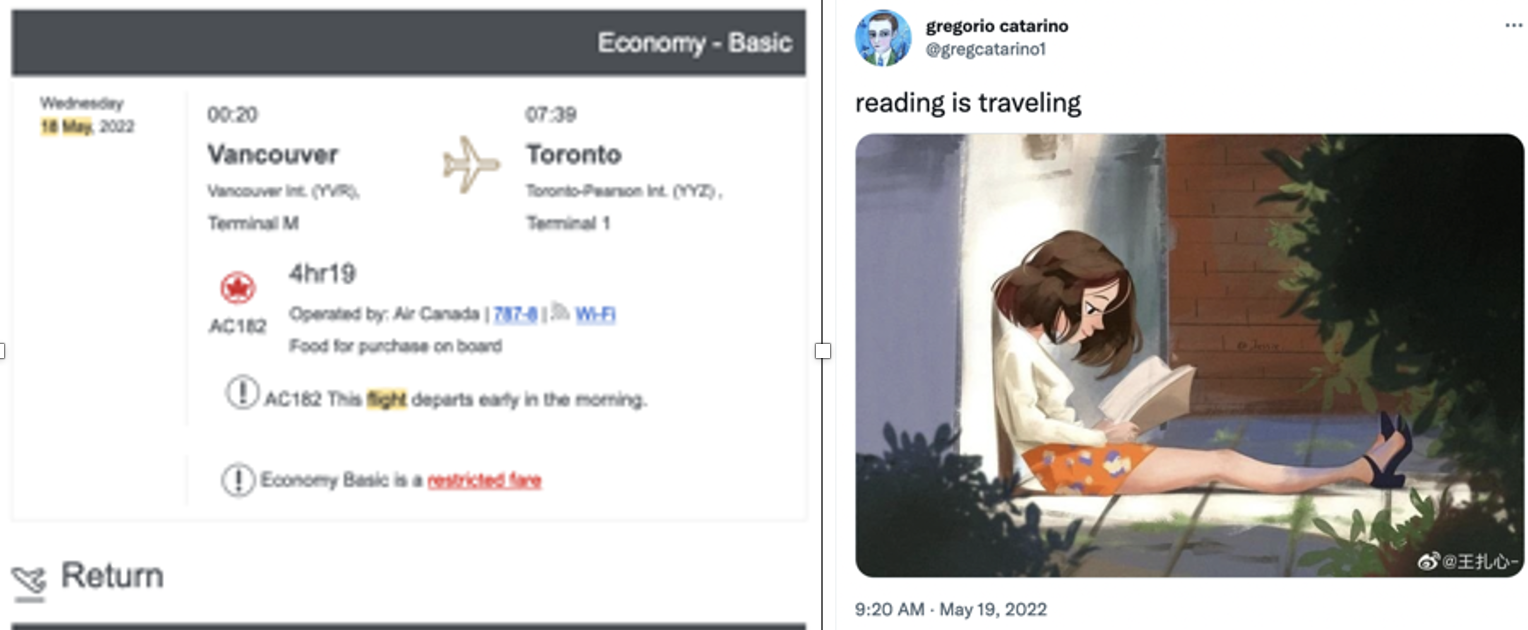
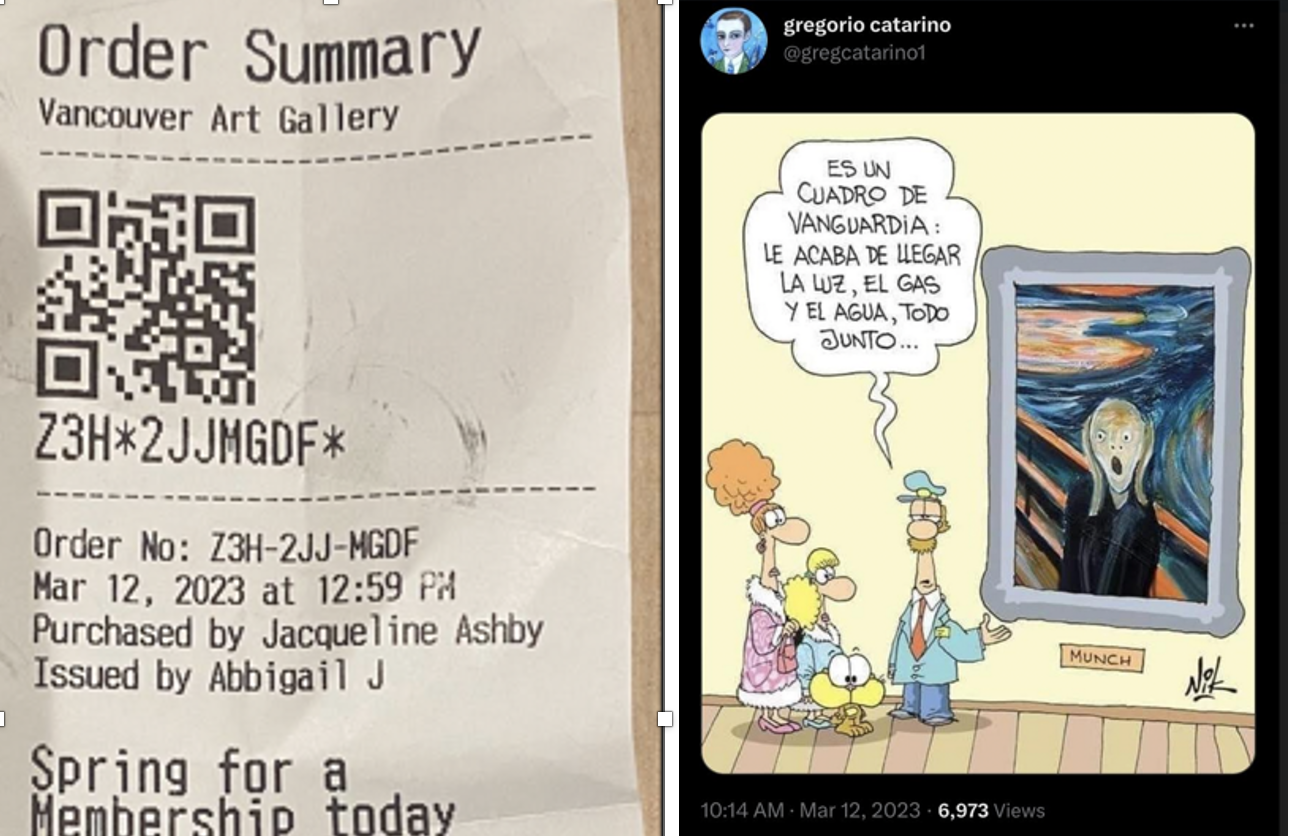
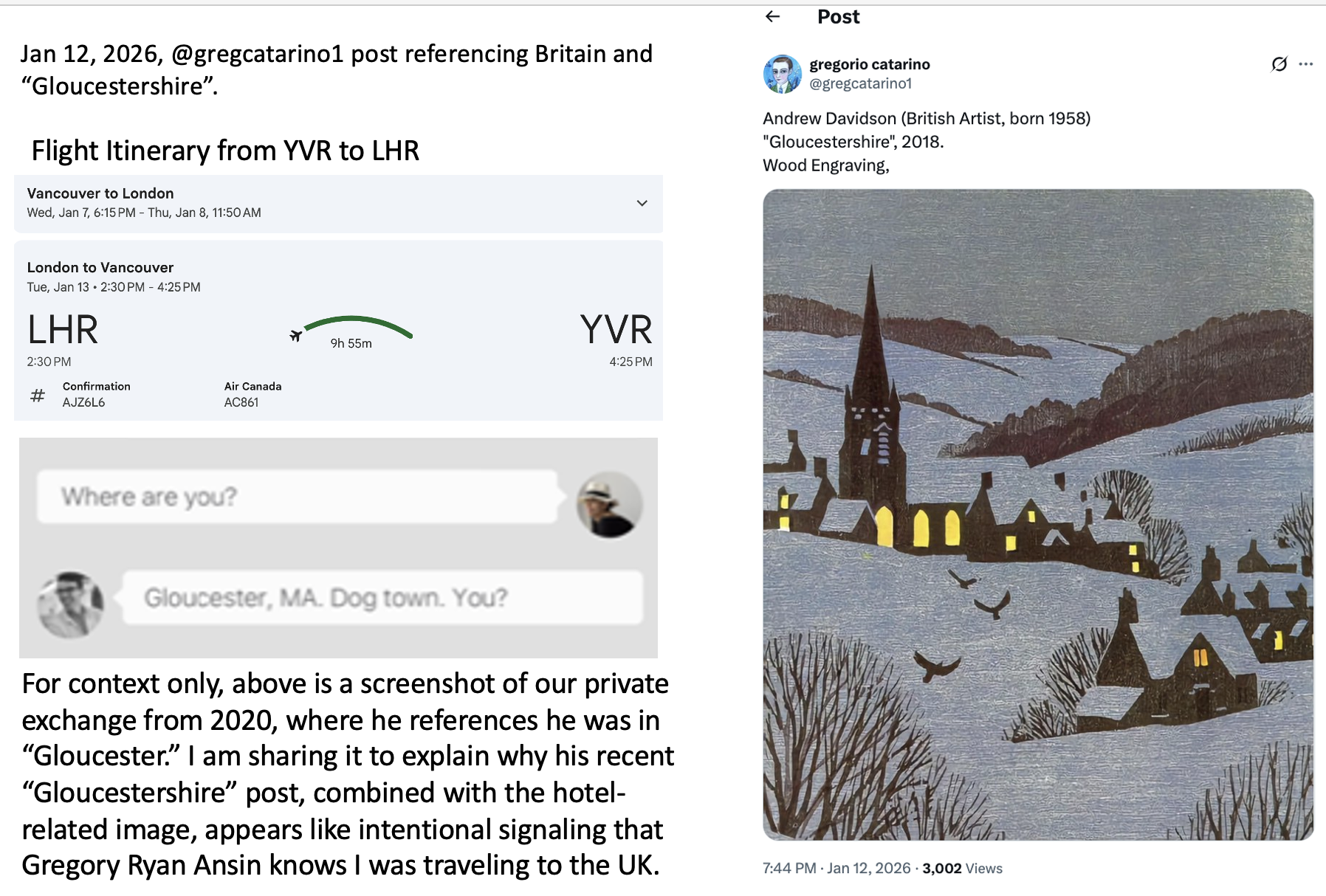
Posts Mirroring My Movements Over time, I began noticing that the @gregcatarino1 account was posting images and art that appeared to echo my own activities. For instance, on days when I took underwater photos or pictures from specific dates, the account posted oceanic or aquatic-themed art. Around the time of my scheduled flight to Paris, it posted illustrations referencing travel and Parisian imagery. Around the time of my visit to the Vancouver Art Gallery, it shared an illustration depicting people touring an art gallery.
Activities & Travel
Importantly, the details reflected in these posts, including my travel itinerary, were not information I had shared publicly. On their own, the posts might seem unrelated or coincidental. But in the context of my experience, the timing and themes felt like a reflection of my private movements. This gave me the impression that my activities were being tracked and referenced online. I cannot verify how the account might have had access to such information, or whether it was intentional, but the effect was that I felt watched, my privacy undermined, and my movements signaled.
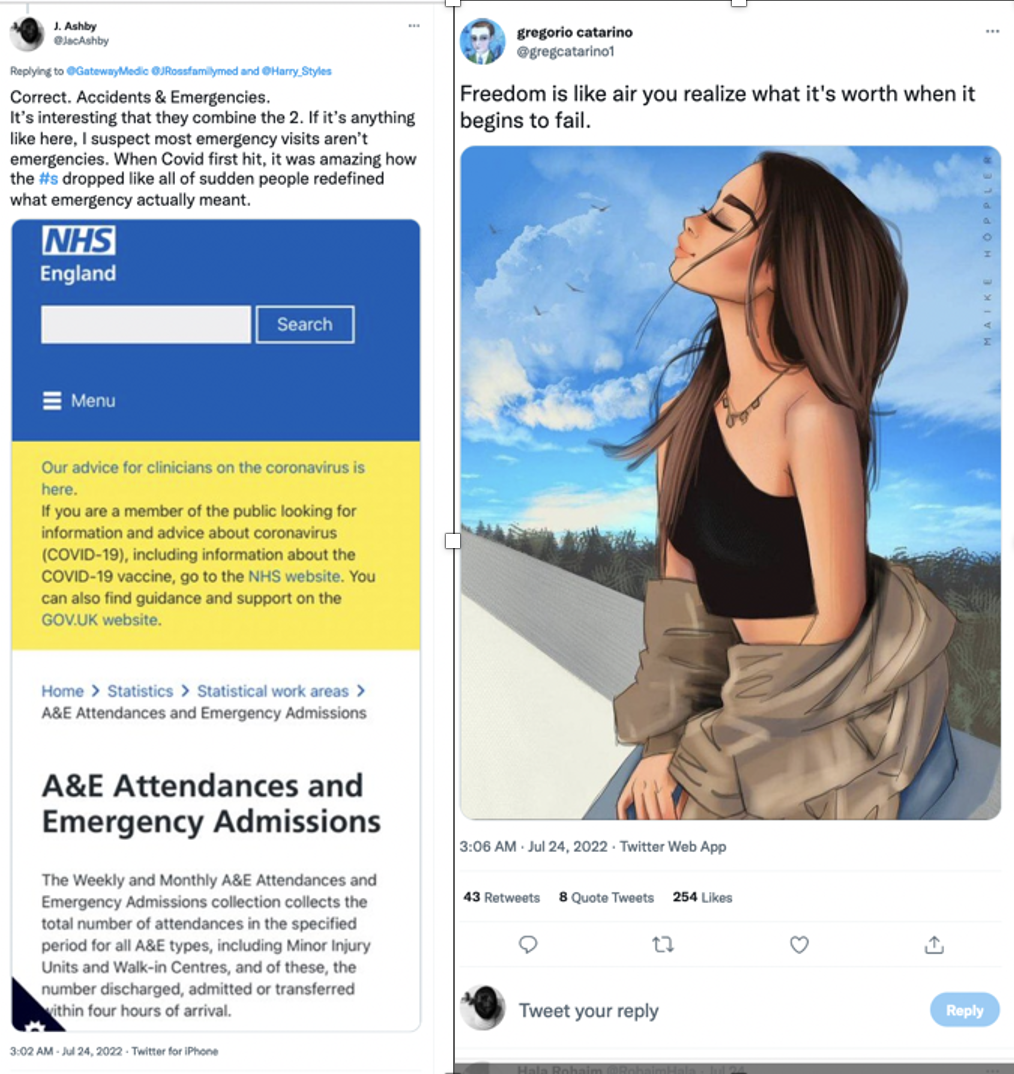
Testing the Timing & Stalking Behaviour On July 24, 2022, at 3:02 AM, I stepped outside onto my back patio because I was coughing. To timestamp the moment and see if there would be a response, I posted a tweet of my own. At 3:06 AM—just four minutes later—the @gregcatarino1 account posted an image of a young woman resembling me outdoors with her eyes closed, captioned, “Freedom is like air you realize what it’s worth when it begins to fail.”
I cannot know how or whether the timing was intentional, but in the context of my experience, the rapid posting and response reinforced my impression that my activities were being observed around my residence and echoed online.
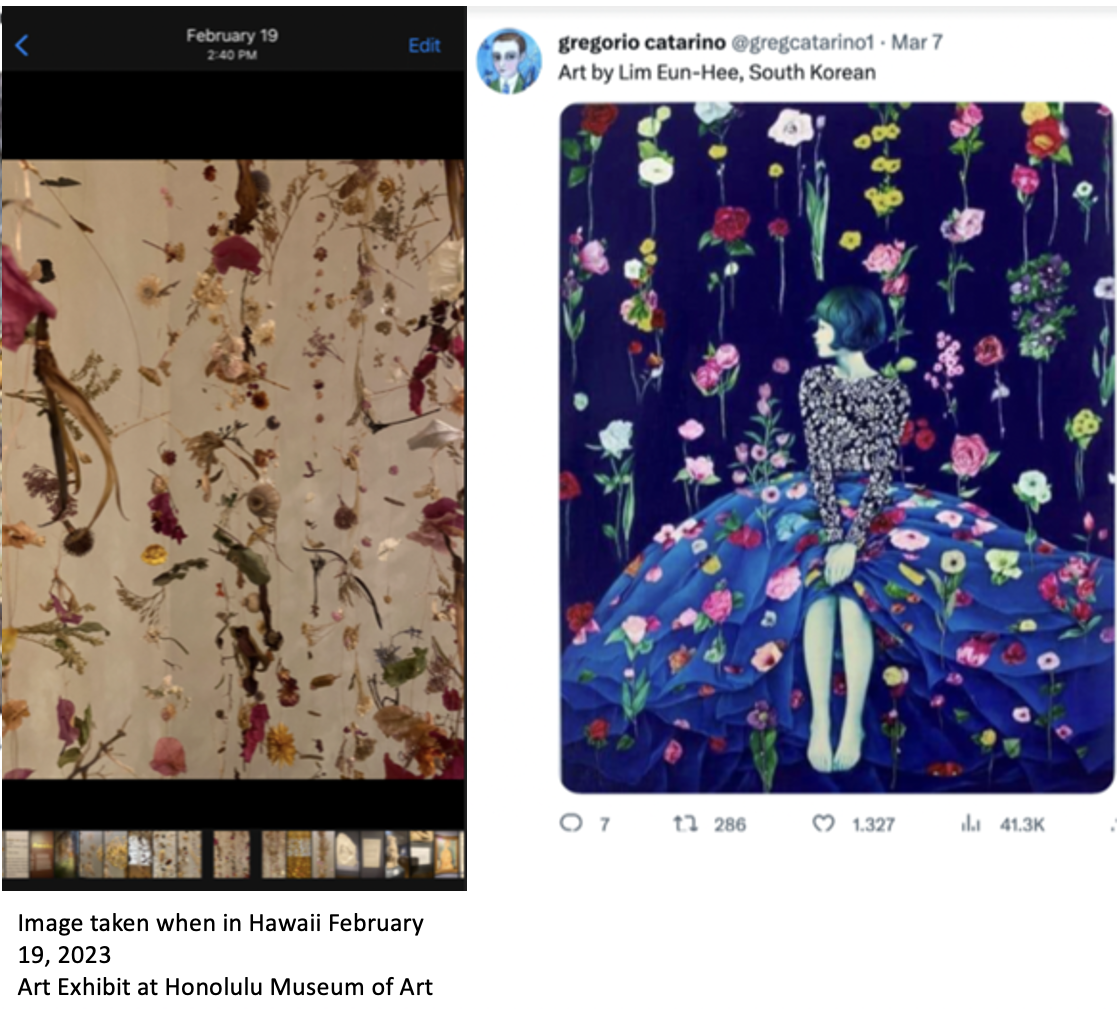
Posts Mirroring My Personal Phone Private Content Reflected Online Alongside the timing of these posts, I began noticing something even more unsettling: images and themes from my private life appeared to surface online soon after I had taken or saved them. For example, on February 19, 2023, I photographed an art installation at the Honolulu Museum of Art. Less than three weeks later, the @gregcatarino1 account posted artwork strikingly similar in composition and theme.
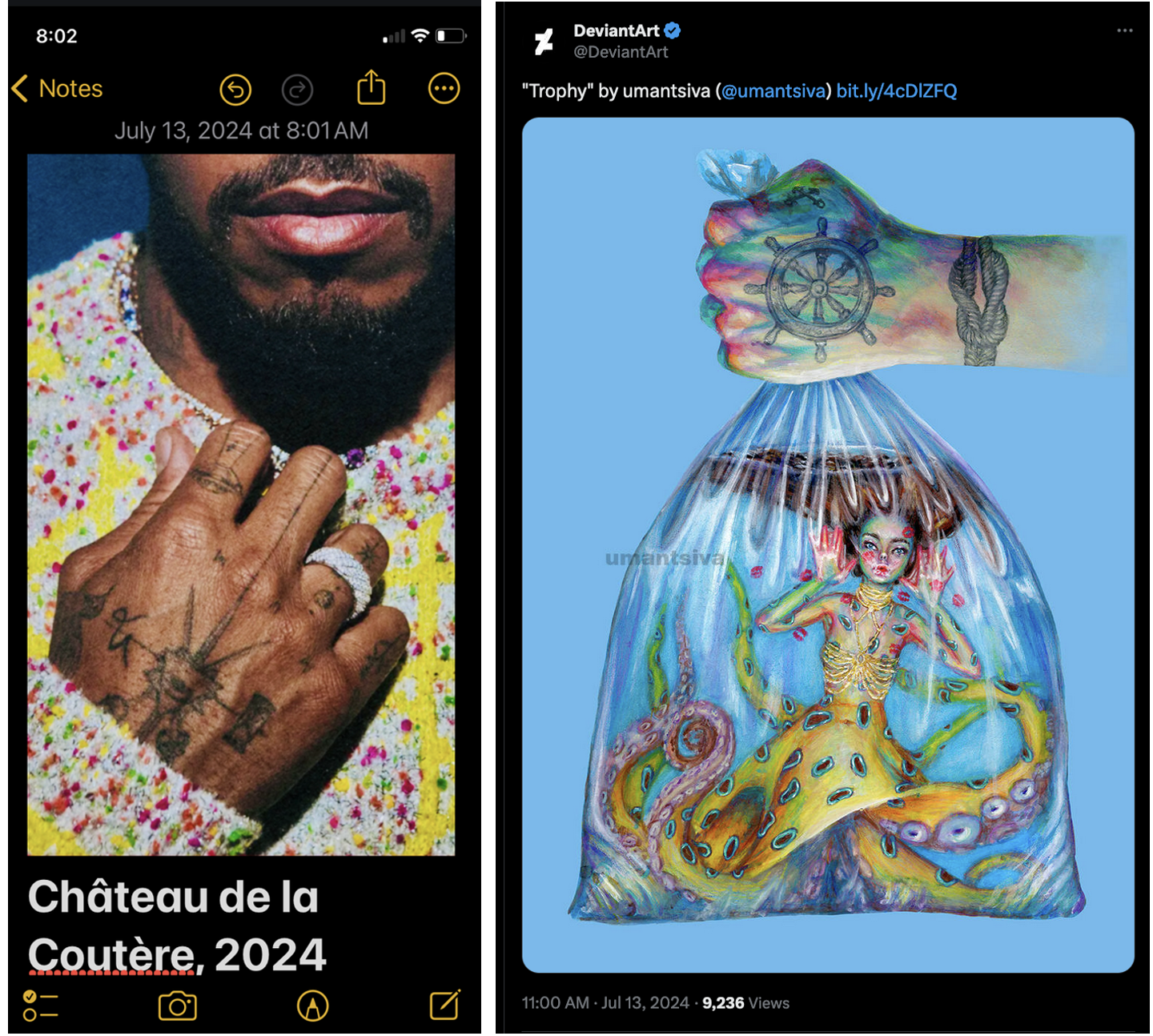
In another instance, a photo saved to my phone on July 13, 2024—showing a distinctive tattoo and nautical motif—was followed the same day, a few hours later, by a DeviantArt post of a drawing featuring an almost identical motif of a hand, a nautical wheel, and a figure submerged in water.
I have never shared these images publicly, which made their appearance in the form of themed posts and illustrations especially troubling. While I cannot verify how or why content resembling my private photos appeared online, or who was responsible for posting it, the pattern reinforced my perception that my personal life was being watched and my private content accessed and echoed back at me.
Escalating Signals After a series of violent incidents near my home, I relocated. The @gregcatarino1 account then began posting content that, to me, appeared to reference my new location and activities. On March 3, 2023, I received a missed call from a U.S. number. In the context of what had been happening, I interpreted that call as a signal to check the @gregcatarino1 account. When I did, I saw an illustration of a child holding bird postcards—the same type of postcards I had been creating at the time (link here)—captioned with a quote “I’m on my way.”
The next day, a cartoon of a man ringing a doorbell appeared with the caption “arriving,” and soon after another post showed someone peeking through blinds with the caption “closed Sunday.”
Individually, these posts might seem harmless or coincidental. But in the context of my experience, they felt like direct signals indicating travel to my direct location. I cannot verify the intent behind these posts, but their timing and imagery deepened my sense of being monitored and approached.
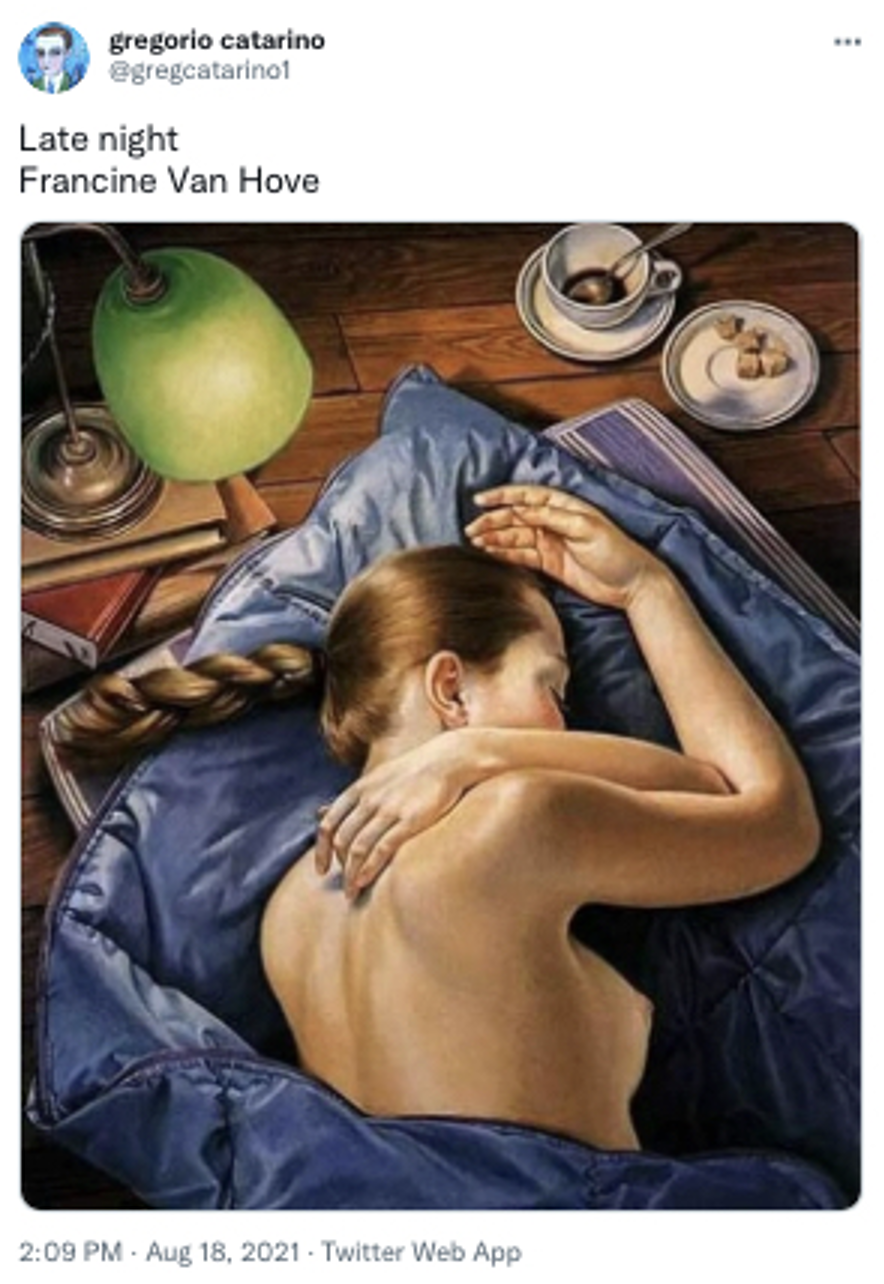
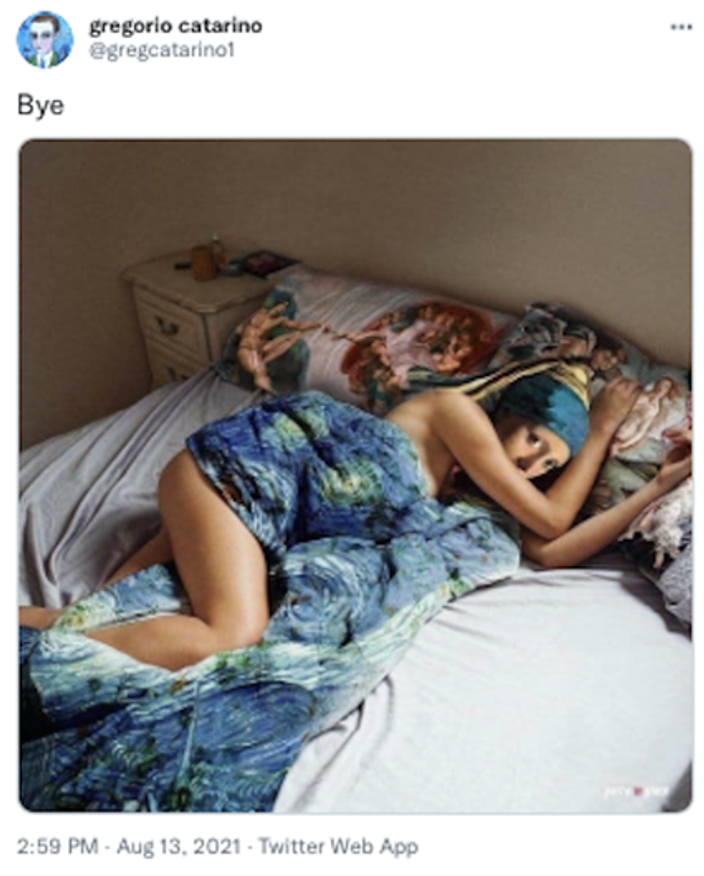
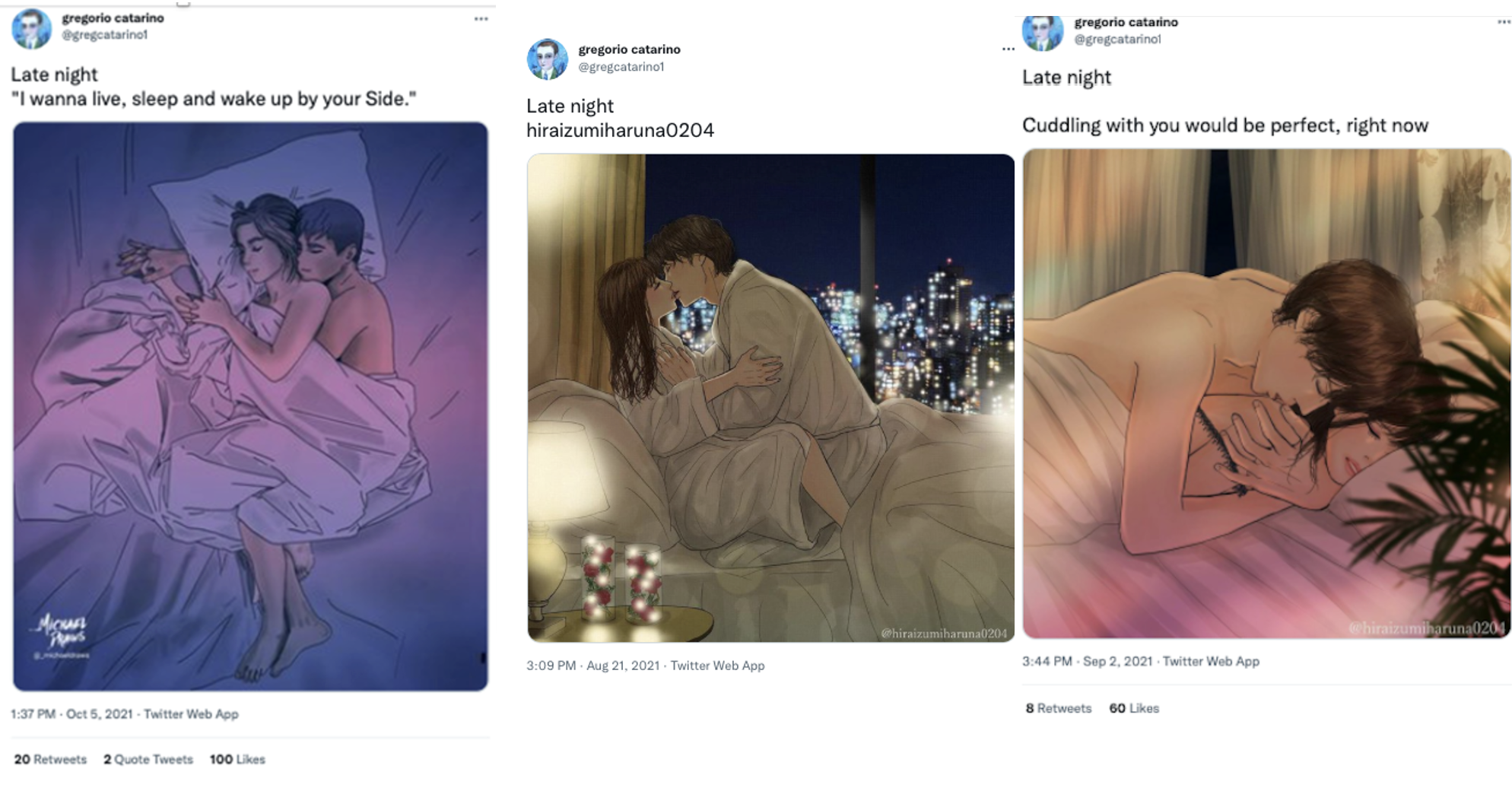
References to Sexually-Oriented Content The @gregcatarino1 account also frequently posted sexualized or intimate imagery. Examples included illustrations of couples embracing or in bed, and captions such as “Late night” and “I wanna live, sleep and wake up by your Side.” Some of the women depicted in these posts bore a resemblance to me, which heightened my discomfort.
Individually, these posts could be interpreted as ordinary art sharing. But in the context of my experience—especially following unwanted attention—they felt sexualized in ways that made me uncomfortable. The timing, the repetition of the “late night” caption, and the intimate themes contributed to my impression that the posts were directed rather than random.
I cannot know the intent behind these posts or whether they were actually aimed at me, but their cumulative effect heightened my sense of being sexualized and monitored online.
Patterns Across Platforms When I compared my TED conversation with Greg Ryan Ansin to the posts on the @gregcatarino1 account, I noticed striking thematic overlaps. In our messages, Greg described living life in “distinct chapters” and “experiencing deeply lots of things.” The Twitter account, in turn, frequently posted about “feeling deeply,” quoting Van Gogh and sharing artwork framed around tenderness and sensitivity.
Separately, Greg has a visible scar along his ear. The account’s profile image and some posts referenced Van Gogh—the artist famously associated with a self-inflicted ear injury—further echoing this theme.
I cannot definitively verify who operated the account. However, these repeated similarities between Greg’s private statements, his known physical characteristics, and the content of the @gregcatarino1 account contributed to my personal impression that the account might be linked to him.
Ansin’s Workplace Reputation: Lawsuits, Sexual Harassment, & Intimidation The issues described in this post weren’t limited to me. Public comments from former Revolutionary Clinics employees and community members describe the workplace plagued by harassment, poor treatment of staff, and unsafe working conditions:
In online forums, people recalled allegations of bullying, favoritism, racism, and misogyny. Others described one executive as “a real creep to the ladies who worked there” and someone who treated colleagues poorly:
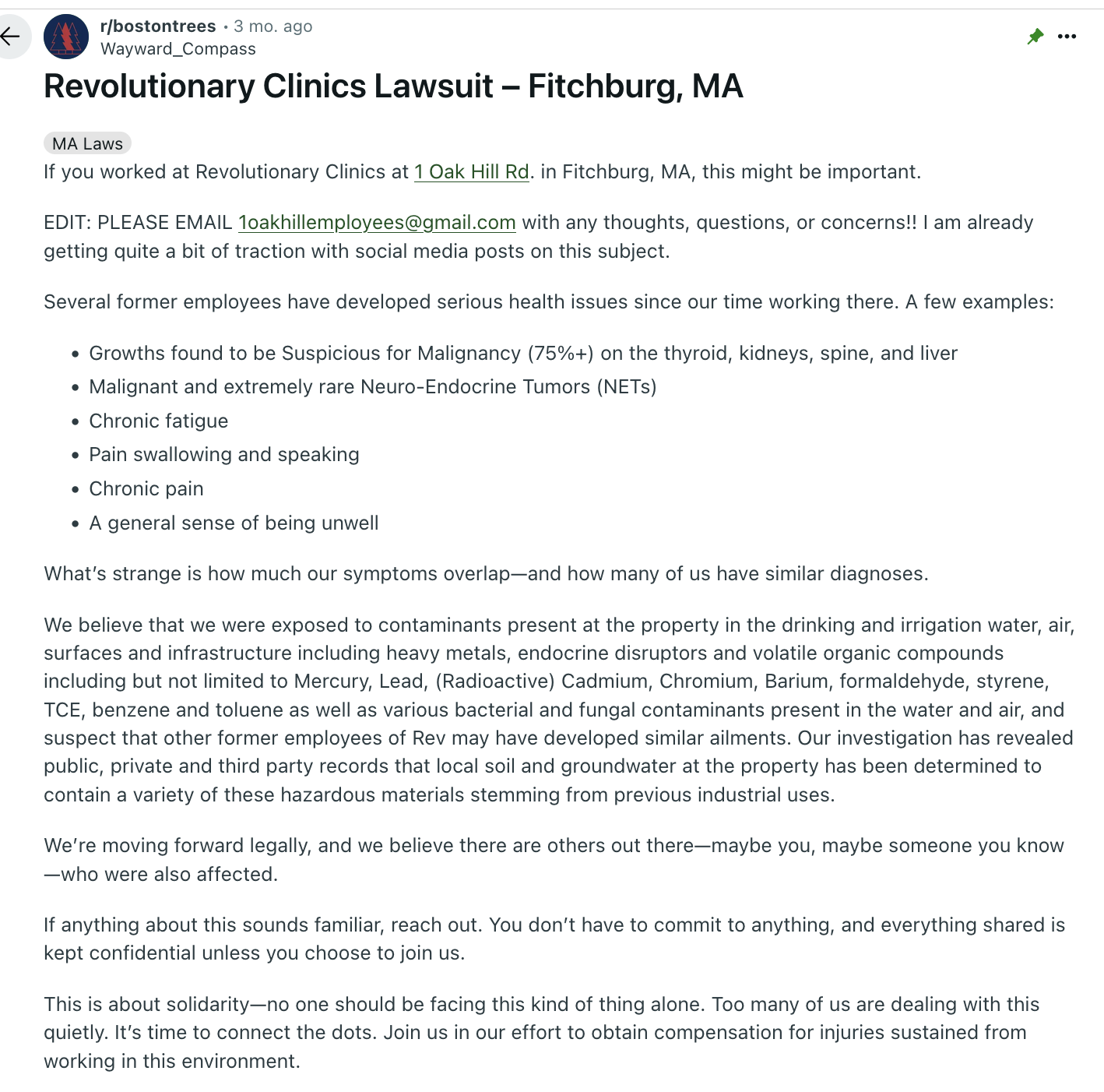
Local residents also voiced concerns about Revolutionary Clinics. Community meetings centered on issues such as odor complaints, safety worries, and the impact of the company’s operations on surrounding areas:
I cannot independently verify every claim made in those threads. However, the consistency of these accounts paints a troubling picture. A business that marketed itself as patient-centered and community-focused is remembered by many of its own workers and community members as a place of exploitation, hostility, and neglect.
Workplace Reputation: United States Securities & Exchange Commission Federal Forms
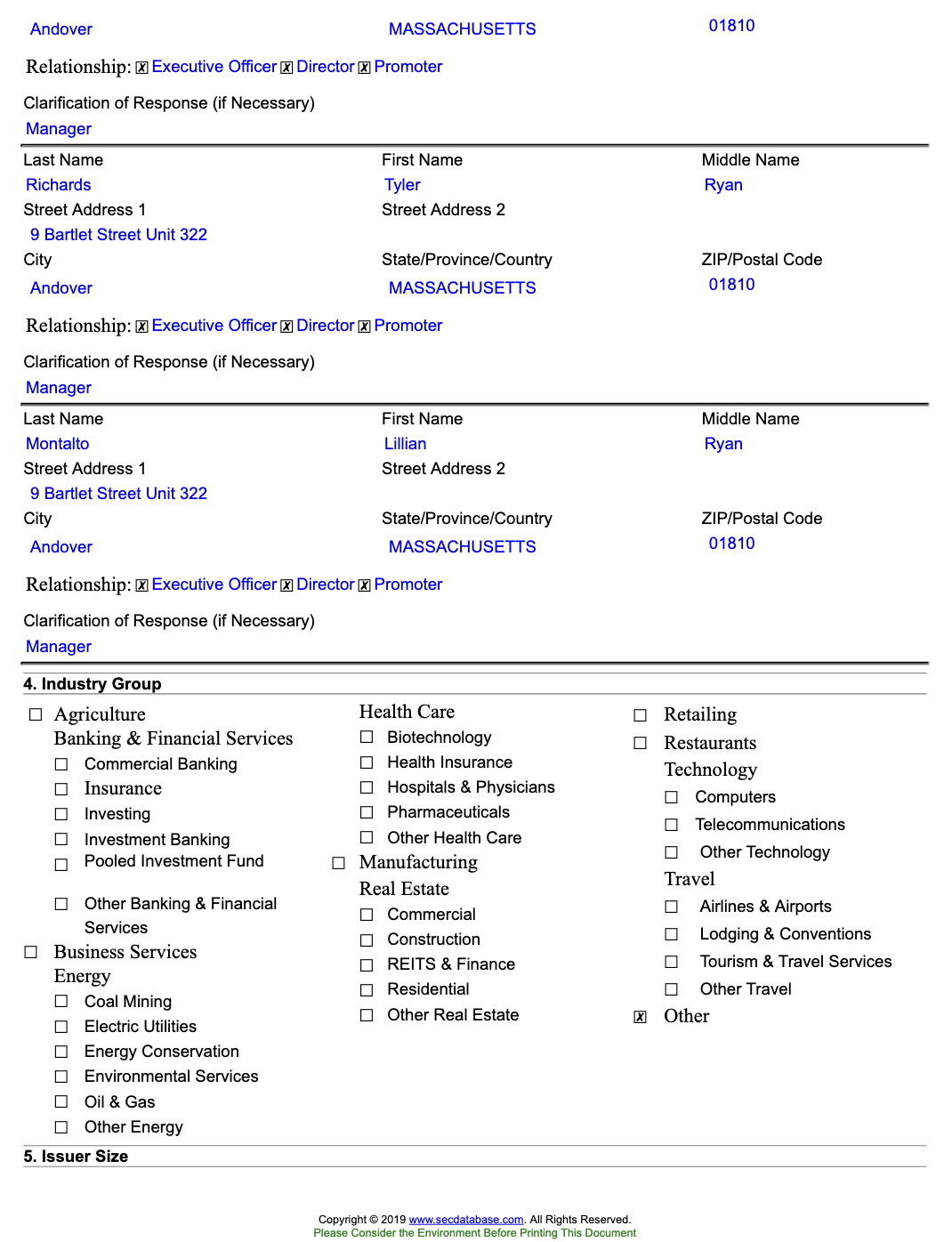
Also, in reviewing the company’s publicly accessible SEC forms, I observed that in the SEC Form D (2019), his middle name, “Ryan,” appears in every slot where a middle name is requested. This repeated use of the middle name “Ryan” appears irregular and may be inconsistent with standard SEC reporting practices. I am providing this information so that authorities can compare it with additional filings and any related records to determine whether the form was accurately and honestly completed and whether further review is warranted.
For comparison, please see the middle names of the individuals below in SEC Form D 2018 (link here):
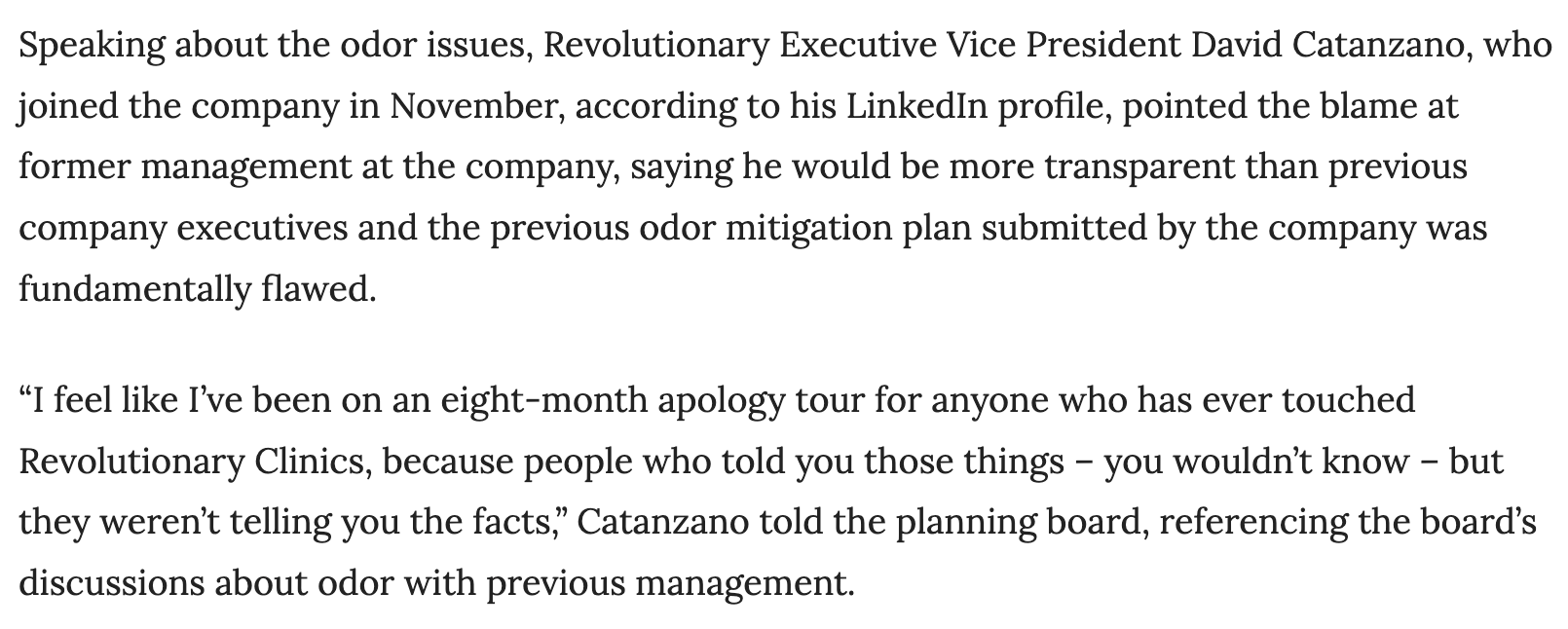
Ansin’s Workplace: A Pattern of Deceit and Misrepresentation At a public meeting, Revolutionary Clinics’ Executive Vice President David Catanzano admitted that the company’s prior operations and odor mitigation plan were “fundamentally flawed,” blaming former management and describing himself as being on an “eight-month apology tour” because “people who told you those things…weren’t telling you the facts.”
For me, this public statement reinforced a pattern I had already experienced personally. Just as the company’s leadership presented one image to the public while concealing flaws and failures behind the scenes, my own interactions with Greg Ryan Ansin followed a similar arc — a charismatic, public-facing persona contrasted sharply with private behaviors that felt manipulative, deceptive, and threatening.
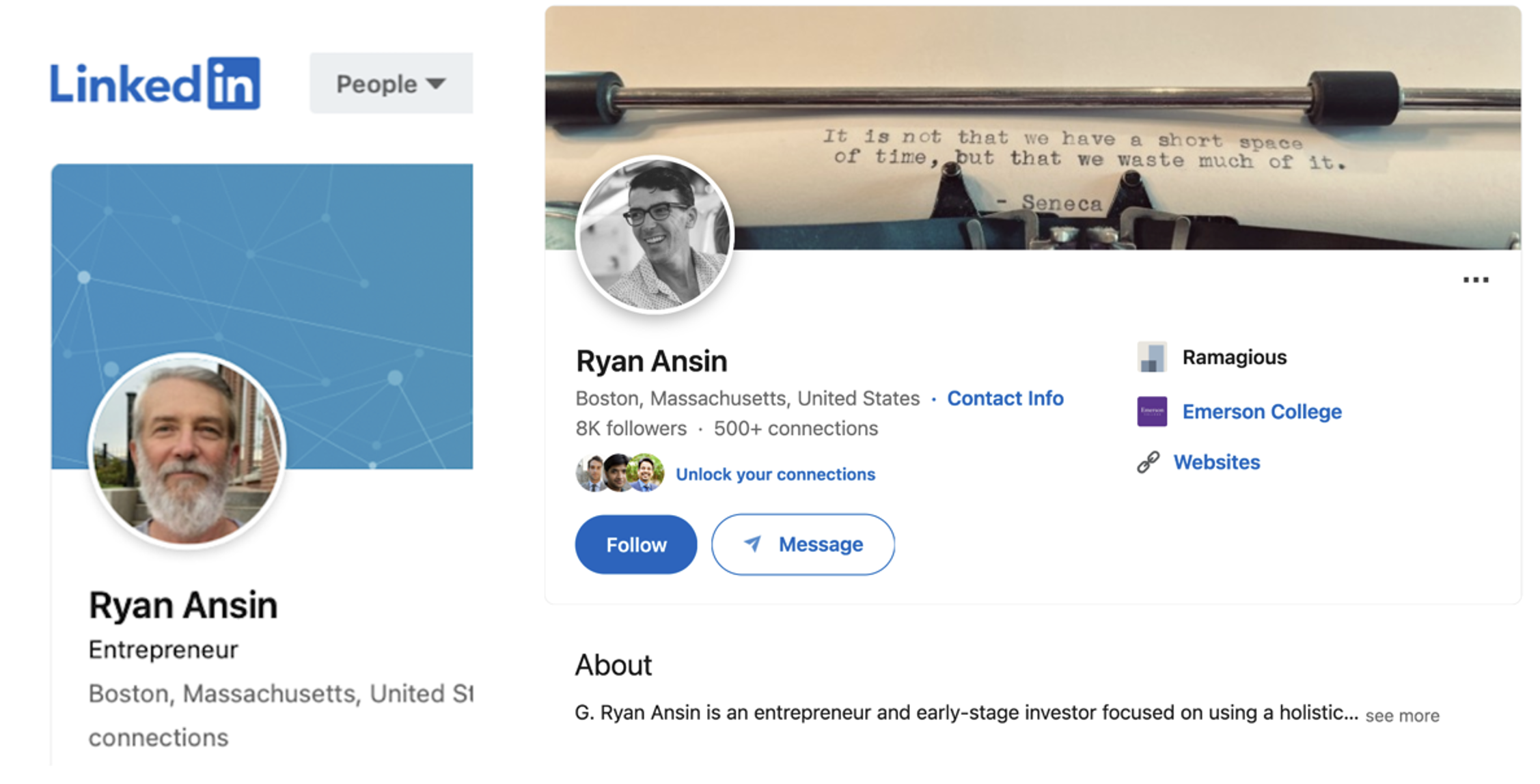
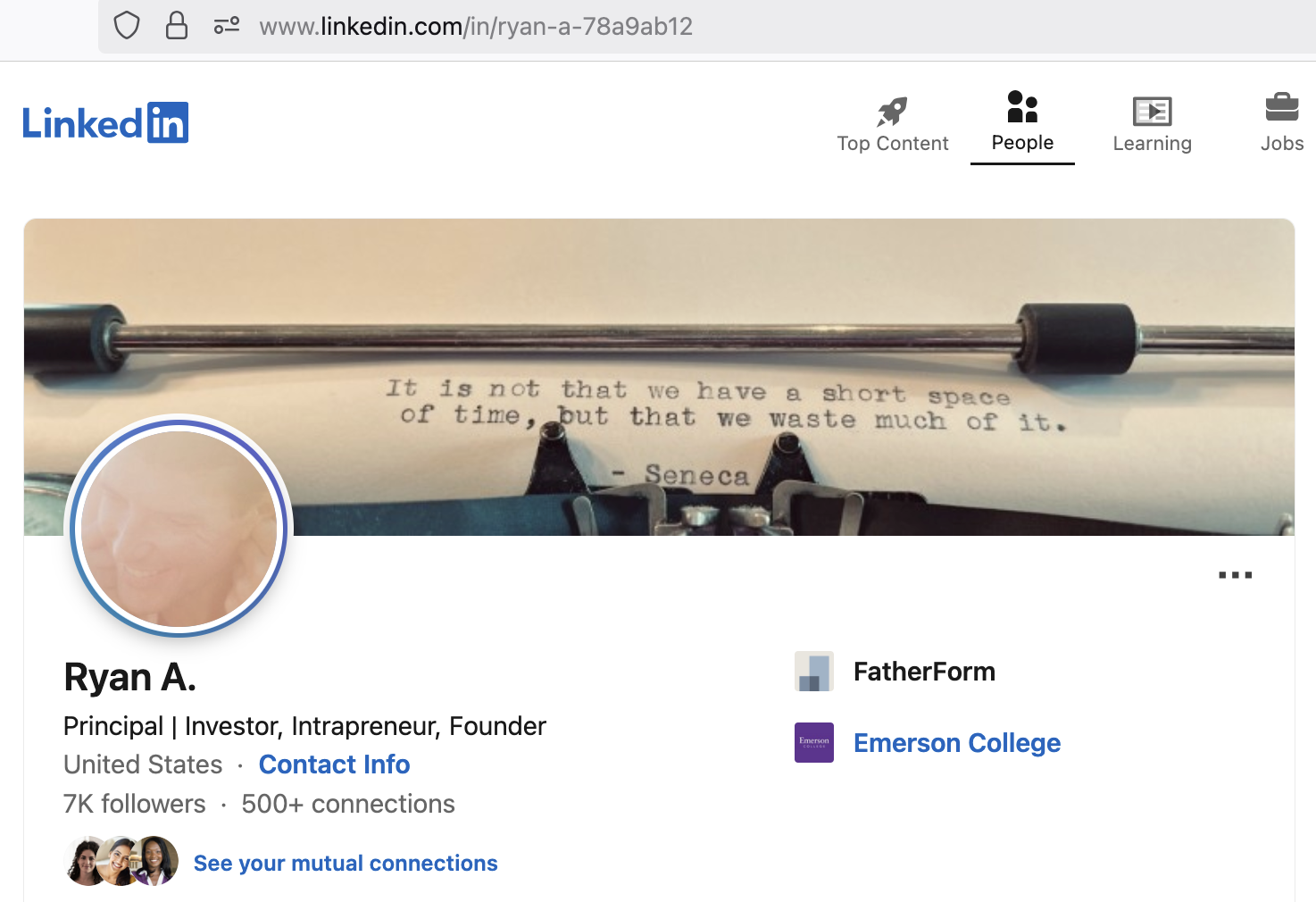
Ansin’s Shifting Professional Online Profiles Another element that added to my concern was the shifting nature of Mr. Ansin’s LinkedIn presence. Over time, I observed multiple changes to his profile picture, displayed name, and account details. For example, screenshots captured at different times show variations in how his name appeared and how the profile was presented. In a recorded interview with Talking Hedge (published April 27, 2022), Mr. Ansin commented on his own LinkedIn presence at approximately the 37:03 mark, stating: “I have a grizzly old beard on LinkedIn because it miss[es] the people that reach out to me by about 50%. And so don’t be fooled by that.”
While people frequently update their social media accounts for legitimate reasons, in the context of my experience these repeated changes contributed to my perception that his online identity was being intentionally adjusted or obscured. At present, his profile no longer displays a clear photo or even his full name:
Image captured October 2, 2025
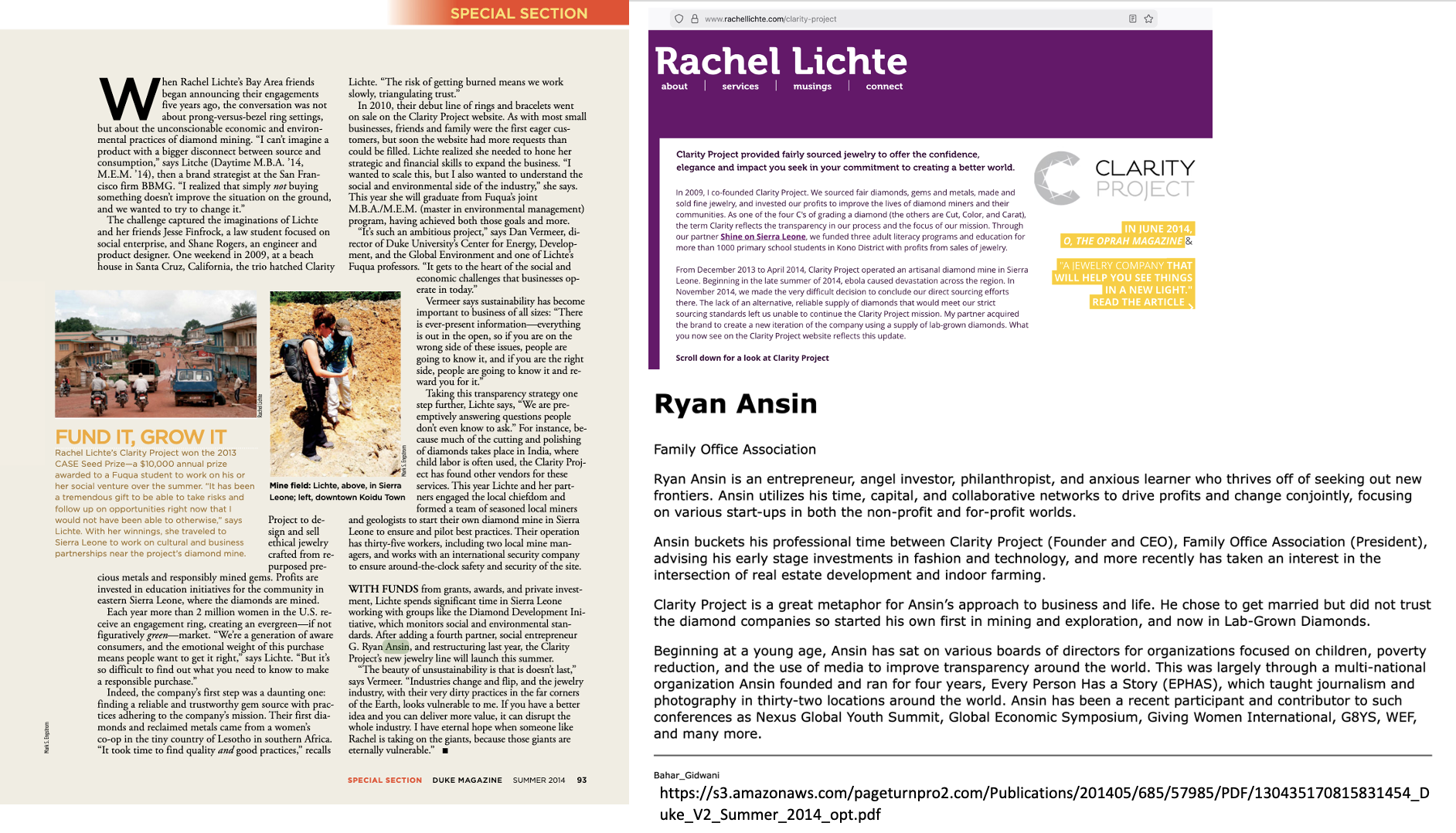
These two public-facing records detailed below are related to the Clarity Project and are worth preserving. Together, they suggest how identity, narrative, and credibility can be shaped through selective presentation. What matters here is not only the language used, but the broader pattern it may reveal: a continuing record of distortion that warrants careful documentation.
Founding of The Clarity Project According to the Duke Magazine article (Summer 2014, pp. 92–93), the Clarity Project was founded by Rachel Lichte, Jesse Finfrock, and Shane Rogers. Ryan Ansin’s bio, by contrast, presents his own version of the company’s origins and his role in it. Both records are linked below for reference. You can read more their initiative in Duke’s magazine (Summer 2014) pages 92-93. Ryan’s bio and version of his founding of the company linked here.
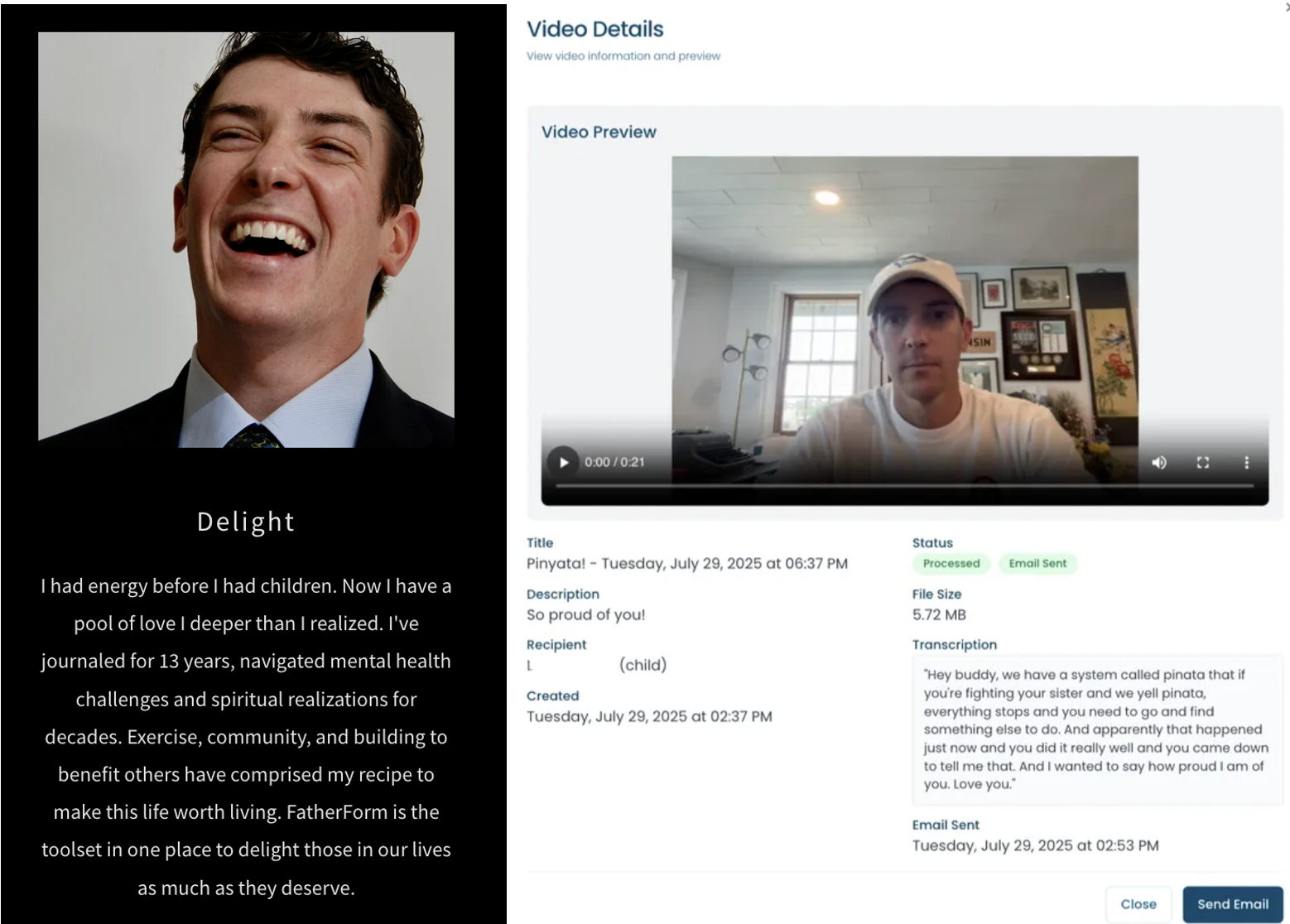
Ansin’s New Venture: FatherForm I’m also noting this for the record: in recent public materials (2026) promoting “FatherForm,” he states that he has navigated mental health challenges. This is his own disclosure in the content, presented alongside personal reflections and messaging about wellbeing and family connection. I am documenting this as an observable statement from his promotional materials, without making any clinical assessment or interpretation. However, given my observations regarding the crude, violent, and sexually-oriented material shared on @gregcatarino1 account, I am concerned that FatherForm is an additional platform encouraging men to upload intimate content pertaining to their children and their activities.
Conclusion: Patterns of Concealment From blurred lines between nonprofits and for-profits, to a workplace culture described as hostile and exploitative, to personal encounters that escalated into unwanted attention, a consistent theme emerges: concealment. Whether through shifting online profiles, indirect social media signaling, or public branding that contrasted sharply with private behavior, the pattern is the same—identity and trust deployed as shields.
I cannot prove intent, nor can I verify every claim made by others. What I can say is that the structural opacity I traced in Revolutionary Clinics echoed in my personal experience. The blending of fronts—corporate, personal, and digital—left me with the perception of being monitored, misled, and manipulated. I would urge people to do their research and proceed with caution.
Note: The experiences described here are my personal account and perceptions, based on communications, publicly available posts, and my own documentation. All evidence has been preserved, shared with trusted individuals, and provided to the appropriate authorities. This post exists to ensure there is a public record of my experience.
When cannabis companies talk about patients, it’s worth asking: is it about care, or about capital? Revolutionary Clinics offers a case study.
Co-founder & Chief Strategy Officer Ryan Ansin described his interest as wanting “to learn about how patients and customers could better rely on what is going into their bodies.” But the public record tells a different story — not of healing, but of holdings. What emerges is an intersection of real estate and “medicine,” where terms like “patients” and “care” are co-opted as branding tools. Property deals and capital tables shaped the company more than clinical expertise.
The paper trail shows how intertwined nonprofits, for-profits, and trusts were in shaping Revolutionary Clinics’ rise and its subsequent collapse:
Nonprofit Wrapper: The original “Certificate of Registration to Operate a Registered Marijuana Dispensary” was filed by the Cardiac Arrhythmia Syndromes Foundation (CAS Foundation), a nonprofit used to satisfy early Massachusetts rules. In its own filing, the foundation admitted: “The CAS Foundation’s Chief Executive Officer, Chief Operations Officer, and Chief Financial Officer have no prior experience in providing services for marijuana for medical purposes” (p. 12). Link.
Management company: At the very same address “9 Bartlet Street, #335, Andover, MA” sat CD Services of America, LLC, the for-profit management company running Revolutionary Clinics. In SEC Form D filings, it classified itself as an “Other Health Care” company (SEC Form D). Officers listed included Robert Bohlen, Lillian Montalto, Tyler Richards (all real estate), and G. Ryan Ansin (SEC Form D).
Mailbox headquarters: The listed address for both CAS Foundation and CD Services of America, LLC corresponds to a UPS Store mailbox. CAS address & CD Services address.
Property ties: Revolutionary Clinics’ Fitchburg cultivation mill was leased through One Oak Hill, LLC, with the G. Ryan Ansin Irrevocable Trust (2015) listed. Mr. Ansin also served as co-founder and CSO of Rev Clinics and as a CD Services manager. Link
Blurred lines: CAS CEO Jayne Vining simultaneously sat on the board of Revolutionary Clinics. Link.
Shifting filings: By 2019, SEC Form D filings began listing every officer with “Ryan” as a middle name. Link.
Five years later, the Worcester Business Journal captured the fallout (link):
Rev Clinics placed into receivership with millions in debt
Fitchburg’s 146,000 sq. ft. facility closed
Leominster dispensary fire-sold for $500,000
Somerville location couldn’t find a buyer
Federal tax audit underway; $20M+ owed to creditors
So, I’m left with questions:
How does a nonprofit founded on cardiac arrhythmia syndromes pivot into selling marijuana gummy bears? Notable considering that there are a number of peer-reviewed articles linking cannabis use to various arrhythmias.
Why were licenses granted to foundations and businesses with no cannabis experience?
And most importantly: where were patients in all of this?
In the end, Revolutionary Clinics looked less like a clinic, and more like a case study in capital over care.
Teaching With AI: Reflections From our Dawn Patrol Series
I had a fascinating early-morning conversation with our UBC clinical preceptors about what happens when AI tools, especially scribes, enter our clinical learning spaces. So many questions came up about how the introduction is shifting the dynamic in patient care. Three key takeaways stood out:
Voice & Accuracy Matter Clinicians note that AI-generated notes don’t reflect their own style or reasoning. These tools often “fill gaps” with information never said, which can distort the record and drive unnecessary tests and investigations. They’re also much longer and less focused. How do we prepare medical learners to build tools that amplify their voice and clinical reasoning rather than overwrite it?
Prepare for a New Patient Dynamic Patients increasingly arrive with ChatGPT-style interpretations of their labs and expect explanations for why certain tests weren’t ordered or to clarify AI’s output. This shifts the power dynamic in the room. How can we equip clinicians and learners to respond transparently and confidently when patients bring AI into the conversation?
Patient Consent, Privacy & Ethics From signage to informed consent, we must clearly communicate when AI is used in documentation, how data are stored, and what biases or commercial pressures may influence these tools and their use. How do we educate and onboard patients around the use of AI in their care?
For me, the central question remains: how do we make AI an ally that supports our clinical thinking and teaching, rather than one that quietly reshapes the clinician’s voice and patient narrative?
“The Road goes ever on and on Down from the door where it began. Now far ahead the Road has gone, And I must follow, if I can, Pursuing it with eager feet, Until it joins some larger way Where many paths and errands meet. And whither then? I cannot say” ― J.R.R. Tolkien, The Fellowship of the Ring
This morning I was perusing the latest on AI and medical research. I came across Dr. Sanjay Gupta’s podcast “Chasing Life” and his recent session with Dr. Yaël Bensoussan, assistant professor of otolaryngology and director of the USF Health Voice Center.
She’s exploring how artificial intelligence could one day help doctors detect conditions like Parkinson’s and cancer simply by listening. We already know that certain diseases, such as hypothyroidism, can alter vocal quality and AI may take this knowledge even further.

















 JACQUELINE P. ASHBY