Public Health

On Sunday, I had the pleasure of watching some wonderful student presentations on the topic of public health communication from our Primary Compassionate Care Initiative, PCC-KWASU cohort. I was so impressed by their presentations and the ideas shared.


A few pearls that I gathered:

Communication is a form of medicine. When done effectively, it has the power to change behaviour and potentially save lives. When done poorly, or with the intention to harm, it can create additional stress, confusion, anxiety, mistrust, and anger.

During an outbreak, communicating early, consistently, and with empathy helps build public trust.

The difference between misinformation and disinformation matters. Disinformation is strategically used to exploit people, while misinformation may be shared without intent to harm.

Public health messaging should also recognize that people can be educated and uninformed, or informed and uneducated. This distinction matters when we think about trust, access, and how messages are received.

Oh! And I learned a new word! Infodemic. An infodemic is an overabundance of accurate and inaccurate information that spreads rapidly during a crisis or disease outbreak.

Congratulations to the presenting groups:

Group 1, Foundations & Audience Analysis: Abdulfatai Abdulsalam, Fadheelah Oluwabukola Bello, Simbiat Abdulrazaq, Halimatu Sadiya Ademuyiwa, and Hibatullah Tiamiyu.

Group 2, Message Design & Interpersonal Communication: Opeyemi Sabiu, Faidat Opemiposi Salman, Olamilekan Babatunde, and Hassan Abdulkareem.

Group 4, Risk Communication & Crisis Planning: Hikmat Ogunlana, Maryam Odeyemi, Aishat Hadi, and Elijah Matthew.

Group 5, Misinformation & Digital Media: Abdulroheem Olatundun, Regina Jimoh, Oluwabukola Alegbe, and Oreoluwa Fatolu.

A huge well done to all of you.

Ph.D.

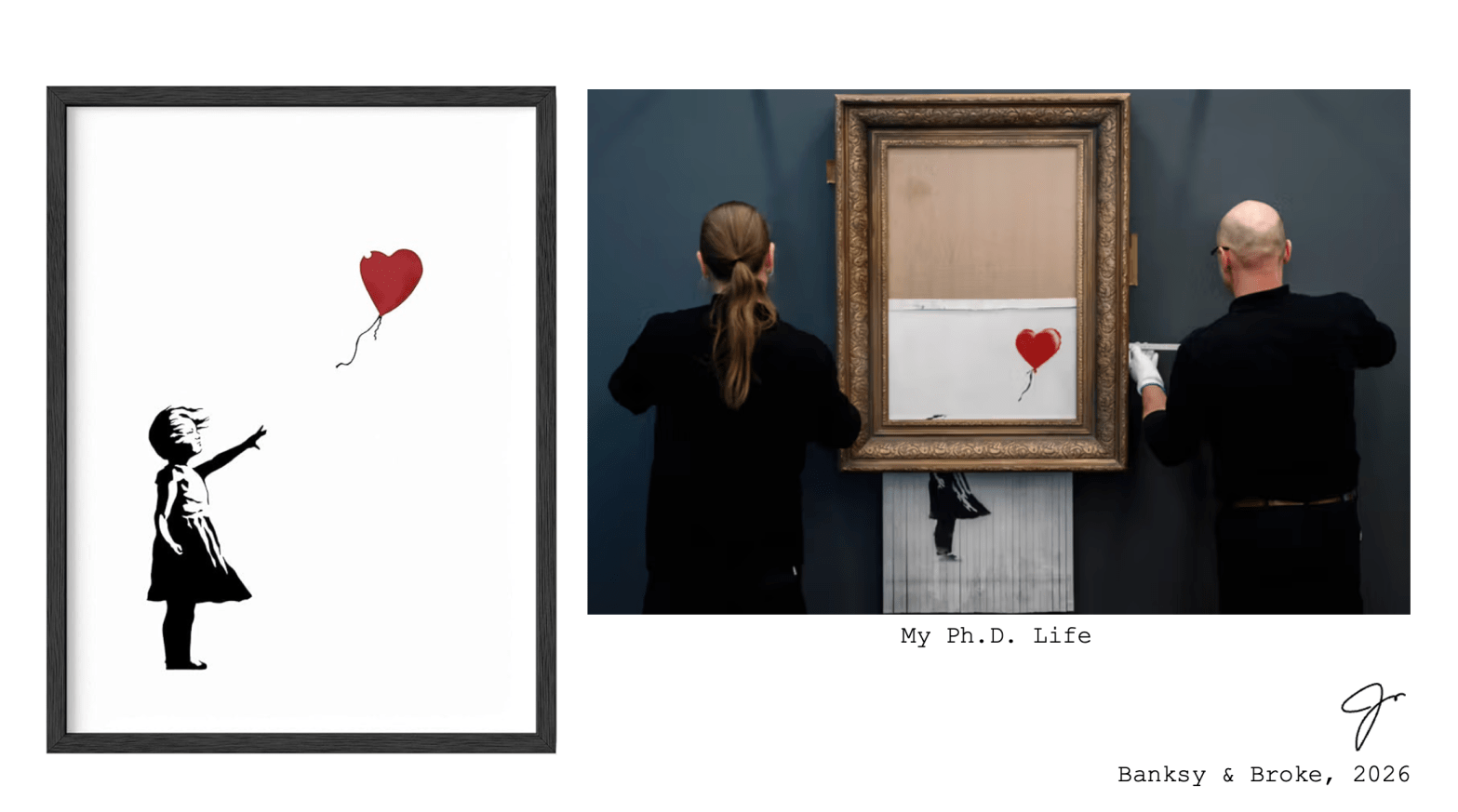
Postcards to Humanity: My Ph.D. Life

This week I attended Green Templeton College, University of Oxford student presentations and one of them posted a cartoon illustrating how her Ph.D. process felt. It resonated with me as I’m sure many others in the room.

Her description also inspired me to depict my own Ph.D. experience and the challenges I encountered. It reminded me of the Banksy incident, where he intended to present and revise his own work in real time, and even for him, it didn’t go quite as anticipated.

During the Ph.D. process, you often begin with something meaningful to you. It may be somewhat fragmented or ambitious, but it’s something you’ve worked hard to shape in the form of a question, a problem, or an opportunity. Then it enters the world of feedback, scrutiny, agendas, edits, restructuring, and more edits. At times, it can feel as though the original work is being taken apart piece by piece, as if Picasso has gotten his hands on it, and through a multitude of different and opposing lenses your work evolves into something that’s more reflective of a community as opposed to an individual.

Yes, research is about producing knowledge and attempting to answer the unanswered. However, it’s also about developing resilience, humility, patience, and the ability to stay connected to the purpose of the work and the objective at hand, even when the process feels uncomfortable and, at times, absolutely miserable. That is precisely when the debts and doubts creep in. But I will never forget the advice I received from my mentor when I was in the thick of it: Jacqueline, a good thesis is a done thesis!

So, for anyone in the middle of revisions, a dissertation, a thesis, a manuscript, or any project that is being closely reviewed: keep going.

Push through. Stay with it. Protect the heart of the work.
And to Banksy, the balloon is still there :).

#PostcardsToHumanity #PhDLife #AcademicWriting #Research #RevisionProcess #DoctoralJourney #HigherEducation

Scotland

O my Luve is like a red, red rose

   That’s newly sprung in June;

O my Luve is like the melody

   That’s sweetly played in tune.

So fair art thou, my bonnie lass,

   So deep in luve am I;

And I will luve thee still, my dear,

   Till a’ the seas gang dry.

Till a’ the seas gang dry, my dear,

   And the rocks melt wi’ the sun;

I will love thee still, my dear,

   While the sands o’ life shall run.

And fare thee weel, my only luve!

   And fare thee weel awhile!

And I will come again, my luve,

   Though it were ten thousand mile.

~ Robert Burns

Ebola

The University of Oxford recently posted on Oxford Vaccine Group‘s Charlie Firth’s piece on Ebola outbreaks and “why trust, community engagement and public health measures remain critical alongside vaccination.”

Screenshot

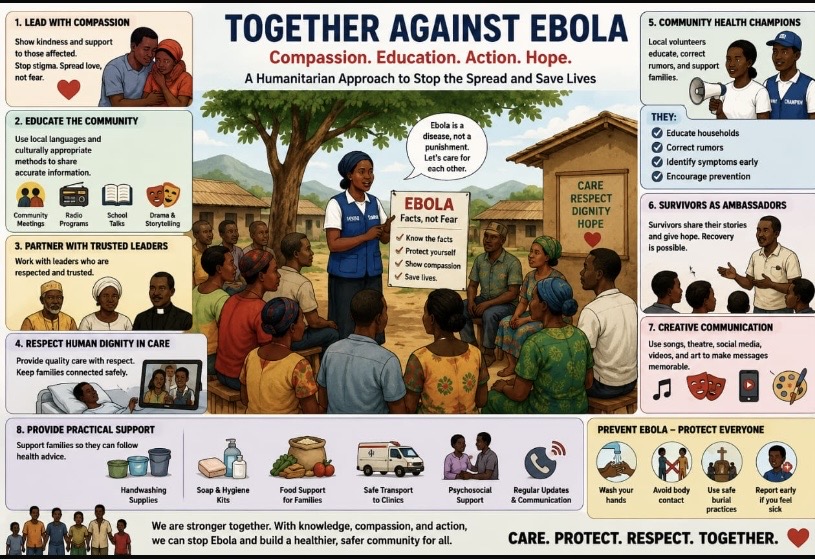
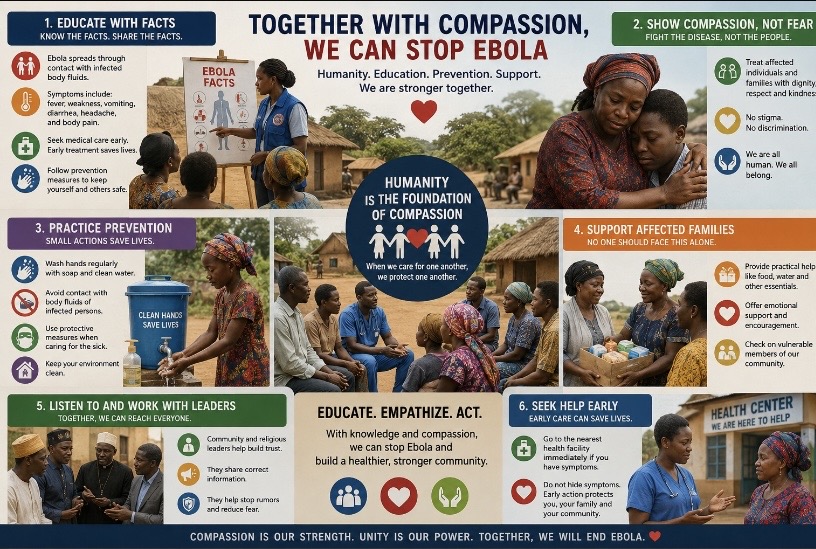
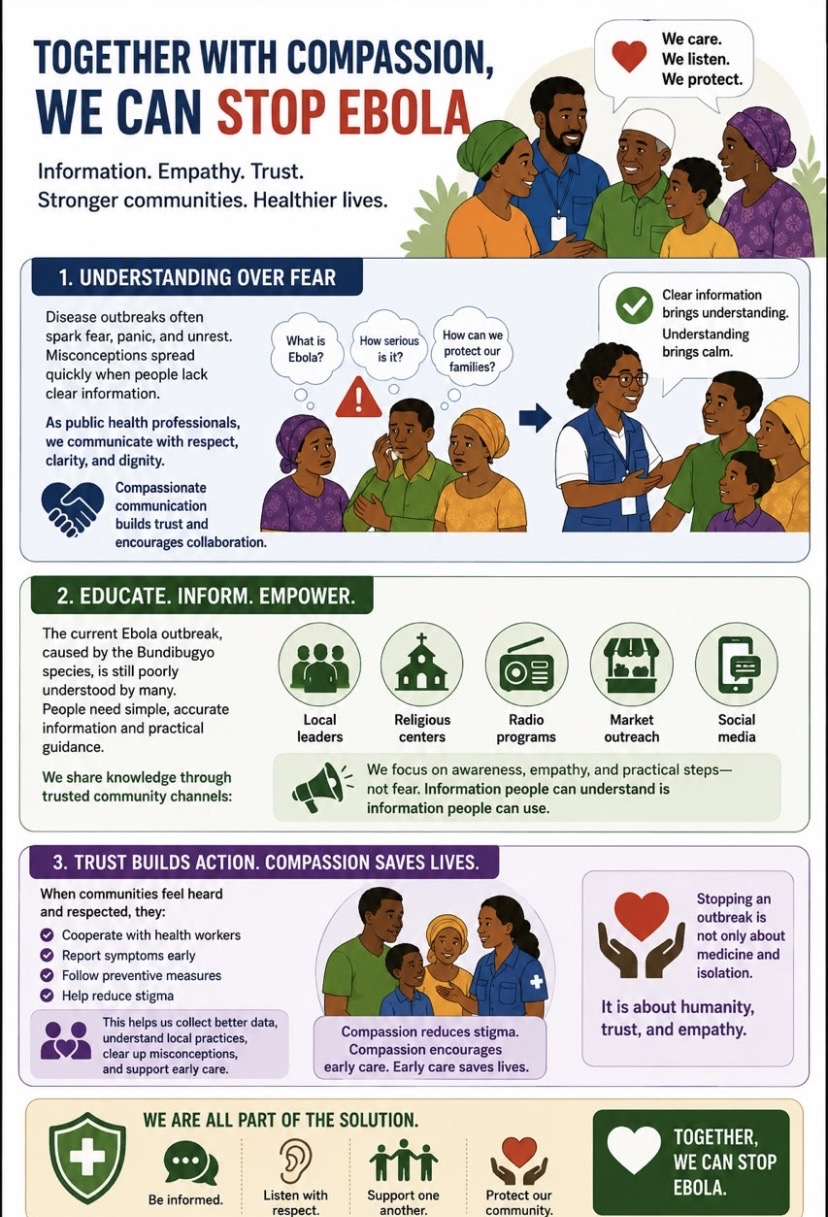
On that note, a few weeks ago, in one of our recent Primary Compassionate Care educational sessions, I challenged our mentees to rethink how a public health campaign could be repackaged to help stop the spread of Ebola.

They reflected on key messaging, community needs, and public understanding, then transformed their ideas into powerful graphics and posters.

Screenshot

What emerged so clearly were themes of cooperation, fear and stigma, education, leadership, engagement, prevention, shared responsibility, practical support, misinformation, and more importantly how to respond with compassion and empathy.

As one of our cohort members, Regina, explained, “This shifts the focus from controlling people through fear to protecting lives through understanding and dignity.”

Their work reminded me that effective public health communication is about building trust, being creative, and responding with humanity.

I’m really proud of what our Primary Compassionate Care mentees produced.

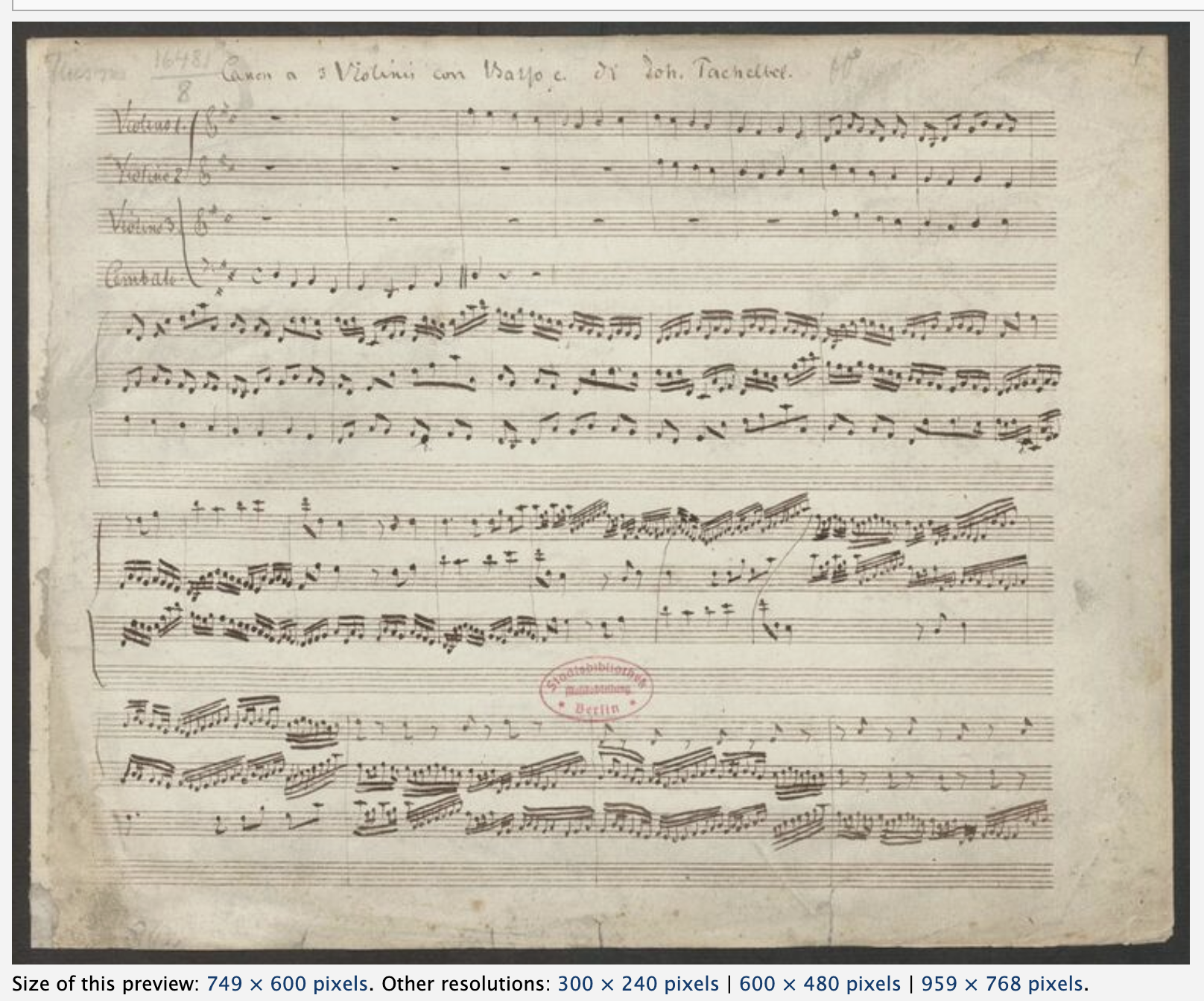
Pachelbel’s Canon in D

The painting above represents Pachelbel’s Canon in D as structure.

The gold arches along the bottom represent the repeating basso continuo, the steady ground bass that cycles throughout the piece.

The horizontal gold line acts like the musical timeline, while the vertical gold lines show how the upper voices rise from and connect back to that foundation.

The light glow on the left suggests the opening of the canon: simple, spacious, and luminous. As the painting moves right into deeper blues, it reflects the way the music builds through layering, repetition, and harmonic richness.

The blue textured field represents the overlapping violin lines, felt through depth and movement rather than literal notes.

In short: it shows Canon in D as a luminous blue architecture of repetition, order, and emotional build, with the bass as the foundation and the upper voices rising above it.

Created by AI.

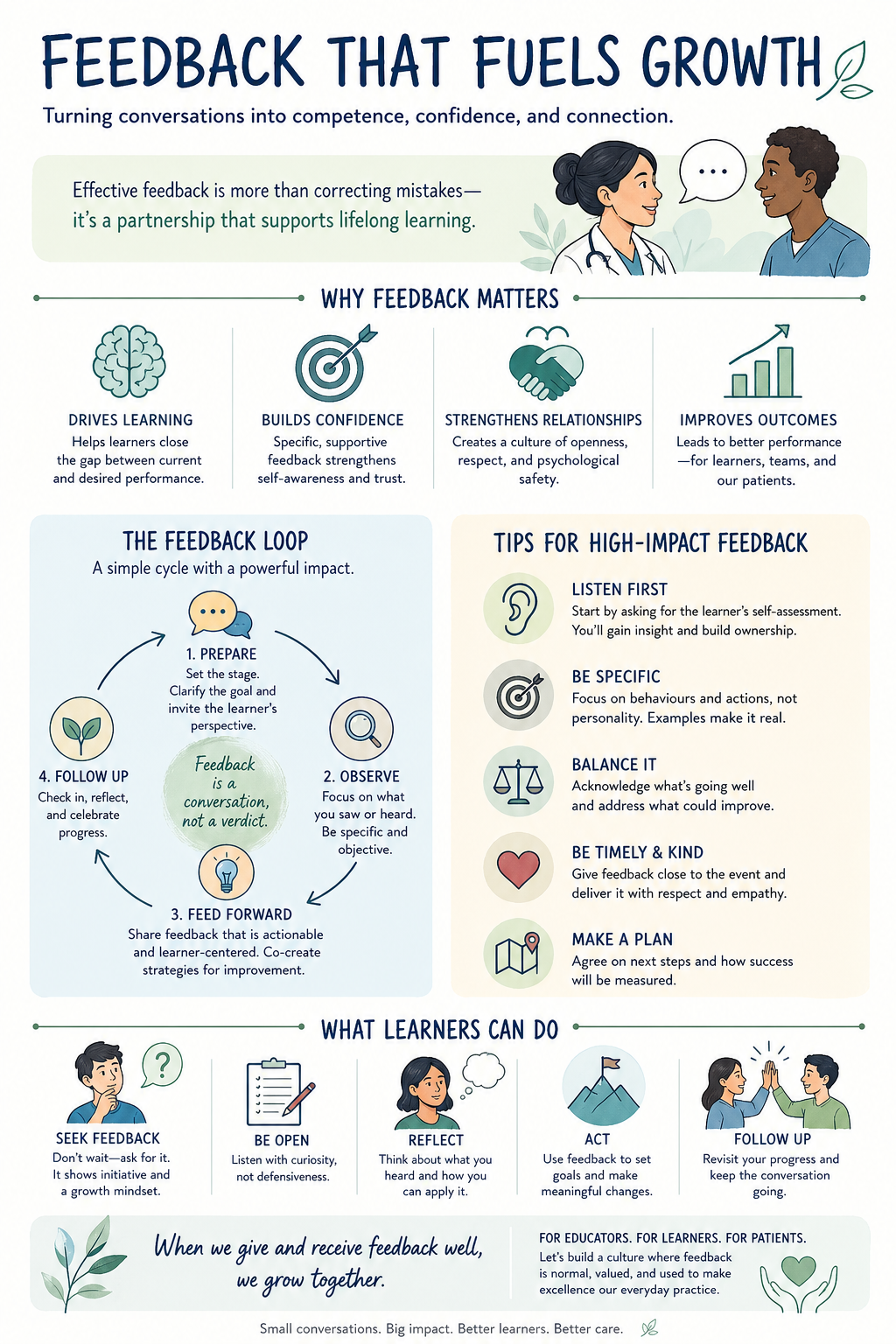
Feedback

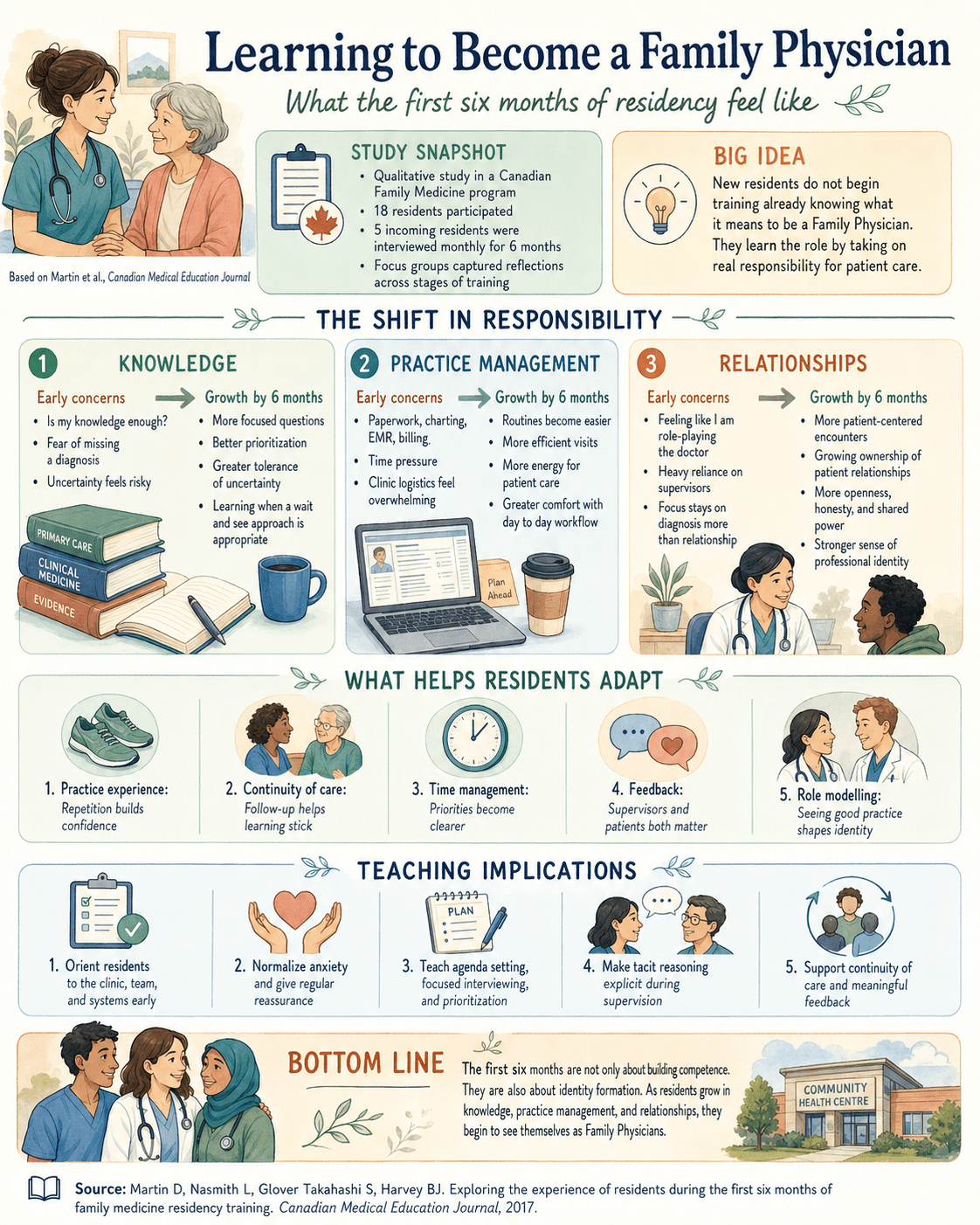
You know when you read an article and the content just sticks with you? This article by Martin, Nasmith, Takahashi, and Harvey, Exploring the Experience of Residents During the First Six Months of Family Medicine Residency Training, has stayed with me because it captures something deeply recognizable about the transition into residency that I have observed.

Becoming a family physician is not simply about knowing more medicine. It is about learning to carry responsibility differently: responsibility for clinical decisions, patient relationships, time, uncertainty, follow-up, and the everyday realities of practice.

The paper breaks this transition down beautifully across three areas: knowledge, practice management, and relationships. That framework resonated with me again today after speaking with a family physician preceptor who described the importance of helping residents understand that they are no longer students. They are emerging professionals, learning to be reliable, accountable, and responsible within real clinical environments.

What I appreciate most about this work is that it normalizes the anxiety of early residency while also showing how residents grow through continuity of care, feedback, role modelling, and repeated practice. The first six months are not only about building competence. They are about identity formation: learning, slowly and meaningfully, what it feels like to become someone’s doctor.

Read more on Martin D, Nasmith L, Takahashi S, Harvey B. Exploring the experience of residents during the first six months of family medicine residency training. Canadian Medical Education Journal. 2017;8(1):22-36.

Consent

The University of Oxford tells students that consent is “an essential foundation for a safe and respectful community of learning.”

It also requires all first-year students to complete Consent for Students training, and encourages all students to refresh that training annually: https://www.ox.ac.uk/students/welfare/supportservice/consent-training

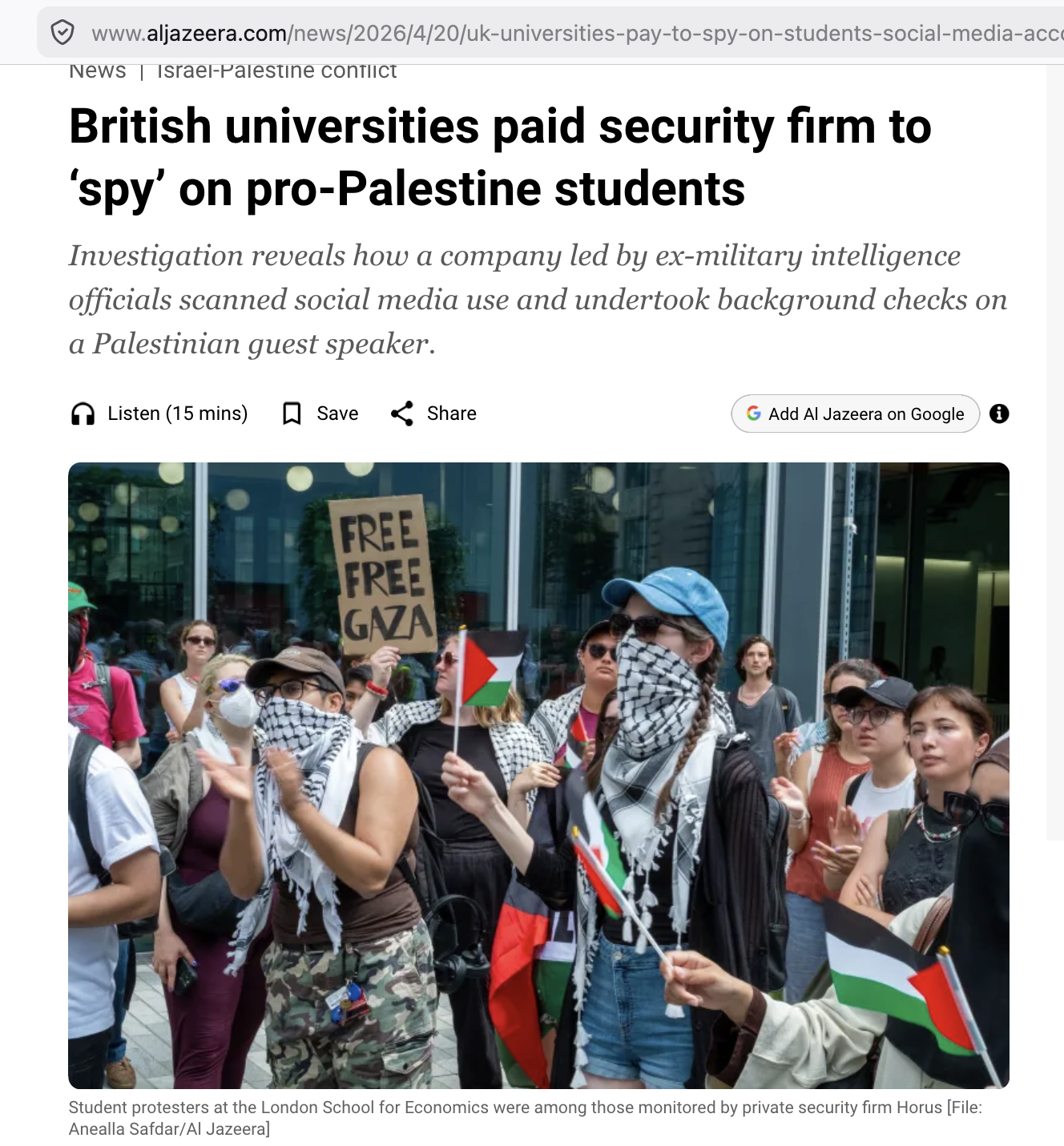
That’s why the recent reporting by Al Jazeera English and Liberty Investigates is so troubling.

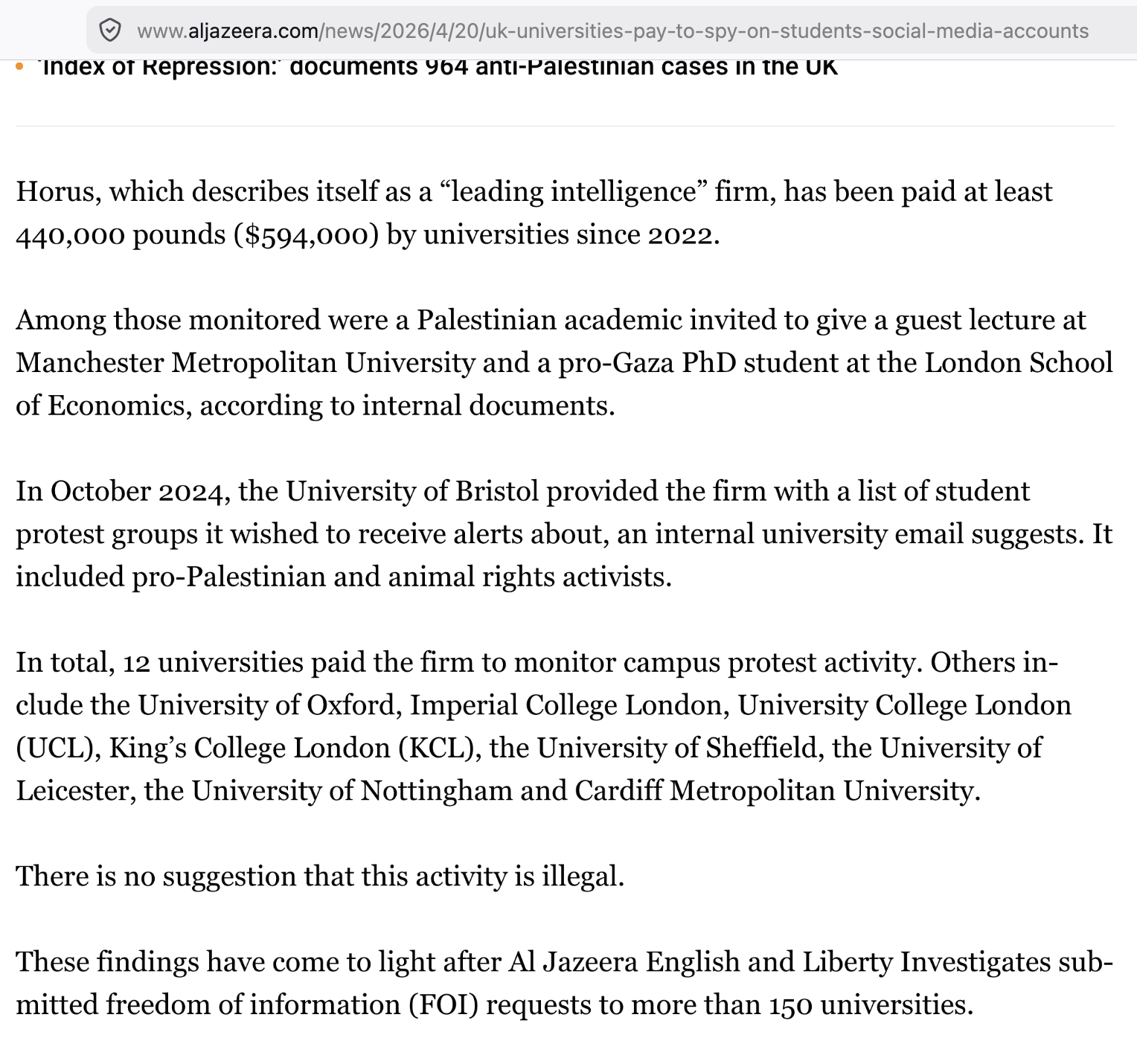
According to the investigation, University of Oxford was among several UK universities that paid Horus Security Consultancy Limited to monitor campus protest activity, including pro-Palestine student activism.


And here’s the part that should make University of Oxford especially uncomfortable: Al Jazeera reports that Horus was originally established in 2006 as a project within Oxford’s own security team.

So this isn’t just a story about universities outsourcing surveillance. It’s also a story about how a campus security function can evolve into a private intelligence service, then be sold back into the university sector.

There may be legal arguments about whether this was permitted. But legality is not the same as ethical legitimacy. If consent is central to a respectful learning community, then institutions must model it too. Monitoring students’ social media activity or protest involvement without their knowledge raises serious questions about transparency, trust, academic freedom, and the chilling effect on lawful political expression.

Learn more here: British universities paid security firm to ‘spy’ on pro-Palestine students. Investigation reveals how a company led by ex-military intelligence officials scanned social media use and undertook background checks on a Palestinian guest speaker: https://www.aljazeera.com/news/2026/4/20/uk-universities-pay-to-spy-on-students-social-media-accounts.

Learn

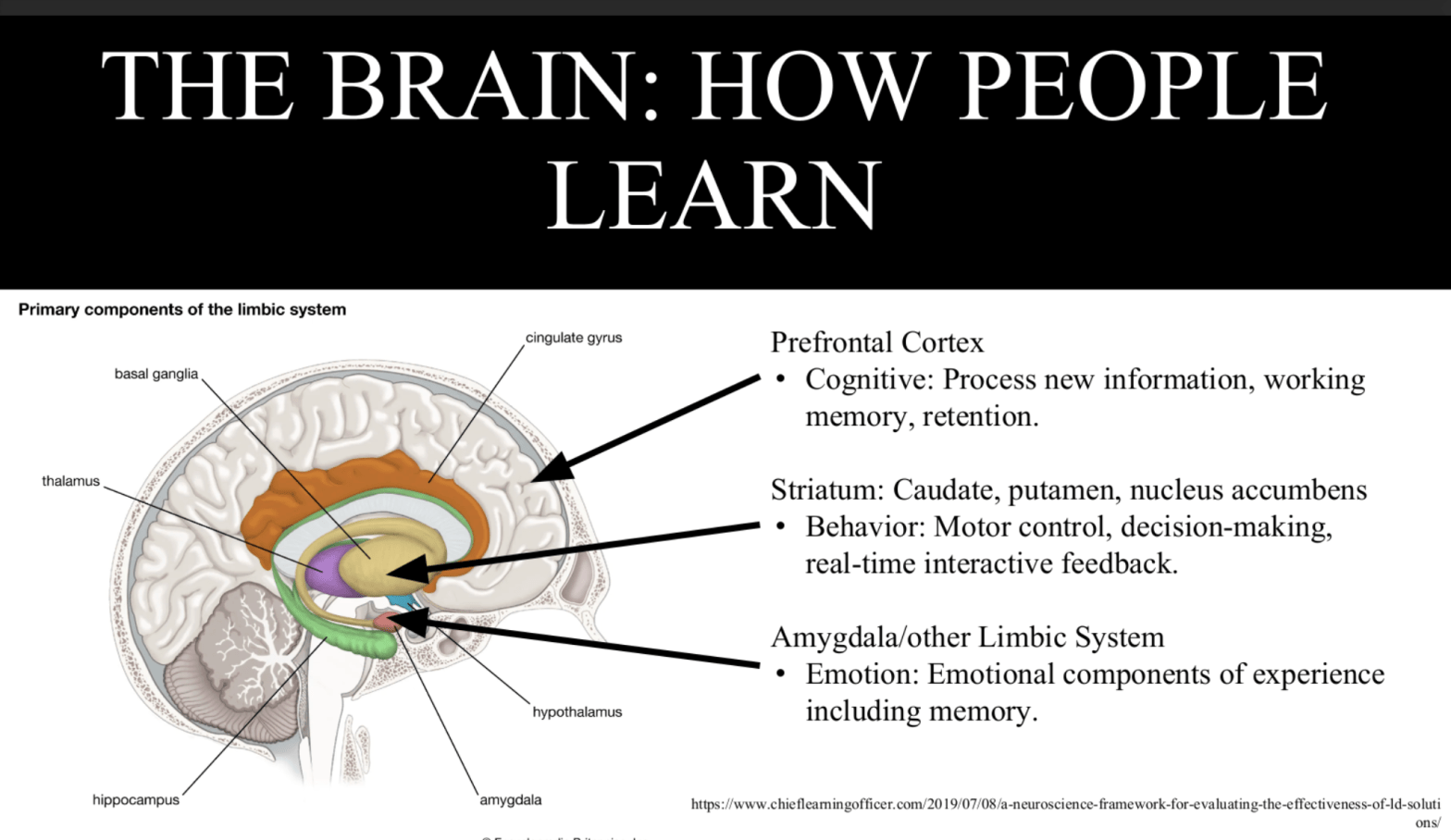
“The Neuroscience of Learning: improving the effectiveness of people skills Technical know-how is always changing, and L&D departments have to adapt their training programs to fulfil a company’s relevant needs at any given time. We can never really know what the future holds for hard skills. Soft skills, on the other hand, are always needed, regardless of innovations in processes or technology. For example, active listening and leadership are critical people skills that are always needed, in addition to effective communication. Team members who can communicate effectively will be able to avoid unconscious biases and take on appropriate behaviors in the workplace. Other essential soft skills are respect, compassion and empathy. A team can demonstrate well-polished hard skills, but without the ability to cooperate and work together, those hard skills will be lost amidst a climate of misunderstanding and frustration.training.”

Learn more here via The Neuroscience of Learning: improving the effectiveness of people skills training.