

Researcher ◆ Climber ◆ West Coaster
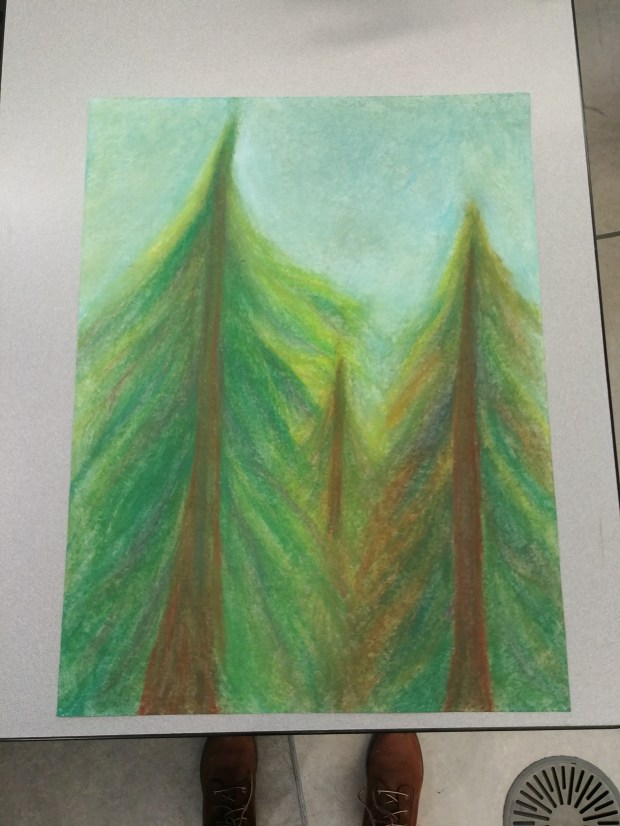 Enjoy Michael! Looking forward to the children’s visual interpretation of my interpretation of Emily Carr’s work. 🙂 #MakeMoreArt
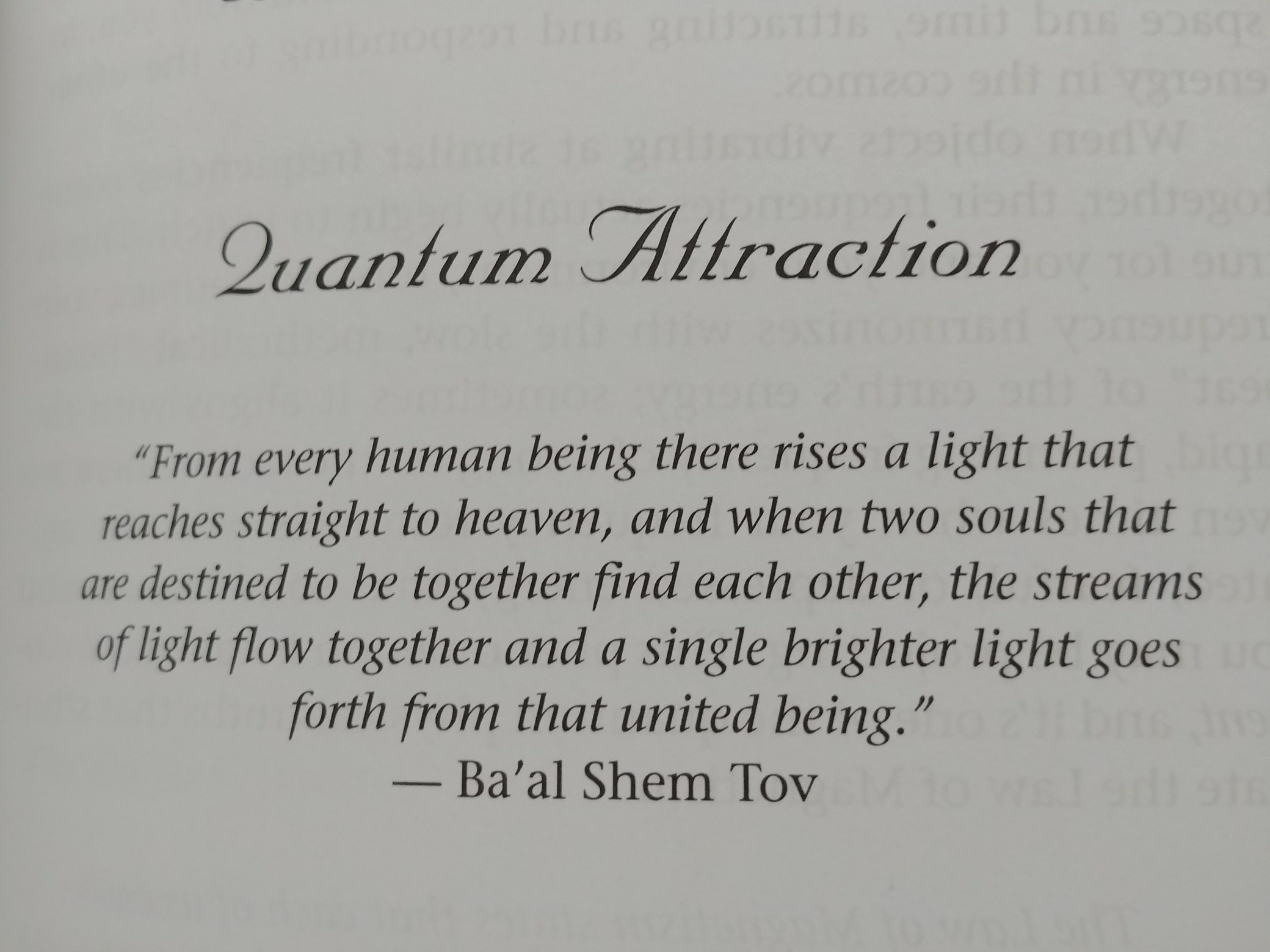 When I was given the book that contains this quote above, my first reaction was to take the small brick of pages and smack the person over the head who gave it to me. This was because I judged the contents of the book by its cover (And it is a ridiculous cover. You have to trust me on this. The book’s saucy jacket was designed to sell copies and fails to honestly reflect the contents). It certainly evoked my inner prude! Ha! But then I began flipping through the pages and realized that it was about quantum mechanics and the energy we create, share, and absorb. And I love quantum mechanics. So, I want to apologize for disrupting a very civil breakfast with my quick-to-judge reaction and whack over the noodle. I’ve learned. Again. 🙂 #NevahEvahJudgeABookByItsCovah
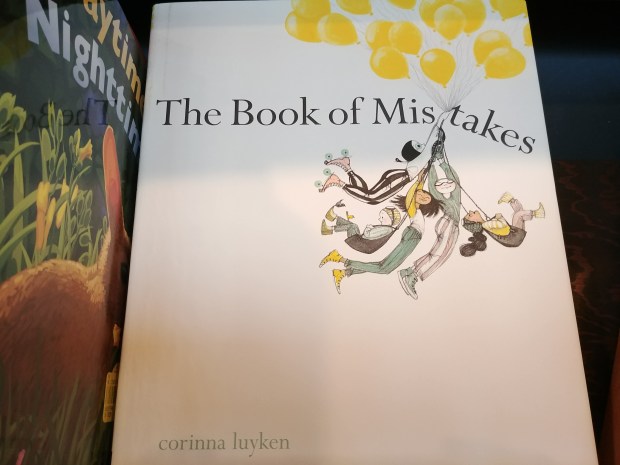 I believe that this may be the first book that has brought me to tears in a public venue. The illustrations are simply divine. But the driving message to view our mistakes or misgivings as opportunities to engage our creativity and to accomplish our goals…it just hit home. I had to go hide out in the kiddie corner and wipe my tears. And Yes! I too will make a cupcake hat and eat my hat! #CaldecottMedal #TheBookOfMistakes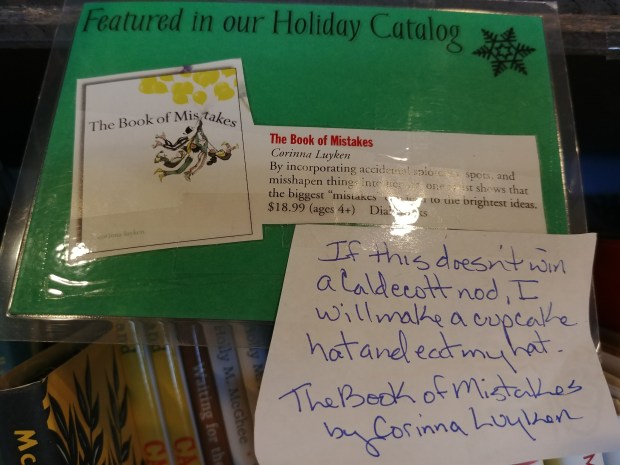
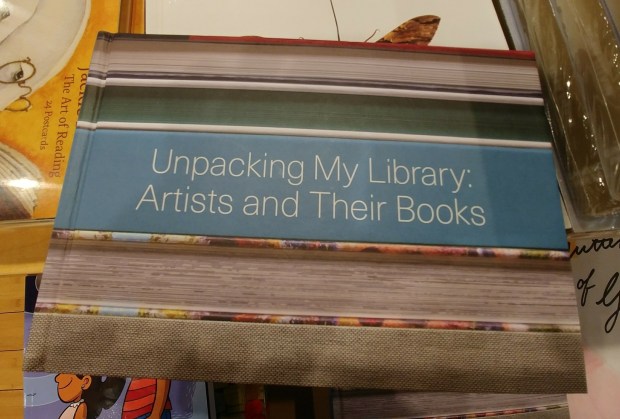 Mark Dion! Best library evah! Everything about it works and it just takes everything out of me to keep from wanting to pry one of those books from the middle of your stack. The tree bark! Stunning.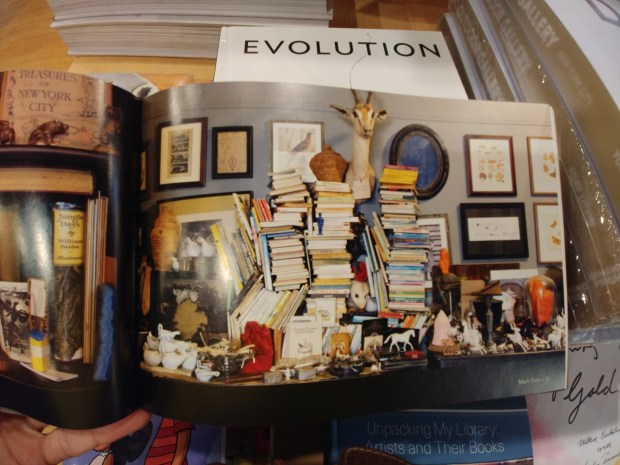

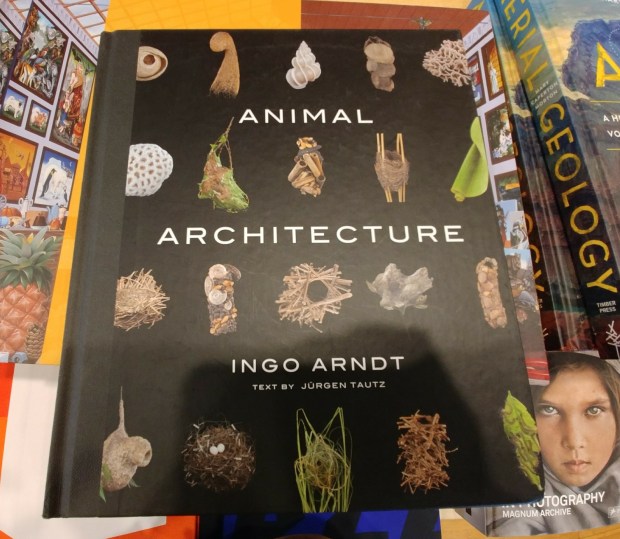 Fumbling and tumbling through books and found this one on animal architecture. Love it. And it just so happens that the first page I turn to is on the Bowerbird. I am so taken by these little winged creatures. All the thought and attention to detail that goes into their courtship astounds me. The seashells are such a warm welcoming entry. It’s about revitalizing a space and making it a place. #MovingDay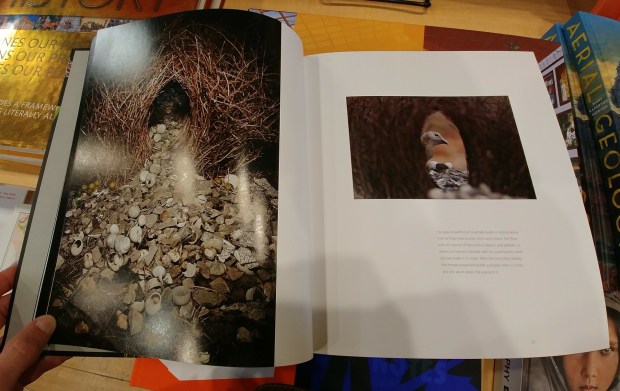
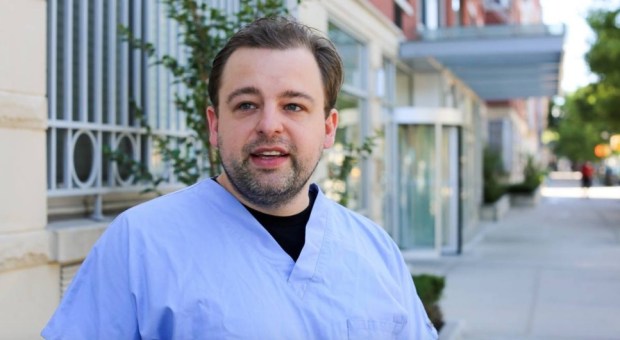
“There’s a strange culture in medicine. People are less friendly to each other than I imagined. I got an MD and a PhD in Neuroscience. I’m finishing my residency right now. I guess I thought that everyone would be compassionate, and would help each other, and would be nice to each other. And don’t get me wrong—I work with a lot of compassionate people. But the stress just erodes people. There’s a lot of tension and anger. We’re taught that 80 hours per week is normal and shouldn’t be questioned. But at the same time, a huge amount of work that medical interns do is administrative. It could be outsourced without affecting the quality of education or care. And the culture does real harm. I’ve had two friends commit suicide. One of them was studying anesthesiology at Yale and overdosed in a parking lot. The other jumped off the dorm building at NYU. There’s got to be a better way. I don’t know, maybe I’m just saying this because I’m stressed. I’m heading to the ER now. I’m almost at the end of my residency. I can see the end of the tunnel. But the tunnel is very damaging.” ~ Humans of New York Project
It never ceases to amaze me. Academics. Just when you think something is dead and gone, an Academic will resurrect the matter and publish a paper. I think we should commence all graduate-level “Selecting a Research Topic” courses with “And on the third day…” 🙂
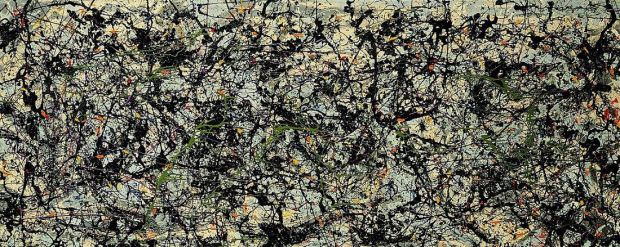
There was (is) an ongoing debate about the use of fractal analysis to determine the authenticity of Pollock’s paintings. I’ve been sort of following the exchange over the past two decades. Then in 2007, this article came out confirming that “Physicists recently ‘put the nail in the coffin’ in the debate about using fractal analysis in authenticating art.” Okay, so fractal analysis is a poor method for authenticity purposes but can you use it for something else?! Yes! To study Pollock’s evolution! Check out this recent article:
Fractal analysis of Jackson Pollock’s painting evolution (2016). “The aim of this work is to study the evolution of some fractality indices of Pollock’s paintings for the period from 1930 to 1955 and, in this form, detect changes in this painting technique and relate them to major cultural influences. To this end, about 30 paintings are analyzed by applying a two-dimensional detrended fluctuation analysis (DFA). Results indicate two large shifts in the fractality indices. One transition involves a change in the correlations dimension by 1937, while a second transition implicates a shift in the short-scale Hurst exponent by 1945-1946. Based on descriptions from Pollock’s biographers, it is postulated that the first change may be strongly influenced by Mexican muralist Siqueiros and the second one by the moving of Jackson Pollock and Lee Krasner for living in the natural landscapes at Springs, Long Island.”
Fascinating to consider how we may be able to detect and measure the influences in our lives and how they alter our perception and interpretation of the world around us.
#JacksonPollock #BenoitMandelbrot #FractalAnalysis
Where are you investing your time, energy, and attention? Are you fully focused on what is important to you or constantly interrupted by the ping and ding?
I encourage you this year TO BE PRESENT. I’m defining this as dedicating yourself completely to what you are engaged in. Commit to the activity. When you cook, cook! When you drive, focus on the road! When you are having coffee with friends, give them your undivided attention.
Put a leash on that cell and create the boundaries necessary to better connect with yourself and those around you. Please.
The Attention Economy – How They Addict Us.
Visit Tristan Harris’ project Time Well Spent: http://www.timewellspent.io/
 JACQUELINE P. ASHBY