Tariffs

“He that lives upon hope, dies farting.”
— Benjamin Franklin, Poor Richard’s Almanack, 1736

I’ll never forget that quote. It was September 1990, and CSUS President Donald R. Gerth opened our U.S. Government class with it scrawled across the chalkboard. A bold, memorable way to say: don’t sit around waiting — act.

I’ve carried Ben’s wisdom ever since. And I haven’t invested this much in others — or in the world — just to quietly… well, you know.

Lately, I’ve been waking up with a familiar pit in my stomach. And while I wish I could blame it on last night’s chimichanga, I know better. There’s a familiar global hum of fear and uncertainty — a déjà vu from the early days of the COVID-19 pandemic.

Only now, it’s economic.

Markets yo-yo like they’re auditioning for Coney Island. Systems are wobbling. Toilet paper is escalating in price. Borders, again, feel like more than just physical lines. The news sounds like a cross between a disaster film trailer and bad financial advice.

Both the viral and economic pandemics have exposed the same deep truth — we are inextricably interconnected. Interdependent. What happens in one corner of the globe ripples across the rest.

Despite all the tough talk, nationalism, and ideological whiplash, we need to resist the temptation to shut down — physically, economically, and emotionally. Because borders aren’t just geopolitical. They’re psychological, too. And when we wall ourselves off — from each other, from opposing views, from history — we all lose.

We need to show up differently than we did before…than we did in 2020. And part of that involves working more collaboratively across government and industry lines.

💬 1. Talk Less About the Man, More About the Mechanism
We’ve spent too much airtime reacting to personalities. Tariffs aren’t just a “Trump” issue — they’re a tool. Let’s redirect the conversation toward how these tools affect everyday people, small businesses, global trust, and economic stability. Ask: Who gains? Who pays? Who decides?

🤝 2. Reconnect Economies with Empathy
Economic policy isn’t just about numbers. It’s about people: the warehouse worker, the farmer, the startup team on their third round of layoffs. Empathy isn’t soft — it’s strategic. Let’s lead with human-centered stories, not just GDP graphs.

🌐 3. Refuse to Play the Zero-Sum Game
Tariffs fuel the narrative of “us vs. them.” But the global economy is not a tug-of-war — it’s more like a complicated game of Jenga. One bad move affects everyone. Let’s challenge oversimplified rhetoric and advocate for policies rooted in cooperation, resilience, and mutual benefit.

And let’s not forget — it’s our children who will inherit these challenges, along with all the unanswered questions and unsolved equations we’ve left on the table. So let’s sharpen our collective #2 pencils and start working through it — with the clarity, creativity, and courage this moment calls for.

Young Cancer Patients

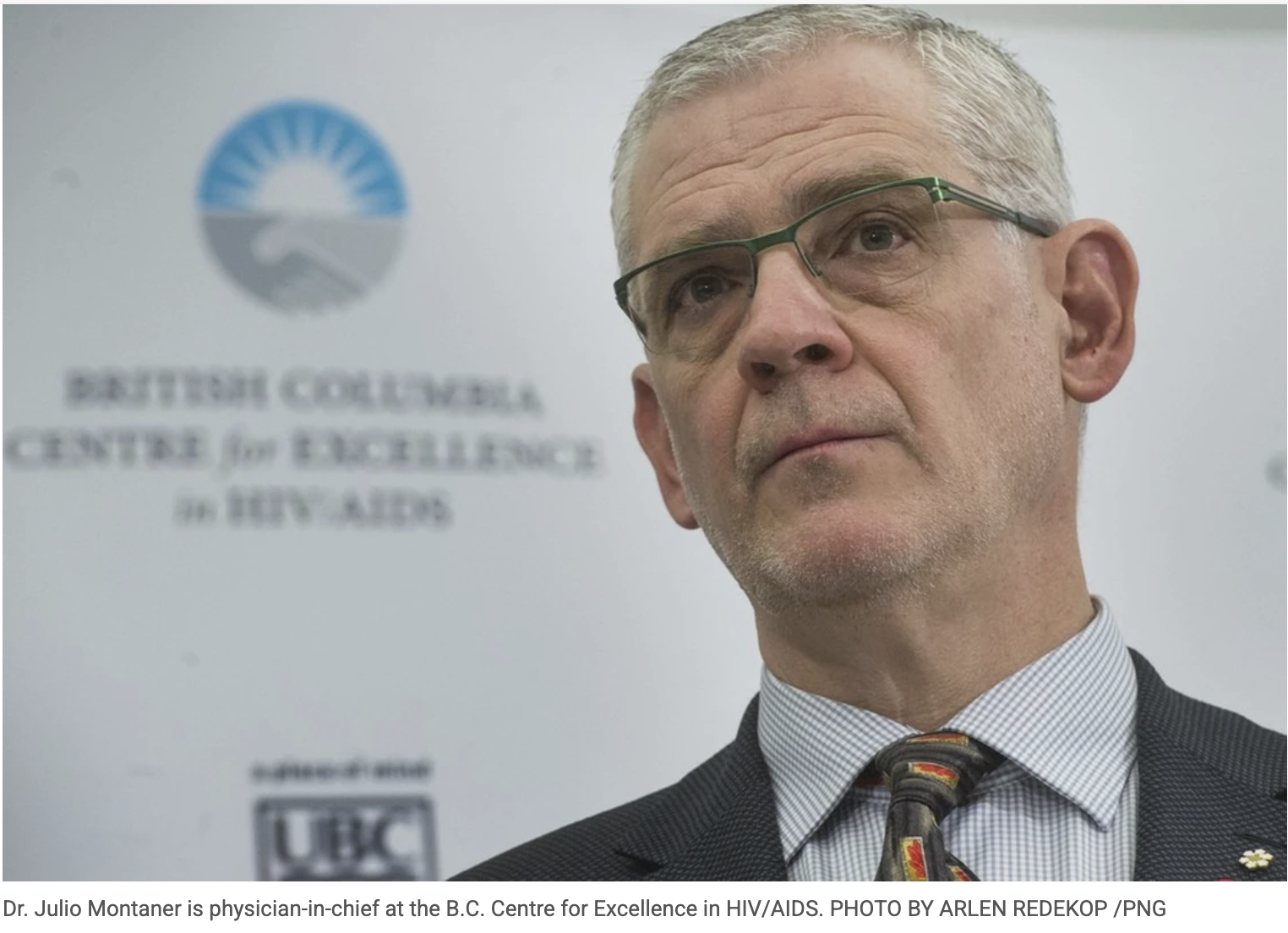
“The team, led by researchers from the UBC faculty of medicine and BC Children’s Hospital Research Institute, is the first in Canada to combine these two techniques to identify and test a drug for a young patient’s tumour in time for their treatment.

Their success in finding a new drug for the patient, described today in EMBO Molecular Medicine, shows how the study of proteins, known as proteomics, can be a valuable complement to the established study of genes (genomics) in real-time cancer therapies.

The work was a collaborative effort of PROFYLE (PRecision Oncology For Young peopLE), a key initiative of the Canadian pediatric cancer network ACCESS (Advancing Childhood Cancer Experience, Science and Survivorship) that brings together more than 30 research and funding organizations and over 100 investigators from across Canada to improve cancer outcomes for children and young adults.

The study by co-lead authors Dr. Georgina Barnabas, a postdoctoral researcher in Dr. Philipp Lange’s lab, and Tariq Bhat, a UBC faculty of medicine PhD student in Dr. James Lim’s lab, focused on an unnamed patient diagnosed with a rare pediatric cancer that resisted conventional treatments.”

Read more on Researchers develop new way to match young cancer patients with the right drugs via UBC Faculty of Medicine.

Lifeworld

🚨 BREAKING: Philosopher Jürgen Habermas saw Elon Musk coming.
(Okay, not literally—but close.)

Years ago, philosopher Jürgen Habermas dropped a concept that may explain why public discourse feels broken right now:
It’s called the colonization of the lifeworld, and it slaps harder than a trending tweet with a hidden agenda.

Here’s the gist:
🧠 The lifeworld = our shared space of meaning, understanding, & real talk.
💸 Instrumental systems = money, power, media influence.
💥 When systems hijack communication, dialogue becomes dollars. Truth becomes trending. And democracy? Distorted.

Think of it like this:
1. You don’t win the conversation—you buy it.
2. Public opinion? Not always public. Or opinion. Just really effective perception management.
3. And that colonial metaphor? Brutal and spot-on.
It’s not just encroachment—it’s forced assimilation of real conversation into PR campaigns, ad strategies, and algorithmic manipulation.

👀 Be mindful of the information being disseminated, who’s feeding it to you, what their agenda is, & more importantly how it’s shaping your thinking.

Learn more on Habermas’s notion of the public sphere…as food for thought or an intellectual nightcap: https://www.jstor.org/stable/41858870

Nibble

I’ve heard of several excuses as to why one can’t attend practice but hearing a mouse nibbled on my plastron is about the funniest.

Keeping your fencing gear properly stored after practice helps extend its lifespan and keeps everything fresh for your next bout. Here are five solid tips:

1️⃣ Air It Out Immediately

  • After practice, don’t just shove your sweaty gear into a bag—lay it out to dry.
  • Jackets, plastrons, gloves, and masks trap moisture, which leads to odor and bacteria buildup.
  • Hang them in a well-ventilated area before storing them.

2️⃣ Store Your Sword Safely

  • Wipe down your blade with a dry cloth to remove sweat and moisture to prevent rust.
  • Keep it in a dedicated blade bag or at least separate from damp clothes.
  • If using a pistol grip, check for any loose screws and tighten them as needed.

3️⃣ Keep Your Mask Fresh

  • Spray the inside of your mask lightly with a disinfectant or deodorizer (or use a vinegar-water mix).
  • If possible, place it in front of a fan or leave it in open air to dry fully before storage.
  • Consider using a silica gel pack inside to absorb excess moisture.

4️⃣ Organize Your Bag

  • Use separate compartments for wet and dry items to avoid mildew buildup.
  • Consider mesh bags for gloves and socks to allow airflow.
  • Keep an emergency kit inside (spare body cords, screwdriver, tape, etc.).

5️⃣ Regularly Wash Your Gear

  • Machine wash your fencing jacket, plastron, and glove as per manufacturer instructions.
  • Avoid using fabric softeners as they can break down the material.
  • For lame jackets, hand-wash with mild detergent and air dry (never put them in the washing machine!).

Proper storage keeps your gear in top shape and saves you from dealing with stinky surprises before your next match. 🏴‍☠️🤺

Chiquita

Ode to Chiquita Boneita
At Green Templeton, quiet and tall,
Stands Chiquita Boneita, queen of the hall.
With a grin so wide and a gaze so bright,
She rules the room in ghostly light.

A scholar of bones, a teacher of lore,
She rattles with wisdom (and sometimes the floor).
Her femurs stand firm, her phalanges wave,
A skeleton sage, so bold and brave.

Oh, Chiquita, with your ivory grace,
You add some charm to this scholarly place.
A book in hand and a banana in toe
She may resemble your Nana, but nobody knows.

So here’s to you, our bony delight—
May your teachings endure through day and night! 💀📚✨

There’s a new skeleton in the library of Green Templeton.
I’ve name her Dr. Chiquita Boneita.
For the record.

Question

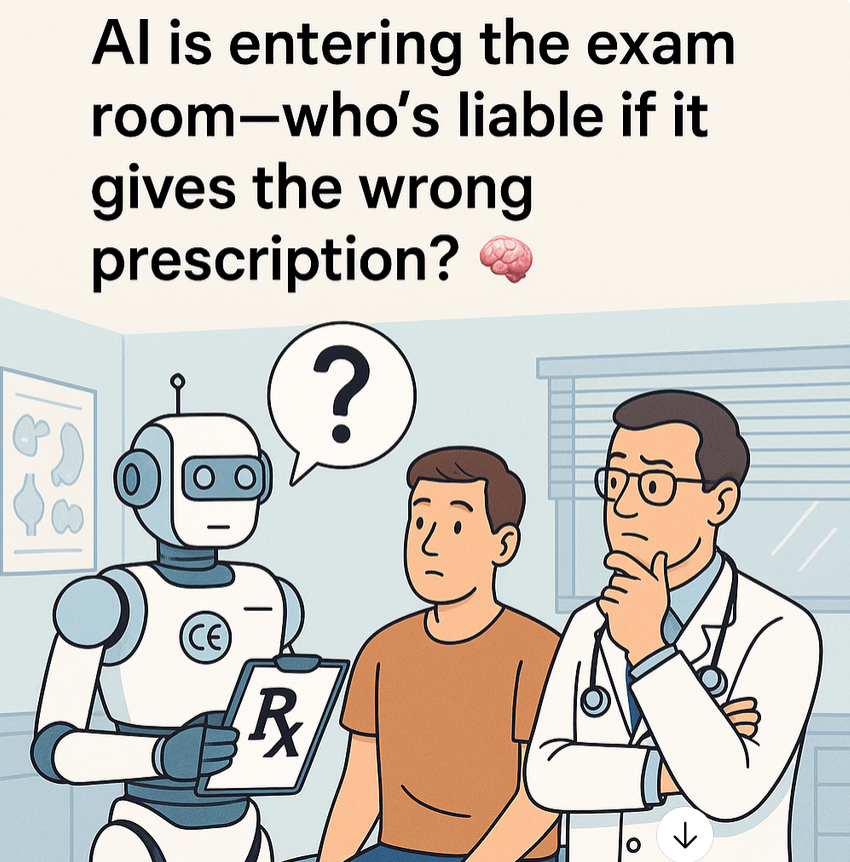
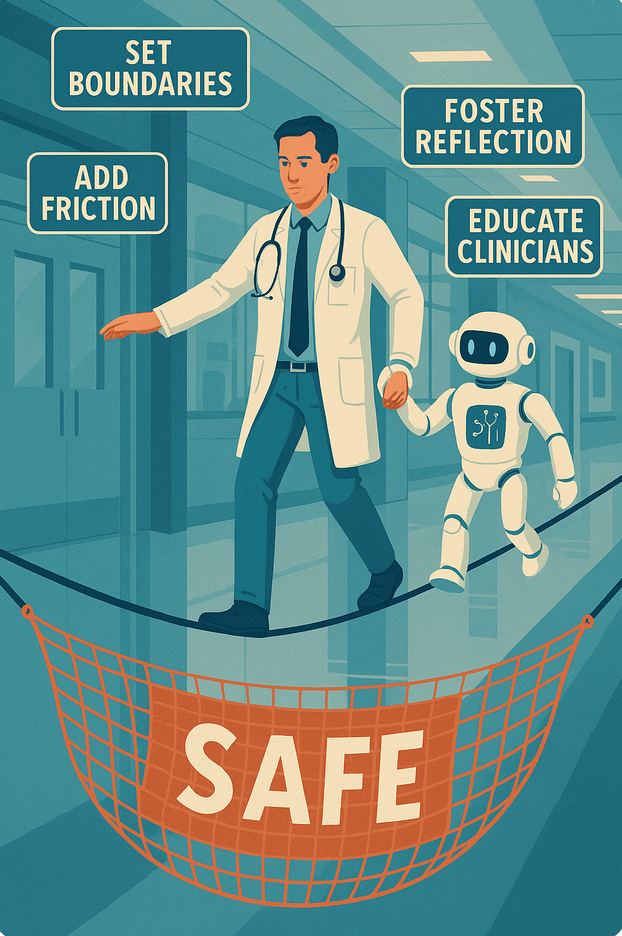
After nearly a decade in medical education, I’ve seen AI quietly reshape both learning and clinical practice. But as educators, clinicians, and patients, are we asking the right questions about its use?

Too often, AI tools are implemented without transparency, oversight, or patient consent. Some platforms even guide users on capturing patient data—without clear governance—raising serious concerns about privacy, ownership, and compliance.

💡 Questions we all need to ask:
🔹 Patients: Is AI being used in my care? How is my data stored and used? Can I access my AI-generated records? Can I opt out?

🔹 Educators & Institutions: Are AI tools aligned with privacy laws? Have vendor agreements been updated to reflect AI-driven features?

🔹 Developers & Policymakers: Is AI implementation transparent and ethical? Are there built-in safeguards? Does the tool comply with FIPPA/HIPAA?

AI itself isn’t good or bad—it’s a tool. But without scrutiny, it can become a liability rather than an asset.

🔍 Never assume AI is being used ethically. Ask the hard questions. Demand clear answers. Protect patient trust.

~ Jacqueline

Learn more on Patients’ Trust in Health Systems to Use Artificial Intelligence via JAMA

App that Map!

Exciting News! 🚀📢 Thrilled to share that Dr. Meera Anand and I have published our latest work, “APP that Map! Curriculum Mapping in Family Medicine”, in Medical Education!

What’s the challenge? Curriculum mapping is critical for ensuring equity, consistency, and accreditation across distributed medical training programs. In our case, UBC Family Medicine spans over 20 training sites—each with unique learning experiences due to regional differences. However, our previous Excel-based mapping method was cumbersome, time-consuming, and engagement was low.

What did we do?
✅ Redesigned the mapping process—streamlining 478 learning objectives into 42 core learning outcomes.
✅ Developed a custom app in Oracle Apex—allowing faculty to easily input and visualize data.
✅ Increased engagement—within 7 months of launch, all sites completed the process (compared to <50% using spreadsheets!).
✅ Enabled data-driven decision-making—helping us track curriculum trends and improve resource allocation.

Lessons Learned:
💡 Technology can enhance, but not replace, faculty engagement—ongoing training is key.
💡 Balancing simplicity and robust data collection is a continuous challenge.
💡 Visualizing trends improves decision-making for accreditation & program improvements.

This work demonstrates how thoughtful integration of technology can streamline curriculum mapping and enhance medical education. Would love to hear from others working in curriculum innovation—how are you leveraging tech to improve learning outcomes?

📄 Read the full paper here.

Immunize

Background

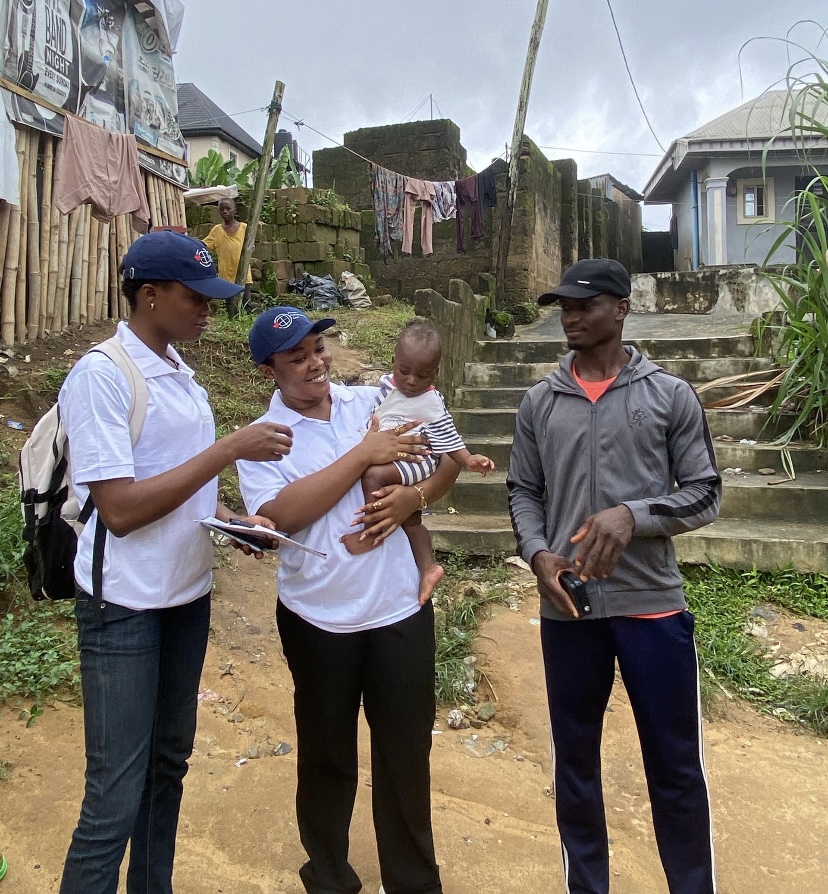
WHO, as requested by its member states, launched the Expanded Programme on Immunization (EPI) in 1974 to make life-saving vaccines available to all globally. To mark the 50-year anniversary of EPI, we sought to quantify the public health impact of vaccination globally since the programme’s inception.

Methods

In this modelling study, we used a suite of mathematical and statistical models to estimate the global and regional public health impact of 50 years of vaccination against 14 pathogens in EPI. For the modelled pathogens, we considered coverage of all routine and supplementary vaccines delivered since 1974 and estimated the mortality and morbidity averted for each age cohort relative to a hypothetical scenario of no historical vaccination. We then used these modelled outcomes to estimate the contribution of vaccination to globally declining infant and child mortality rates over this period.

Findings

Since 1974, vaccination has averted 154 million deaths, including 146 million among children younger than 5 years of whom 101 million were infants younger than 1 year. For every death averted, 66 years of full health were gained on average, translating to 10·2 billion years of full health gained. We estimate that vaccination has accounted for 40% of the observed decline in global infant mortality, 52% in the African region. In 2024, a child younger than 10 years is 40% more likely to survive to their next birthday relative to a hypothetical scenario of no historical vaccination. Increased survival probability is observed even well into late adulthood.

Interpretation

Since 1974 substantial gains in childhood survival have occurred in every global region. We estimate that EPI has provided the single greatest contribution to improved infant survival over the past 50 years. In the context of strengthening primary health care, our results show that equitable universal access to immunisation remains crucial to sustain health gains and continue to save future lives from preventable infectious mortality.

Read more on Contribution of vaccination to improved survival and health: modelling 50 years of the Expanded Programme on Immunization via The Lancet.

Echolocation

“Bats’ skill with echolocation—pinpointing prey on the wing and in the dark—has long been a source of inspiration for scientists and engineers, resulting in advances that include novel medical devices for the visually impaired and sophisticated radar systems. Now researchers have created a 3D sonar system that, when combined with high-speed cameras, makes it easier to ‘see’ bat echolocation in action. The new tech, which could reveal more valuable insights into echolocation and predator-prey interactions, is described in a study published 8 January in IEEE Sensors Letters. It could also potentially pave the way for even more bat-inspired technologies in the future.”

Read more on Sonar System “Sees” Bat Echolocation in Action: The tech could help develop more bat-inspired devices in the future via IEEE Spectrum.

Limits

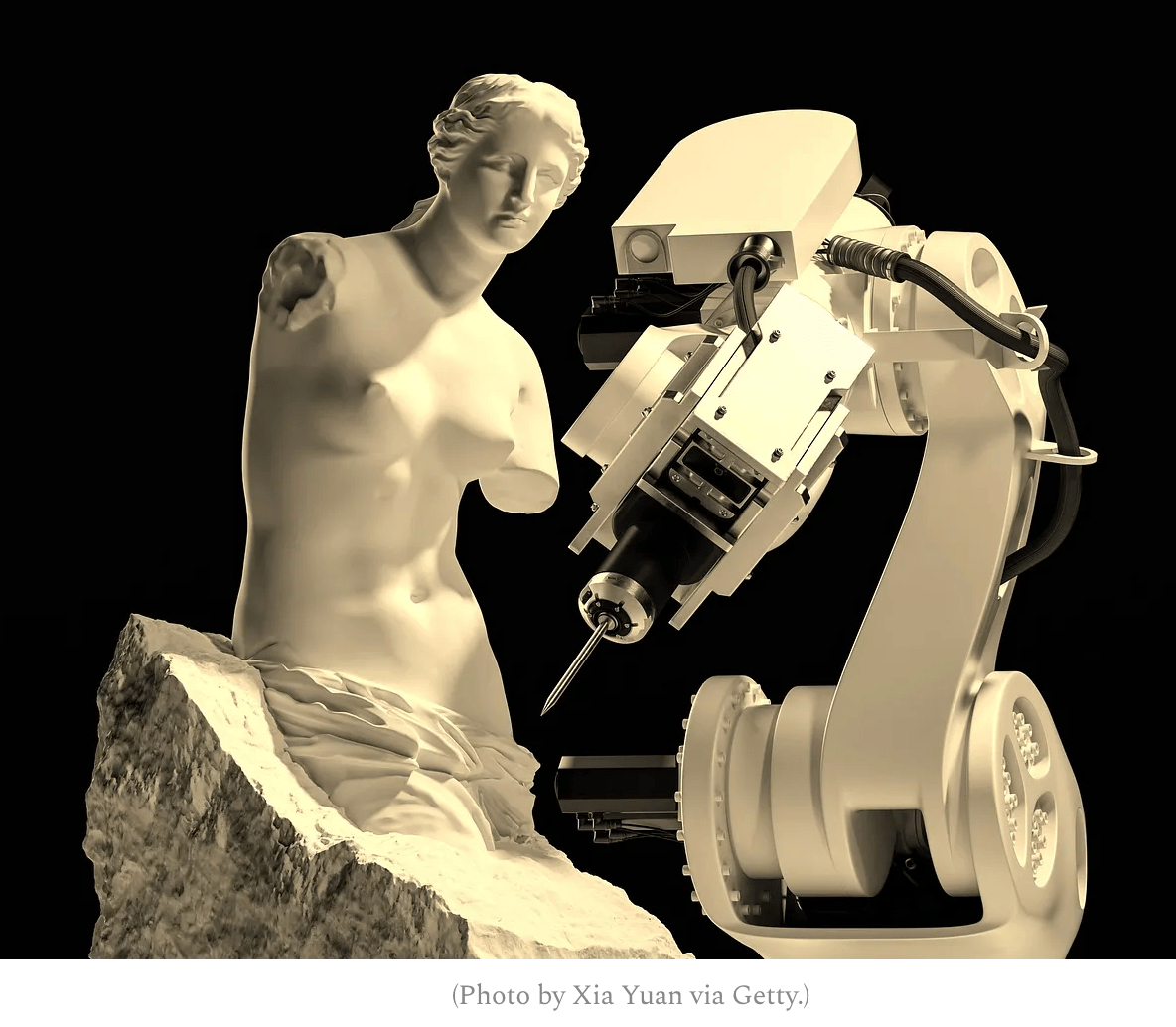
Anduril Founder Palmer Luckey, the designer of the virtual-reality headset Oculus Rift, laid out his vision for the future of the IVAS program Tuesday in a blog post titled, “Turning Soldiers into Superheroes.”

“For me, this announcement is deeply personal. Since my pre-Oculus days as a teenager who had the opportunity to do a tiny bit of work on the Army’s BRAVEMIND project, I’ve believed there would be a headset on every soldier long before there is a headset on every civilian,” Luckey wrote.

He wrote that IVAS will allow troops to “surpass the limits of human form and cognition, seamlessly teaming enhanced humans with large packs of robotic and biologic teammates.”

The Army has conducted IVAS-controlled drone flights for microdrones, such as the Black Hornet and other squad-level drones. The device is also used for inter- and intra-squad communication, both through voice and chat. Users can share map information, coordinates or other data via the headset.

Read more on Oculus founder wants to help troops ‘surpass the limits of human form’ via Military Times