Truth

truthTruth = Perception of one’s reality (when Real is greater than the imaginary)??

A day down the rabbit hole! Fortunately, I have a brilliant life to throw these questions out to!

Questions to my Philosopher King:
1. Does truth exist if there is no other? (Other meaning external validating source)
2. Is truth reliant upon another person’s validation of our perceptions?
3. Does the imaginary always exist (to a greater or lesser extent) in the Real?
4. And sanity (perceived collective of Real?) is when the individual’s Real is greater than the imaginary?

Philosopher King’s response:
take no 1: “other meaning external validating source..
What is the force of “other”? Does it means outside the person? Sure, if the claim is some external fact, e.g., “Trump is a liar” (an easy one). But not if I am claiming that this or that life is really a genuinely fulfilling life for some person. There’s a truth here, I would say, but it’s not outside the person, as in the Trump case.
2. It follows from this that 2 is false.
3. also very hard. What is “imaginary”? In physics, certainly not. But “imaginary” in the sense of derived imagination which allows us to invent/grasp deeper and more revealing paradigm? that we certainly need to understand human beings.
4. On this meaning of “imaginary”, 4 is not true.

My Summary/Follow Up Questions 
1. Does truth exist if there is no other? Yes, if it applies to Trump (Tr). Hahaha! Here’s the problem though, if Truth is found within, then what is the validating source to confirm that it is the Truth as opposed to Deception or Delusion?
2. Is truth reliant upon another person’s validation of our perceptions? If the answer to 1 is yes, then 2 is No.
3. Does the imaginary always exist (to a greater or lesser extent) in the Real? Physics, No. Philosophically, Yes.
4. And sanity (perceived collective of Real?) is when the individual’s Real is greater than the imaginary? If the answer to 3 is Yes, then 4 is No.

He’s always right! Love it!

Escape

Escape Velocity: “For a spherically symmetric massive body such as a star or planet, the escape velocity for that body, at a given distance is calculated by the formula[3]logo

where G is the universal gravitational constant (G = 6.67×10⁻¹¹ m3 kg−1 s−2), M the mass of the body to be escaped, and r the distance from the center of mass of the body to the object.[nb 2] The relation is independent of the mass of the object escaping the mass body M. Conversely, a body that falls under the force of gravitational attraction of mass M from infinity, starting with zero velocity, will strike the mass with a velocity equal to its escape velocity.

When given a speed V greater than the escape speed {\displaystyle v_{e},} the object will asymptotically approach the hyperbolic excess speed {\displaystyle v_{\infty },} satisfying the equation:[4] 

formula

via Wikipedia

Thinking out loud: I wonder about the connection between Escape Velocity and Avoidance Coping. Gravity (defined as the emotional force/attraction of/to the stressor) and Avoidance Coping (the desire to Distance oneself from that stressor). Distance defined as the physical space (PS) between the Object (O) and its Stressor (Gravity) + Perception of the Real and the imaginary force of that stressor within the Object’s mind?
distance-formula
y is the Object and is the Stressor and then,
P = f(R,i)
The perception is that in order to avoid, one must accelerate to a point of escape velocity.

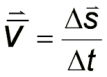
Velocity: The velocity of an object is the rate of change of its position with respect to a frame of reference, and is a function of time. Velocity may be a passive coping mechanism if the perception is that the faster one distances his/herself from the stressor the quicker the anxiety will be relieved?

unknown

Hmmm. I dunno. I need to think about it more. It worked for Mrs. Smith. At least short term. Or did it?

Avoidance

Avoidance coping: “Literature on coping often distinguishes coping avenues into two broad categories: approach/active coping and avoidance/passive coping. Approach coping includes behaviors that attempt to reduce stress by alleviating the problem directly, and avoidance coping includes behaviors that reduce stress by distancing oneself from the problem. Traditionally, approach coping has been seen as the healthiest and most beneficial way to reduce stress, while avoidance coping has been associated with negative personality traits, potentially harmful activities, and generally poorer outcomes. However, research has shown that some types of avoidance coping have beneficial outcomes. A study by Long and Haney found that both jogging and relaxation techniques were equally successful at lessening anxiety and increasing feelings of self-efficacy. Therefore, it seems that positive forms of passive coping such as exercise and meditation have qualitatively different outcomes from negative forms such as binge eating and drug use. These positive forms of passive coping may be particularly beneficial for alleviating stress when the individual does not currently have the resources to eliminate the problem directly, indicating the advantage of flexibility when engaging in coping behaviors.” Wikipedia

Final scene translation.
Mr. Smith (prior to being pitched off the cliff): “We need to talk!”

Evolving

“You must constantly ask yourself these questions: Who am I around? What are they doing to me? What have they got me reading? What have they got me saying? Where do they have me going? What do they have me thinking? And most important, what do they have me becoming? Then ask yourself the big question: Is that OK? Your life does not get better by chance; it gets better by change.” Jim Rohn

Formulating

Students! Can’t find your question? Let me make a few suggestions.

1. First, conduct a comprehensive literature review on your area of interest. Saturate yourself in the sea of research.
2. Review research that has been conducted within the last 7-10 years.
3. Understand what has been done and what has yet to be explored.
4. Pay close attention to the Recommendations section where many researchers indicate areas left to further investigate.
5. Also determine what methodologies are used and what may be feasible for you to undertake given your time and access to resources.

You want your question to be reflective of the current tide as well as something that you are passionate about and want to pursue for the next year.

Logical

And here we go Neva! And no I’m not alphabetizing off the top of my head but I’ll try! #AcademicsGoneLogical

Analogical
Proctological
Radiological
Oncological
Physiological
Pathological
Hematological
Embryological
Phenomenological
Epistemological
Ideological
Etymological
Ecological
Oological
Seismological
Dialectological
Anthropological
Narratological
Eschatological
Theological
Illogical
Codicological
Soteriological
Thanotological

Your turn and 18 months to go! “Gogy” is next! Go girl!

3/3/17 UPDATE Neva!: Biological (came to me at 2:30 a.m. this morning ha!)
3/4/17 UPDATE: Sociological!